

Napalm Death’s Shane Embury goes in depth on Melvins collaboration

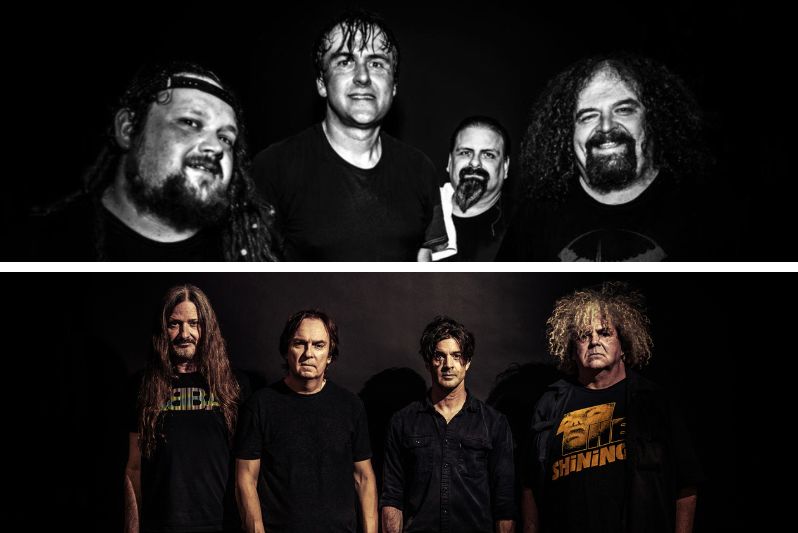
Collaborating can be a special thing when both parties involved merge in perfect harmony. It forges a perfect musical recipe where all the ingredients combine seamlessly and the result both excites and pleases the senses. Savage Imperial Death March, the joint album from sludge masters The Melvins and grindcore icons Napalm Death released earlier this month via Ipecac Records, is just such a collaboration. The full-length album plays to both bands’ strengths, while showcasing how their varied approaches complement each other’s music. This seamlessness can be heard in tracks like “Tossing Coins Into The Fountain of Fuck,” “Nine Days of Rain,” and “Stealing Horses.”
I had a talk with Napalm Death bassist Shane Embury about how the endeavor came together, creating a freeform structure, and how he hopes whoever gives the album a listen experiences a reward.
Treble: For the conception of Savage Imperial Death March, how did the idea for this dual record initially come about where it’s kind of a half and half with Buzz Osbourne and Dale Crover from The Melvins forming a quintet with you, “Barney” Greenway and John Cooke from Napalm Death?
Shane Embury: Me and Buzz tend to talk on and off during various parts of the year and before the last tour happened, we had always talked about doing some sort of record together. We then had a conversation centering upon a particular date with John and I coming over, and it just happened to coincide with that tour we did last year. We were working on it on and off where we wanted to do something that was less of a split and more of a collaborative, so it was a lot of fun from the point of view of there being some songs that had a rough outline of what they were, but they became more and more twisted due to five people sitting in a studio just messing around.
Treble: For the recording process, were there parts that were done in the studio together and parts that were done remotely? I know you’re based in the United Kingdom while The Melvins are out in the West Coast of the United States, so how did that affect the experience?
SE: We had a particular timeframe, I think it was April of 2024, and I just bought a flight ticket and went out, which kind of kickstarted it, really. It’s as simple as that, they’re based in Los Angeles, and we recorded it at The Melvins’ studio, so it wasn’t really that complicated. I had a couple tracks lying around that I thought Buzz would like, and we’ve known each other for a long time, so we knew it was going to be very easy. We didn’t want to make it complicated because we all like all kinds of crazy music anyway so it was anything goes, there wasn’t anything that we couldn’t do or whatever. That was it, it was simple over the course of a four-day period, and because “Barney” wasn’t there, he did his vocals back in England.
Treble: From listening to the album, there’s a lot going on musically while definitely seeming like an amalgamation of both the Napalm Death sound and The Melvins sound, but one thing that caught my senses is the presence of synth and electronic elements courtesy of yourself and Toshi Kasai, who also served as a co-producer. Who initially had the idea to include this aspect of the music? When you think of Napalm Death and The Melvins, you don’t usually think of keys and synthesizers.
SE: Over the past five or six years, I’ve been experimenting around with electronic music through various projects. The Melvins also did that Throbbing Gristle record and Buzz has a couple people he likes to work with as well that do some modular electronic stuff, so even though we’re quite different musically in some ways, we all listen to lots of the same kind of things. Buzz looks at it like musical anthropology and I’ve always liked that kind of term because that’s kind of what it is. We’ve been around for such a long time, and when you grow up in a particular scene, you move on to this and you move on to that. There’s these things called stylophones, and when I grew up in the ‘70s, it was this thing with a pen that you could make high pitched sounds with, but Toshi had one in the studio, so we threw that in there.
There was no decision process for it, we just tried it. There was also a wall of effects pedals and we John used them to his heart’s delight, so it was interesting how it all came about. It’ll be great to do another record because I think with this one the next one can be even wilder, but it all depends on our tour schedules and stuff. The weirder, the better, I guess.
Treble: Being on bass while crafting the rhythmic foundation for the album with Dale, what made playing with him stand out for you? Dale is a unique drummer where he can go all over the place with his instrument, kind of like yourself.
SE: Dale is interesting because of the stuff that he’s done over the years, but he’s also rhythmically on point, to use that phrase. He can shift around through various time signatures, but he can also stay in place, so that helped me a little bit because I could go off in a progressive time scale. We just gelled very easily. He’s also open to ideas as well because some drummers can be a little bit strange. I started as a drummer when I was young, and then I moved on to bass and guitar, so for “Nine Days of Rain,” for example, I imagined this Killing Joke tribal kind of beat. He immediately got it while doing it his way, and he’s also very solid, which makes it easy for bass players to keep rhythm.
Dave’s a little different, and I’m very used to playing at a bizarre hummingbird pace, but when you slow it down, it’s more controlled. It should be easier, but in some ways it’s a challenge for me because I’m used to playing really fast. You have to be minimal with your placing of bass notes where with death metal, grindcore, or whatever, you can usually do 20 notes in half a second.
Treble: Both Napalm Death and The Melvins have a lot of crossover with their fan bases, so when it comes to people who are fans of both bands and just heavy music in general, what do you hope they take from Savage Imperial Death March when they give it a listen?
SE: I hope they get some sort of reward in the sense that we were very free when we put it together. I’m not sure that happens all the time, there’s kind of this musical culture where things tend to sound the same and people have to play perfectly. This is very freeform, it just goes off and does its thing, and it was also very fun. I hope when people hear it, they can tell that we were having some fun.
Treble is supported by its patrons. Become a member of our Patreon, get access to subscriber benefits, and help an independent media outlet continue delivering articles like these.
