


There was a period in the early to mid-80s when recording artists from a previous era chose to catch up. Heard and embraced the technology of the day. A surging next wave of producers and dancers flocked to these arrangements, where guitars went in the background and samplers, synths, and 808s stood in the front of the mix. Trevor Horn, among others, saw that rock needed a glow-up. The producer and member of seminal groups The Buggles and Art of Noise got hold of the sophistipop UK band ABC in ’82 and produced their debut communique to swoon.
The Lexicon of Love made the said outfit a prototype for the decade’s embrace of new romanticism. Next up, he refurbished the art-rock, prog-heavy dinosaur band Yes. Making their ’80s return, “Owner of a Lonely Heart” not just a hit; the single came loaded to the teeth with sampled horn stabs, gunshots, plus arpeggios that in quick sequence resembled digital conflagration running amok. These interruptions, albeit with a soul-adjacent groove, propelled the band not just back on the charts but also awarded them the most successful single and album of their careers. As for the digital conflation?
The technique was later featured within sections of the computer slow jam played on late-night Black radio stations, “Moments In Love,” by the Art of Noise. Make no mistake. Folks, from all corners of music, we’re not just listening but transcribing these new developments. If they could make a stiff, white, British prog-rock band hip, Mod for the pop charts. What could these whizz-bang production techniques do for an R&B diva from the ’70s?
When the street dance flick Breakin’ descended upon American suburbs on May 4, 1984, it affected the kids like Elvis moving those hips in ’56 on Ed Sullivan. Mayhem. The youth camped out in movie parking lots for hours before the film showed, “chilling,” blasting the soundtrack, trying new dance moves, unsuccessfully spinning on their heads, and vibing with classmates—you know, being dumb teenagers.
Those parking lots became an overnight hangout; the breakdance culture had connected. Not just with inner-city kids but suburban (ahem) white teens cosplaying, completely unaware, in fact, as Black and brown city kids in Nike windbreakers and shell-toed Adidas. I remember a whole bunch of white dudes named Trent, Mike, and Jim ever so boldly co-opting the term “fresh” for the weekend. Yes, there had been breakdancing movies previously; Wild Style and Beat Street were hits for sure, but they mostly played in what community development officials of the day would call “urban centers.”
Breakin’ ,the 87-minute, slightly exploitative yet ever-exciting flick that made breakdancing the central activity, was a lodestar to the urban battle cinema verité of the 2000s (Save the Last Dance from 2001, Honey from 2003, You Got Served from 2004, and Step Up from 2006). Breakin’ kicked off the always prevalent questioning of whether “street dancing” is low-class or even real art. Toss in a love story and plenty of dancing vignettes. The ‘84 movie introduced Ice-T to the world via cinema and supplied an electrified soundtrack that remained on blast for the entire summer. For a film that cost just over a million to make with a bunch of unknown actors and dancers, the idea and vehicle would eventually gross close to $40 million.
In my little suburban Northeastern town, the film opened on that Friday, with sold-out shows all weekend, and teenagers saw it back to back to back. Every kid, teenager, disaffected youth, or interested young 20-something in town and from local burgs did the good hang in the parking lot. Maybe the older high school kids sipping and smoking something when the cops weren’t around… But come Monday, that flick was outta here. Party over.
Maybe those community development officials had an emergency weekend meeting with the movie theater. All I know is this: Monday night? Sixteen Candles and Romancing the Stone had taken over, and the Trents, Mikes, and Jims started talking normal again.
We’re talking months before the Purple Rain situation rolled into town. 1984, Jack.
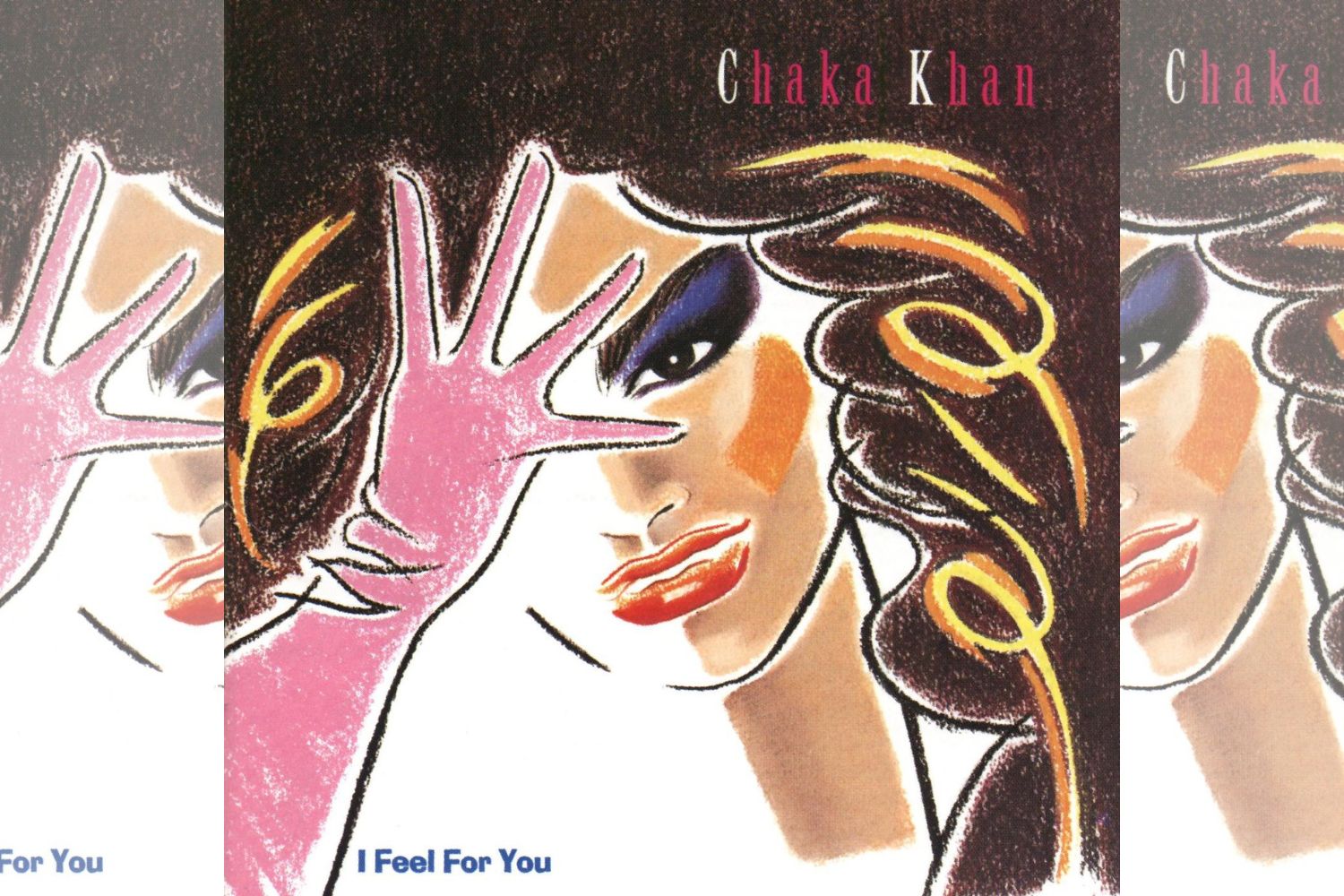
Amongst all that noise, there was a forgotten-about Prince song that found its way on the Breakin’ soundtrack, called “I Feel For You,” dug up from his self-titled Prince album in 1979. Known religiously on black radio stations as the delivery system that birthed the ultimate jam, “I Wanna Be Your Lover,” and then the other soul-pop disco burner, “Sexy Dancer.” But for Chaka Khan, the deep cut was a perfect confection for a transformative career moment.
Positioned stealthily on a soundtrack that featured more of the electro side of hip-hop culture. Produced by Arif Mardin, the Turkish-American music producer who worked with hundreds of artists across many different styles of music, including jazz, rock, soul, disco, and country, the song served as a retooling for the ’70s-era artist. Her instrument, that big voice from that small frame, was forever on point; it was what surrounded it that needed to be revised. By grabbing Grandmaster Melle Mel, of the Furious Five, who penned and performed an early rap staple, “The Message,” a song many believe changed hip-hop, Khan transferred that street cred into ingenuity. That classic “Ch-ch-ch-chaka-chaka-chaka Khan” rap intro and Stevie Wonder on prismatic harmonica (and also a sample from one of his first hits, “Fingertips”) got Chaka rebooted. Embracing the new. That enigmatic voice, known for ’70s R&B building blocks of Black radio, “Sweet Thing,” “Tell Me Something Good,” and “I’m Every Woman.” Joints people.
Known from the first note. Now that voice was skittering through a machine, caught in this glossified, sheeny instrumentation.
She was done relying on previous R&B production styles, such as the Pointer Sisters’ cover of the song in 1982. While it’s strong and groovy, melodic and breezy, it didn’t punch; it just landed safely using a previous decade’s idea of Black pop.
Chaka’s rubbery, hard-hitting, incisive, heatrock eargasm, by way of Linn-drum-dominated presentation, used high-tech explosive sound modernizations to express the song’s convictions, falling hard for someone. Similar to the way Madonna had kicked off the decade with her own synth-heavy, rubber-band-like city jams that leisurely started to invade mall culture of America.
“I Feel For You” had Chaka’s voice just buzzing, refracting back through recorded snippets, and taking space, wonderfully, in everyone’s ear. Delivering news to the culture, Black song arrangements got aggressive, defensive and reactionary. They switched up.
Just like the White House regime and its supply-side economics, it was a different decade. The culture followed suit. Those “voodoo economics ” got built into the frequency. Big-horn-powered funk bands, lush soul arrangements, and even Barry White’s orchestral disco? Bogus. Lame. Outta here in the Reagan years. When these popularized young urban professionals, aka yuppies, with their MBAs and BMWs, in their high-contrast-colored, soft-pastel, geometric-shaped, brass-finished, glossy-surfaced condos, were done listening to Frankie Crocker’s “Soft and Warm, Quiet Storm” radio. They wanted to move. To these electro-freestyle jams. R&B went the way of technology and housing—it was programmed.
Chaka Khan’s studio album I Feel For You, already in demand due to the single blasting all summer from the Breakin’ soundtrack, was released on October 1, 1984, amidst all the Purple Rain blitzkrieg consumerism. Khan made an album that used several songs from the 70s and punched them up into the new sound palette. For example, the AM radio staple by Gary Wright, “My Love Is Alive,” received that modernized, sample-laden, conflagration touch that pushed the rock element into this new, wavy, freestyle deep cut of a jam.
“This Is My Night,” written by the synth-pop duo The System, known for their synthwave textural feel and heartfelt lyrics, was the second single released from the album, possessing that electro-jam groove, cosmopolitan metallic structure, and overall bubbling-up force.
Which again, buttressed the vocal dynamics of Khan, manufacturing this icy cool delivery system with Chaka’s incessant, non-stop, fiery vocal runs as a contrast. Giving these pounding, banging metallic structures their sultry gravity. To this day, “I Feel For You,” the single and album, are Chaka Khan’s most identifiable pieces in her wide-ranging discography.
Treble is supported by its patrons. Become a member of our Patreon, get access to subscriber benefits, and help an independent media outlet continue delivering articles like these.

