
Craig Taborn : Dream Archives

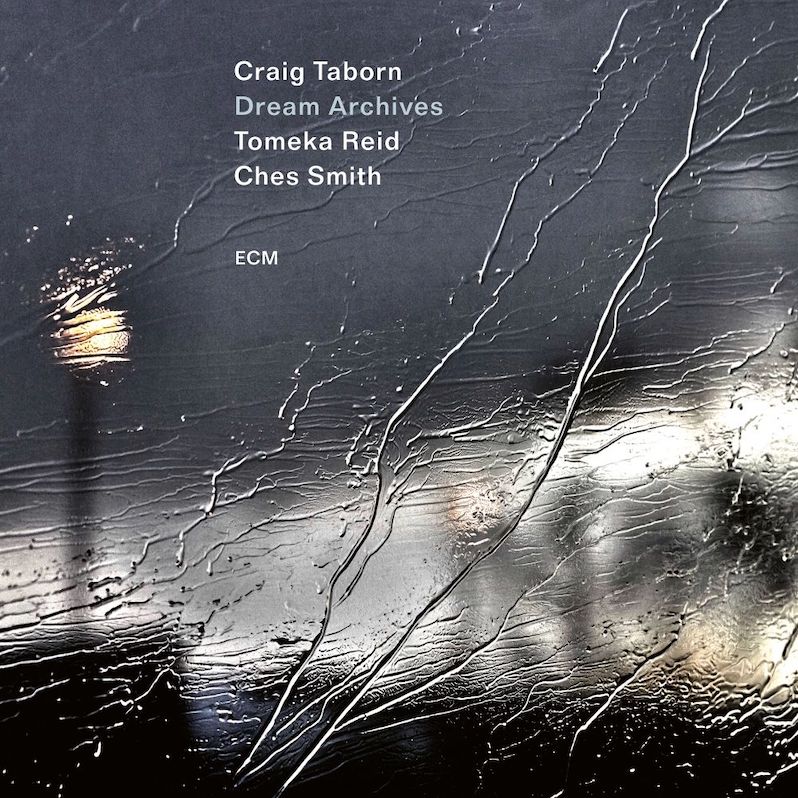
Listening to records with my wife gives me occasion to say out loud thoughts and information that would otherwise be passive in me. During Craig Taborn’s Dream Archives, which plucked us both up on its Friday release, it was on the topic of fusions of jazz and Western art music (classical, Baroque, Romantic, etc.). This record, like so much of the ECM Records catalog, belongs to a variation of this fusion called Modern Creative, one of the most delightfully vague genre names we’ve yet come up with, but one made necessary by its progenitors taking up the better names. American Music, for example, was Duke Ellington’s name for his fusion of styles; third-stream, meanwhile, was the preferred term for mid-century composers of the style, including some early ECM greats as well as legends like Ted Macero. The differentiation I might give is that while American Music was a jazz composer demanding legitimacy as he established a now revered artform and third-stream was work drawing consciously from both pools, Modern Creative might be seen as the child that comes with third-stream parentage, where it’s no longer the braiding of two elements but simply is the combined effect. Calling it jazz feels like you’ve erased the masterful composition; calling it orchestral or chamber music feels like you’ve erased that exploratory jazz spirit to it.
Taborn, a brilliant pianist, delivers here a set of compositions that, sans accompaniment, would feel somewhere between the imagistic work of Chopin, the bold and invigorating works of Stravinsky before breaking into beautiful solos over some truly and delightfully bizarre chord choices. It’s the rhythm section of Tomeka Reid and Ches Smith that are the most resolutely jazz element of the material here, cooking and swinging even when the piano becomes more an architectural scaffolding than the robust fiery dance of jazz.
Take “When Kabuya Dances” for example, which alternates between quite beautiful structured piano composition and those wild and open solos Taborn is so good at, with a cascade of notes popping with play. The composition-heavy parts take a position almost like “The Rite of Spring,” striking and jarring with its chord choices, at least until the finale where a sudden softness and melodicism appears in the line. The rhythm section meanwhile is a constant hard bop churn, a cascade of snare and cymbal hits against a bass that feels like Scott LeFaro coming back to us.
This is immediately followed by “Mumbo Jumbo,” presumably taken from the novel by Ishmael Reed given the emotionally complex timbre of this piece and the monumental achievement of that Black American novel, which is driven by these wide sawing and creaking strings set against a dramatically rich atonal piano part. There’s a strong melodic logic despite the absence of a tonal center, with the players chasing each other in a way that feels reminiscent of the genius playing Carl Stalling got out of the orchestras for those brilliant Looney Tunes scores, which blended the avant-garde with the melodic in a way that worked so well not even children blinked at it.
The album is just six long compositions over a 50-minute span, certainly appealing to the idea of orchestral composition approached by jazz players. Let’s look at some of the other titles: “Coordinates for the Absent,” “Feeding Maps to the Fire,” “Dream Archive.” There is a strong element of the literary to these framings of the pieces; there’s certainly a greater sense of deliberateness to these titles than, say, naming something “September” or “Wind” or something simple like that; my supposed connection to Reed’s novel comes largely from this literary heft to the work. This matches well the programmatic feel of these pieces, which use both structured and improvisational sections to paint stories with moving pieces and transformations over time, eschewing heads and solos for something you could just as easily imagine being group improvised as you could fully scored out. Dream Archive gives us a brilliant start to the world of jazz in 2026 and a commanding bar for future combos and composers to beat. It is as invigorating intellectual as it is moving and organic.
Label: ECM
Year: 2026
Similar Albums: