

“It’s funny what what happens when you kind of open yourself up to the universe to do what it wants with you.”
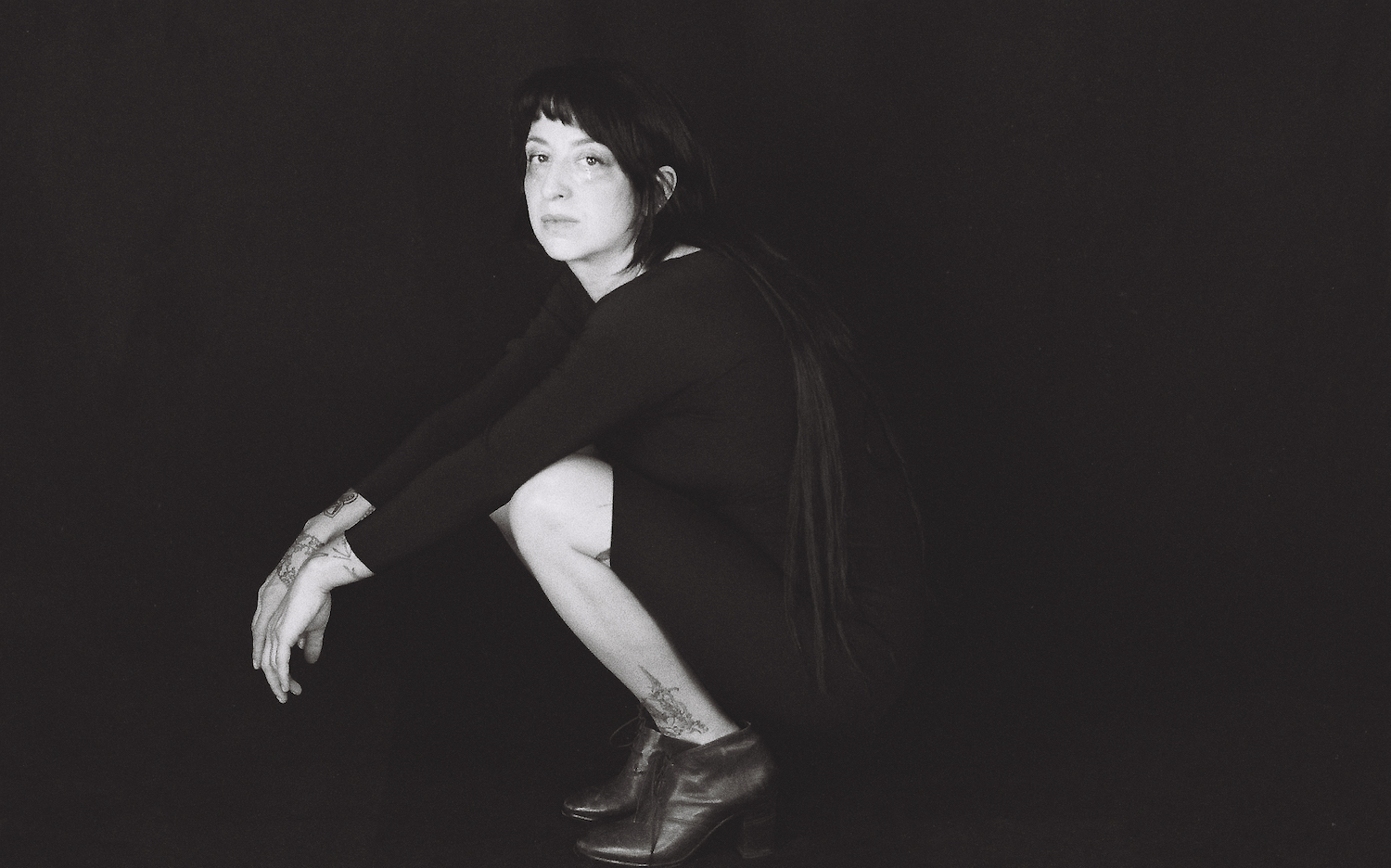
Everywhere that Ora Cogan has gone throughout her career, it’s rarely been in a straight line. The Vancouver singer/songwriter plays “folk music” in the broadest sense of the word, having made her first recordings with an emphasis voice and acoustic guitar, but true to Louis Armstrong’s oft-quoted observation that “all music is folk music,” Cogan’s music is multifaceted and unpredictable, informed by the music she’s loved since childhood as it is the sounds that challenged her as a young adult—in a conversation over Zoom from her living room, between sips of coffee she mentions any number of artists whose music has left an impact on her. J.J. Cale, Nina Simone, Dolly Parton, klezmer artists, Norma Tanega, Townes Van Zandt, and particularly the experimental artists she’s made friends with in the Vancouver scene. Her songwriting both personal and political, at times pitch-black but never anything less than hopeful, the product of a lifetime of unexpected left turns and a willingness to be curious enough to take them.
Cogan grew up in a musical household on Salt Spring Island in British Columbia, in the Salish Sea, her mother a musician and activist and her father a photojournalist. From a young age she took in a wide swath of musical styles, from traditional folk to Bill Withers. She took up an apprenticeship in silversmithing at age 15, and shortly thereafter began performing in punk clubs and DIY venues in Vancouver, honing her skills as a folk artist. But discovering the noise scene opened things up for her, revealing new possibilities in sound and community.
“I loved noise because it felt like freedom, you know, like where you’re just like, you,” she says. “It’s meditative, and it’s also really cathartic. And felt nice to just be with people that were just playing with, yeah, like tone and frequency and pitch and and elements, and creating these kind of primordial landscapes that don’t have a definition, and I feel like that just opens a lot of doors in your mind. And also, it’s not pretentious—you don’t need to have a music degree [to do it].”
Cogan’s latest album, Hard Hearted Woman—out this month via Sacred Bones—is an album defined by the versatility and contradictions of Cogan’s music, a work that weaves threads of folk, country, soul, psychedelia and gothic rock into an eclectic but cohesive whole. But even amid its darker shades and textures, there’s a brightness and hopefulness to it that speaks to a renewed determination after a period of self-doubt and loss.
Between the making of her 2020 album Bells in the Ruins and its 2023 follow-up, Formless, Cogan even stepped away from music for a time, in part discouraged by the uphill battle of being an independent musician as well as seeking a different kind of constructive pursuit. She planned to take a solo trip via motorcycle to New Orleans, but instead ended up doubling back north, invited by a friend to take a canoe trip with the Heiltsuk Nation of the central coast of British Columbia. She got involved in climate activism, joining the movement to prevent the building of an oil pipeline on First Nations land, as well as taking on work as a photojournalist.
She returned to music after her father died, and the songs she wrote thereafter, comprising her 2023 album Formless, are shaped by that grief. But while sadness followed her as she returned to making music, so did a sense of self—a renewed sense of purpose that had proven elusive leading up to her self-imposed hiatus.
“I’d been playing music for a long time, doing DIY tour circuits and working, you know, service jobs and it was just really hard. And could feel kind of lonely, as a solo artist, and sometimes unsafe too. Just being out on your own could feel really precarious,” she says. “I guess I felt like I wanted to do something that was more tangible than music—to focus energy on to something else. At first I was just kind of, you know, having some kind of just flipping-the-table-over in my life and giving everything away and just changing.”
Hard Hearted Woman comprises some of the most diverse sounds that Cogan and her ensemble of collaborators have put to tape. Its rich palette contains the bad-acid psychedelia of “Bury Me” and its melting guitar effects, the twinkling piano and elegant open spaces of “Limits,” and the pedal-steel-driven country rock of “Love You Better.” Cogan has a particular knack for balancing a haunting melodic sensibility with unexpected stylistic flourishes, such as with the traces of jazz in the light-footed rhythm of the spectral dream pop of “Outgrowing.” Yet while Hard Hearted Woman balances out its darker moments with those of lightness and beauty, Cogan admits that her aim was to create something with even greater intensity.
“If I set out to do anything—what I was inspired to do, what I thought I was going to do was something that was going to be heavier and weirder and like more technically challenging,” she says. “And what ended up coming out of me was, more kind of pop songs and like, really, like heartfelt, sentimental stuff.
“I got mad at myself about it a little bit. Sometimes, I’m like, ‘why is this so sensitive?'” she continues. “But I came around to it. It’s true to my heart. I guess it’s good to be a little vulnerable.”
A believer in the power of community, Cogan is quick to credit much of the shape of the sound of the record to its deep bench of collaborators. Hard Hearted Woman is the third album Cogan has made in collaboration with Victoria, British Columbia-based producer David Parry, also of the band Loving, recorded in part in his studio as well as partially in Cogan’s own studio in Nanaimo, a town described in press materials as “Twin Peaks-like.” Tom Deis, who plays in the Sufi music ensemble Falsa, contributed piano, bass and backing vocals in addition to some of the mixing. And there’s an eclectic ensemble of artists who contribute instrumental elements throughout: viola and violin from Norwegian artist Ester Thunander, mandolin and violin from Nashville bluegrass musician Patrick M’Gonigle, and background vocals from film and TV composer Lillie McDonough, to name a handful.
“I’d feel really grateful to work with a lot of really, really, really, really brilliant, thoughtful weirdos who are, you know, kind of into everything,” she says.
The complex tangle of sounds on the album are matched with an equally rich emotional core, meeting feelings of defeat and anger with an irrepressible humanity. Opener “Honey,” with its smoky and lush groove, was written as a response to a rise anti-trans legislation—a statement of resolve amid “everything in ruins.” On “The Smoke,” Cogan explores the dualities of what it means to be human (“We’re teaching our shadows/to dance on the wall/While we’re living in fear/Of doing anything at all“) against a mesmerizing conga pulse and layers of psychedelic blues. And “Division” shimmers with a gothic chill, the distant sound of a saxophone cutting through the fog as she pleads not to give into that which turns us against each other. The sensitivity and vulnerability that Cogan describes is central to the album, at once a way of making sense of dark times and a way to recognize the feelings they bring to the surface, as well as being fuel to keep moving forward.
“If you’re heartbroken, you can’t just make yourself not heartbroken,” she says. “If you’re terrified because the rise of fascism is unfolding before our eyes with people we love, you know, we respond, and I guess a part of that response is maybe metabolizing information through your system. And having music is a way to regulate when it comes to all that stuff, so that you can try to find a way to a healthy mind and a healthy spirit and a healthy being, to be able to take action and respond and be in your body and not dissociate through all—to hold the complexities of life and still celebrate life, and find some joy, or make some joy within it.”
As she reflects on her own songwriting, Cogan returns to the feelings evoked by the soul and folk music that she grew to love when she was younger. They capture a wide swath of emotions and speak to a vast array of experiences, and ultimately hold more than one meaning. Being human is complex and music can be as well, but more than that, it’s a necessary component of helping us understand and process and even celebrate when things get heavy.
“When Nina Simone was writing her songs…the music is holding everything. It’s holding anger and and celebration and joy and ingenuity and, you know, all of it at the same time,” she says. “I feel like a lot of folk music is like that for me, where it can feel like—listening to klezmer, and the lyrics are devastating, or traditional Greek music, and there’s like, there’s so much despair and and the music is just like, chaotic and fun and wild—and people are dancing, but if you listen to the lyrics, it’s like, ‘rip my heart out and throw it in the sea and light it on fire,’ you know?
“And yet, everybody’s just, like, celebrating life and dancing. Having music as the enzyme that allows you to metabolize really fucked-up stuff.”
Treble is supported by its patrons. Become a member of our Patreon, get access to subscriber benefits, and help an independent media outlet continue delivering articles like these.