

The world is feeling smaller: An interview with Sleaford Mods

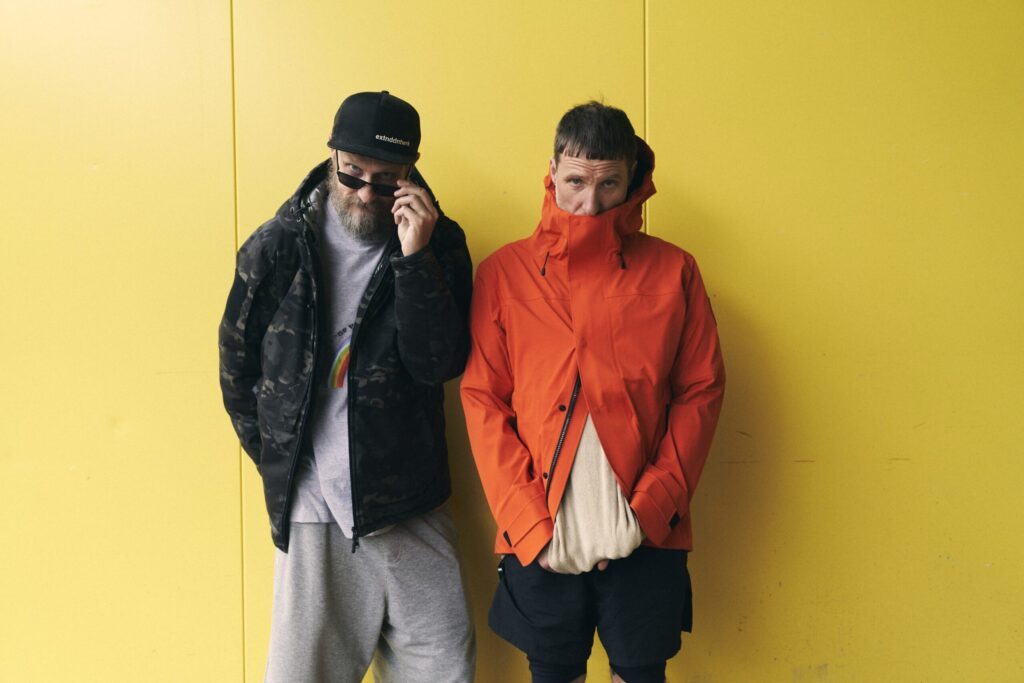
Sleaford Mods have always defied classifications with their minimalist approach to music. There’s a punk energy to the British duo’s sound, with notes of hip-hop, electronica and trip hop blended in, but it’s an aesthetic that has been making vocalist Jason Williamson and multi-instrumentalist Andrew Fearn stand out for nearly two decades. This aesthetic also propels collaboration, with artists ranging from Aldous Harding to Dry Cleaning vocalist Florence Shaw and Amyl & the Sniffers’ Amy Taylor lending their talents to the band’s records over the past decade.
Sleaford Mods’ latest release is The Demise of Planet X, released via Rough Trade Records last month, which exhibits a proper evolution of the band’s peculiar sound with an increased emphasis and a refreshed thematic vision.
Williamson and I had a talk about the making of the full-length, bringing a bunch of people into the fold, making a music video while being surrounded by apartment buildings, and what he hopes people take from the album while giving it a listen.
Treble: For The Demise of Planet X, when it came to the sonic progression of the Sleaford Mods sound, which is very much has a drum and bass foundation, what was the main goal that you and Andrew had when it came to crafting the song arrangements and the overall quality of the record?
Jason Williamson: To put it basically, just for it to be good. For it to be, to a certain degree, criticism-free. I know people have different aesthetics and tastes, but it really doesn’t matter how well you craft an album. For me, it’s important for it to mean something, for it to matter, so these things were first and foremost for it to be good. Also, at the same time, to try and challenge ourselves again is important, so I think that’s what we did and achieved.
Treble: What was the reasoning behind going to three different studios to make the record? I know you both worked at your home base at JT Soar in Nottingham, but you also went to the legendary Abbey Road Studios in London and Invada Studios in Bristol, the latter owned by Geoff Barrow from Portishead. When it came to using multiple locations, was it all about just recording different parts or was it something else?
JW: Just for a changeup. Around this time last year, we did 16 demos, and it became clear to us that we needed to go elsewhere and try to make music in a different location. It was more of us just looking to be in a different place.
Treble: Much like your most recent records UK Grim and Spare Ribs, The Demise of Planet X is very much a collaborative effort where you have Gwendoline Christie, Big Special, Aldous Harding, Sue Tompkins from Life Without Buildings, Liam Bailey and MC Snowy involved. How did you get all of these people into the fold? Was it all done remotely? I know you’ve done some acting on the side, so is that how you get connected with Gwendoline?
JW: Not really, Gwendoline was from social media, and the rest of them I knew kind of vaguely. I knew Aldous Harding quite well, Snowy I knew well, and I knew Liam a little bit. We had a phone conversation about a year ago when his last album came out, which I’m a big fan of. Sue Tompkins was suggested to us by Jeanette Lee from Rough Trade Records, she said that Sue might be a good candidate for a guest vocalist. Also, apart from Gwendoline and Sue, these were people who came to mind when we were actually recording the music because I couldn’t do the parts myself, but I knew somebody who could.
It was a case of dragging them in as we went along, like trial and error. A certain song sounds terrible with me singing it, but I know someone who could do it better, so it got to a point where we needed something to replicate the strand of DNA that was demanded. My sort of attempt to sing on that just didn’t work, so we dragged someone else in.
Treble: The music video for “No Touch” with Sue Tompkins was filmed at a housing complex, so where was that actually located and what was the experience like filming in that environment?
JW: That was done where Andrea Arnold, who directed the video, grew up. I think it was in Maidenhead, or around there, just outside of London. It is for lack of a better term an estate with council flats, but there was a real positive energy to it and it kind of reminded me of the environments that I grew up in, and obviously Andrea. It was done within a day, I think it took about a day to do it, and some of the locals joined in, so it was quite a positive experience.
Treble: It’s a cool video to watch. The title of The Demise of Planet X comes from a doomsday theory of two planets colliding with each other that some people say is supposed to happen in the early part of this century, but you translate this to the real world where it feels like we’re in another scenario with all of these different things such as social media, politics, war, strife, the wealth gap, disease and mental illness contributing to it. When it comes to channeling this towards the messaging of this album, what do you want people to take from it while listening?
JW: It acts like a kind of wallpaper to what people see around them and it feels familiar. I hope people connect with the idea of that, and it’s more of a global album. This time, we’re not so interested in kitchen sink dramas, The Demise of Planet X talks about the global issues that you just pointed out, but also the issues that feel like domestic issues. Domestic politics now is the global stage because everything is slowly becoming intertwined. Whether that is a premise of a third world war or whether that is the world feeling a lot smaller these days, who knows? I hope people connect with it and feel familiar with the stuff I’m talking about, and also, even the music and the rhythms, I hope people see it as a contemporary album.
Treble is supported by its patrons. Become a member of our Patreon, get access to subscriber benefits, and help an independent media outlet continue delivering articles like these.
