
Jim Ghedi : Wasteland

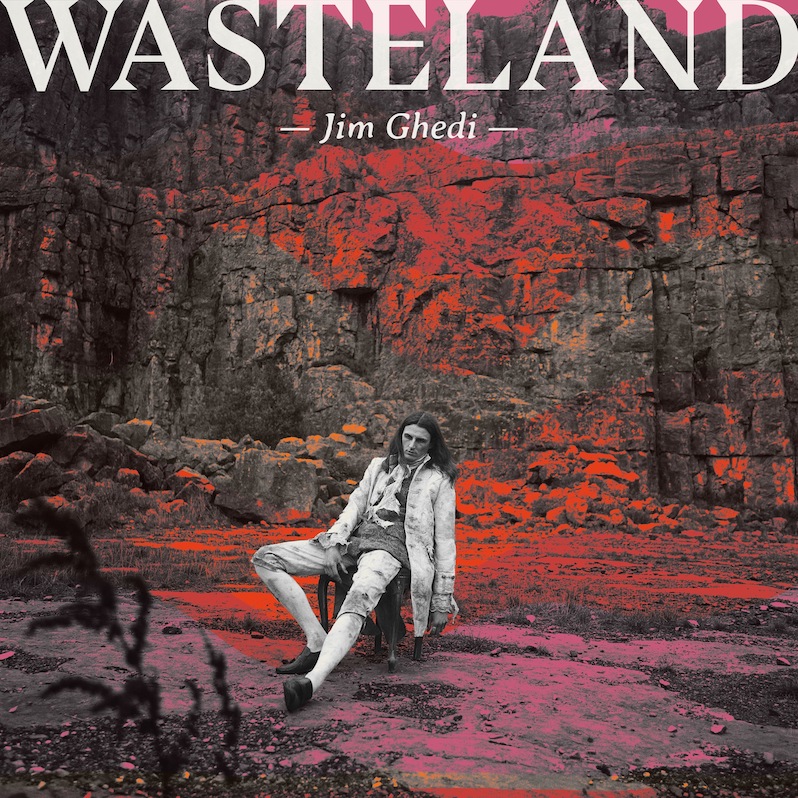
“What Will Become of England,” a lament about the sorrowful state of a nation, is like many folk ballads passed down from singer to singer in that doesn’t have an easily traceable origin. English singer Harry Cox’s rendition was captured in 1953 by folk archivist Alan Lomax, and Cox learned it from another musician in a pub but couldn’t remember most of the verses—which is why its first known recording is less than a minute long. But the verses that Cox retained paint both a grim and familiar picture, England or otherwise: “He cannot find employment, for bread his children cry/And hundreds of these children now lay in their graves.”
Jim Ghedi’s version of the song, released 72 years later on his fourth solo album Wasteland, steeps its acid-tongued indictments in ominous drones and a turbulent atmosphere, peering through a blood-soaked gauze inspired by ‘80s-era televised apocalyptic nightmare Threads. Ghedi remarked on the timeliness and timelessness of its complaint, that “you could just be in a pub, and you could hear that conversation tonight, and some old lads just grumbling about it.” Yet while the words haven’t changed, amid its siren-like wails, the situation feels even more dire and his reading of it nothing less than harrowing.
The English singer/songwriter arrives at folk not through traditional channels but a background in D.I.Y. underground rock and an ear for doom metal. His fourth solo album Wasteland is steeped in the lineage of elder scribes, featuring interpretations of songs and words by British troubadour Ewan McColl and poet Joseph Campbell alongside original compositions. Yet where his intricate guitar plucks and stunning vocal range on leadoff track “Old Stones” evoke an England a century or so too early for Brexit, the deep rattle of his guitar’s downtuned strings captures a more contemporary, intense and electrified permutation of folk. An elegy for a friend, “Old Stones” is an impassioned cry of grief (“These hills lay still, knowing they’ve lost one of their own/And light broke through clouded skies and on the moors you loved“) that continuously gathers heat until it erupts into a brightly burning flame.
Where Ghedi’s 2015 debut album Home Is Where I Exist, To Live and To Die featured a more stripped-down approach to instrumental fingerstyle guitar, Wasteland comprises a vaster expanse of musical terrain. Only the guitar and violin instrumental “Newtondale/John Blue” revisits the rustic traditionalism of his debut, while the Ewan McColl composition “Just a Note” finds his impassioned reading accompanied by the stark wheeze of harmonium. But a highlight such as “Sheaf & Feld,” blowing the doors open on side two with a turbulent blast of noise rock, is decidedly radical, an eruption and interruption with intention and fury.
Ghedi approaches every song on Wasteland with reverence and a powerfully emotional delivery, but the original songs provide a showcase for his versatility as an artist, whether through the title track’s Jeff Buckley-like evolution from gentle ballad into a lush and verdant arrangement or the haunting and skeletal verses of “The Wishing Tree” giving way to a widescreen sweep of strings. The baroque phrasings and bleak storytelling is steeped in ages old folk convention, but the sound is something else entirely, reframing the idea of folk through songs with grit, muscle and fire. And yet as part of that lineage, they retain an agelessness that blurs the line between modernity and antiquity. Grumbling about how your country is going to shit is timeless, and so is kicking up the volume and bashing away at an electric guitar.
Label: Basin Rock
Year: 2025
Similar Albums: