

10 Great ambient albums of Fall 2025


Ambient music can less be in the background and more as a way of thinking out loud. Across these noteworthy releases this quarter, artists lean into diverse forms to wrestle with memory, absence and perception. Some here return to the scene after long silences. Others drill into the grain of place or family history, but they share a commonality that small gestures carry big emotional charge.
In these albums, synths, strings, pedal steel and field recordings become tools for asking how sound can hold feeling without freezing it; how it can trace the outline of a city or a childhood garden; how it can make the inaudible or overlooked feel unmistakably present. Rather than offering escapism, these records invite a slower, more deliberate kind of attention.
Taken together, this set of recordings maps out a rare kind of listening. There are albums built like houses of rooms you half remember, records that compress whole days of atmosphere and data into a singular moment, and suites that treat collaboration as a form of shared experience. You might appreciate that the collection presents questions about lineage, community and connection in an uncertain world. There are dedications to parents and grandparents, trios that move like one seamlessly together, and electroacoustic studies that listen to the elements themselves. This column’s works are patient, detailed and quietly radical in how they ask us not just to hear sound, but to feel the spaces and relationships it shapes.
Note: When you buy something through our affiliate links, Treble receives a commission. All albums we cover are chosen by our editors and contributors.
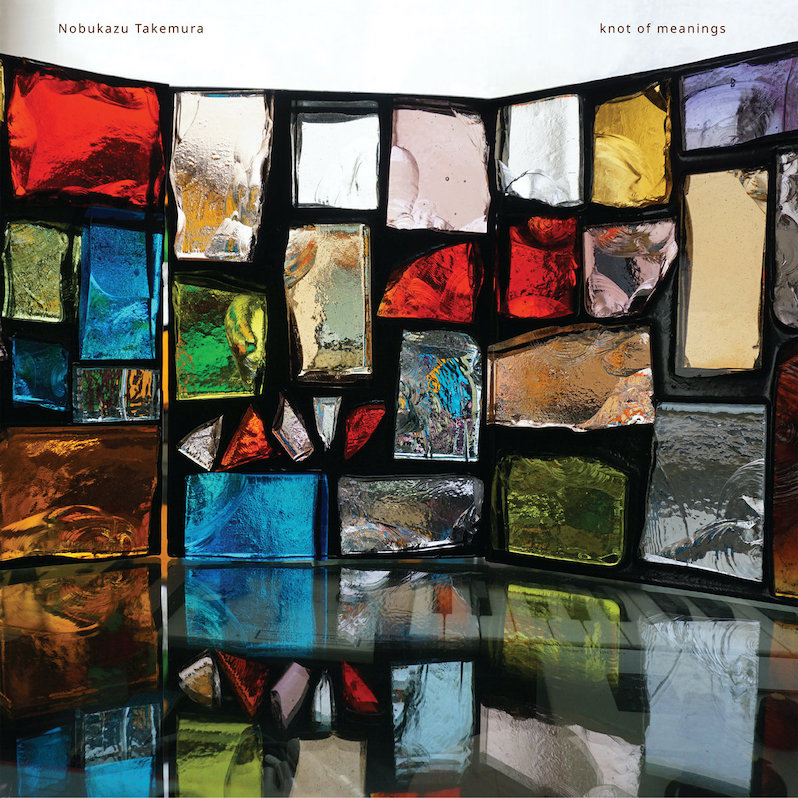
Nobukazu Takemura – knot of meanings
Since launching his career alongside Boredoms’ Yamatsuka Eye in 1990, Nobukazu Takemura has ventured through jazz, minimalism, hip-hop, chamber music and countless genres in between. Along the way, he’s collaborated with boundary-pushing artists such as Tortoise, Yo La Tengo and DJ Spooky, among many others. After a decade-long silence following an extensive discography spanning over 30 releases, Takemura returned in September with knot of meanings, his first full-length since the early 2010s.
The sprawling chaos of Takemura’s early work has given way on knot of meanings to focused experimentation and daring electronic explorations. First presented on the single “ladder of meaning,” Takemura conjures a curious interplay between robotic narration, found sounds, drones and textured atmospheres. It’s hard to categorize because he’s melding abstraction into storytelling. Throughout knot of meanings, he reveals himself again as a relentlessly imaginative architect.
The album opens gently, with synths mingling with acoustic textures on “an ephemeral radiant.” Immediately, the track drifts into the hushed mood of “savonarola’s insight,” where melodic fragments of voice, xylophone and tonal shifts blend like muted acrylic colors in water. On “ocular creature,” keys and accordion engage in whimsical dialogue, guided by a disembodied voice bouncing around the edges, while taking center stage at turns. “afterglow apprehension” leans elegantly into sparse piano lines and refined minimalism, while “veiled grammar” foregrounds woodwinds in delicate microtonal interplay.
If you come expecting ambient order, you’ll find instead a shifting labyrinth of tone poems—each one teasing coherence but delighting in elusion. knot of meanings isn’t a nostalgic return; it’s a reminder that Takemura still composes like a physicist of perception, forever splitting the atom between silence and sound. The result lingers like static after lightning—quietly charged, impossible to contain.
Listen/Buy: Bandcamp
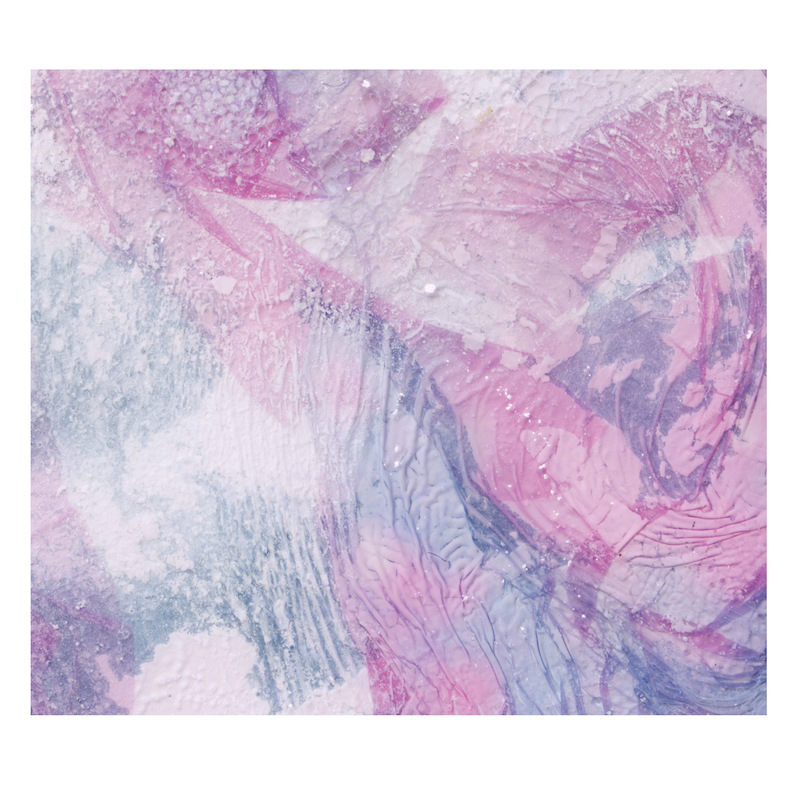
Raica – The Absence of Being
After a decade of silence, Chloe Harris returns as Raica with an album that is garnering lavish praise. It’s all deserved, as this release sounds both wounded and luminous. The Absence of Being feels like a meditation on persistence. It is so compelling across tracks in creating a feeling around how grief reshapes, rather than silences, one’s creative core. Across seven pieces, Harris sculpts slow arcs of synth resonance that recall the sequenced patience of 1970s Berlin electronics, yet the tone is unmistakably intimate.
What stands out is how cuts at points veer into concentric melodies that shimmer in the mind’s eye. Elsewhere, with songs like “Sometimes Sad But Not,” there’s a tense, almost futuristic hum. It traces a line of ache that sits with the listener. The prior track, “The Details,” presents a similar vibe, with a tautness to the synth that feels impossible to avoid.
Why is this album such a standout this year? Its strengths include a sequencing feels organic, almost tidal. There are also a range of recurring rhythms that reappear as echoes rather than repetitions. Moreover, there’s an attention to detail that gives the listener a feeling that there is an emotional throughline for the album. Harris seems to favor clarity over abstraction, though, as each composition feels measured, each swell offering a quiet resolve.
Rather than fading into the background, these tracks feel like they insist on emotional visibility. Harris creates with restraint, yet her outcomes feel raw. The tracks are beautifully done and sure to prompt many to re-listen. By the time The Absence of Being closes, it has folded its sound into an architecture, one you’re unlikely to forget.
Listen/Buy: Bandcamp
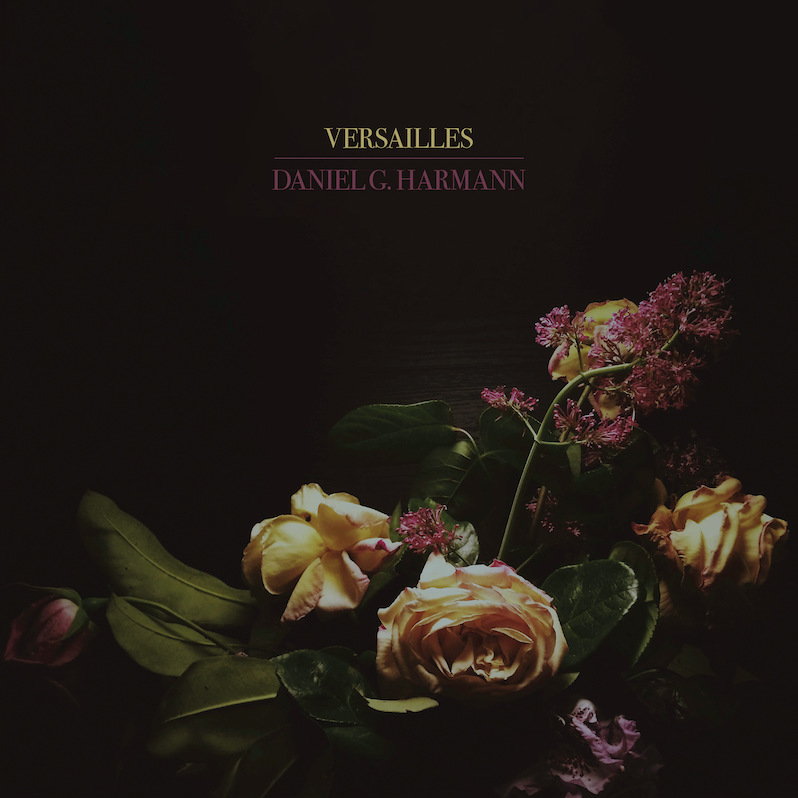
Daniel G. Harmann – Versailles
Speaking of architecture, Daniel G. Harmann’s Versailles may have your imagination conjuring images of the iconic European city with its own sweeping buildings and bridges. However, this tenth album is not nearly that dramatic. Instead, it unfolds with tone and resonance. Harmann’s instrumentation is ornate like the city, yet it is also poised between a touch of silence and release. The result is one of synths exhaling a kind of weathered grace. The influence of legends like Nils Frahm or even a Max Richter might linger at the edges, but Harmann’s touch feels more spectral, more insular to the creation somehow. Each song builds, dissolves and then reappears in altered form, looping back on itself in some instances. Harmann does a beguiling job as a veteran musician. With this album, it’s as if time has changed the meaning of the music, and the experience is enthralling.
If you are a fan of field recordings, you might hear hints of them. Voices, shorelines and more arrive as fleeting apertures, grounding the album’s reverie in life. In the distance, you might hear birds. Elsewhere, the warmth of the outdoors. Harmann’s sense of pacing is cinematic yet unhurried; Versailles breathes, contracts and reforms, evoking decay not as loss but as continuation. The cello and auxiliary synths supplied by Graig Markel add depth without disturbing the stillness, allowing silence to speak as vividly as sound.
As the final notes fade away, Versailles leaves behind a sense of slow afterimage. The beauty of it all is how Harmann somehow evokes the impression of rooms we’ve walked through, but can no longer name. It’s ambient music that is creative yet familiar. Still, Harmann doesn’t resolve his themes or such apparent conflict. Instead, he lets the music oxidize in air, lovely in their erosion from one cut to the next. Versailles is reverent in its patience and rewards you for your time.
Listen/Buy: Bandcamp
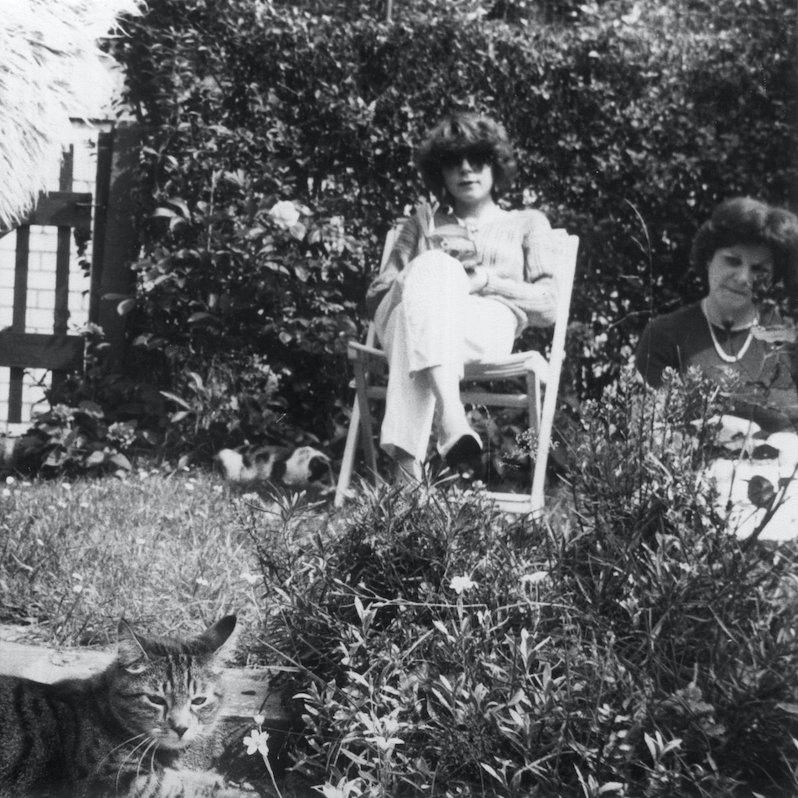
Natasha Pirard – Fernande, Cécile
Natasha Pirard’s Fernande, Cécile listens like a family album unfolding in sound. Across two sides, one devoted to her late grandmother, the other to her mother, Pirard turns remembrance into resonance. It’s a captivating effort that binds fragments of melody to the fragility of life as well as recollection. Produced and mixed by Soulwax‘s David and Stephen Dewaele, the record’s precision feels almost invisible, allowing Pirard’s voice, violin and synth textures to move with breathlike intimacy.
As the close of 2025 approaches, this release has come up in many online comments as one of the better albums of the year. That’s because Fernande carries both a sonic mastery and a story herein. There is the ache of fading memory. There is also the peerless composition, where piano tones dissolve into field recordings, where the flutter of birds and the hush of air blend in with the music. On “Buisson de mûres,” synths magically sewn together become both heartbeat and echo, recalling the childlike wonder of the garden that inspired it. The Cécile half of the LP feels steadier. Its tracks are graceful, nurturing and luminous. Yet throughout both sides, the release has repetitions that are a testament to love’s quiet endurance.
By its end, Fernande, Cécile feels like not only a triumph of a recording, but also just a bit of reclamation. The story of ancestry rendered audible is compelling. Overall, Pirard captures the quiver between remembering and becoming, with an album that permits her lineage to resound in breath and bow stroke. What she builds is a living pulse passed from one generation to the next.
Listen/Buy: Bandcamp | Rough Trade (vinyl)
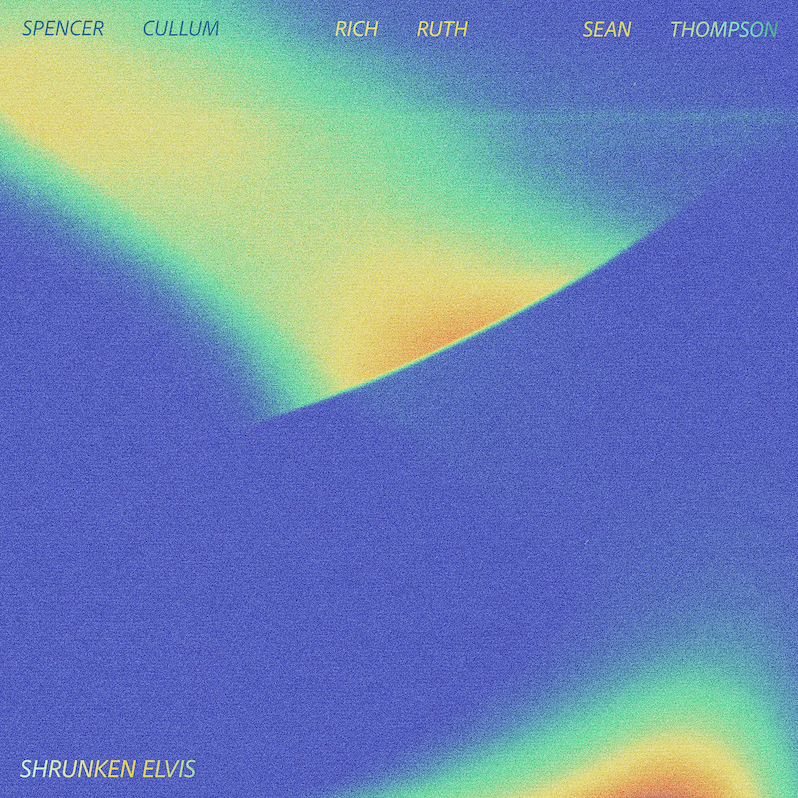
Shrunken Elvis – Shrunken Elvis
There’s a quiet electricity running through Shrunken Elvis, the debut from Spencer Cullum, Sean Thompson, and Rich Ruth. First, there’s the uniqueness of this being a trio. Ambient tends to have so many solo artists that this outfit feels unusual. Regardless, the group offers a chemistry that feels both casual and fated, as if the three are speaking as a solo artist of their own. Born from endless European van miles and rekindled in a Nashville shed, the self-titled record distills a shared obsession with fluid sound: pedal steel sighs, cyclical guitars and vaporous synths circling one another until genre distinctions evaporate.
What’s fascinating about this album is how it is ambient in ways that feel fresh yet familiar. The music unfolds in slow spirals, a meeting point between kosmische repetition and pastoral reverie. Note a cut like “An Old Outlet” to get the gist; it’s organic and analog while feeling forward and electronic. You can trace hints of Ashra’s Correlations or Pat Metheny’s ECM-era drift, but the trio’s dynamic feels unstudied, like three frequencies finding alignment in real time. Ruth’s synth beds hum like weather systems while Cullum’s steel guitar paints streaks of chromatic haze over Thompson’s soft pulse. It’s a wonder and joy to hear.
When the final chord dissolves, you realize this trio has built something light bending and pressure shifting. Songs like “K House” briefly merge sounds before dispersing, a quality you’ll hear through this release. Shrunken Elvis exhales at various turns, leaving you the ponder their bold take on ambient that is both admirable and enjoyable.
Listen/Buy: Bandcamp | Rough Trade (vinyl)
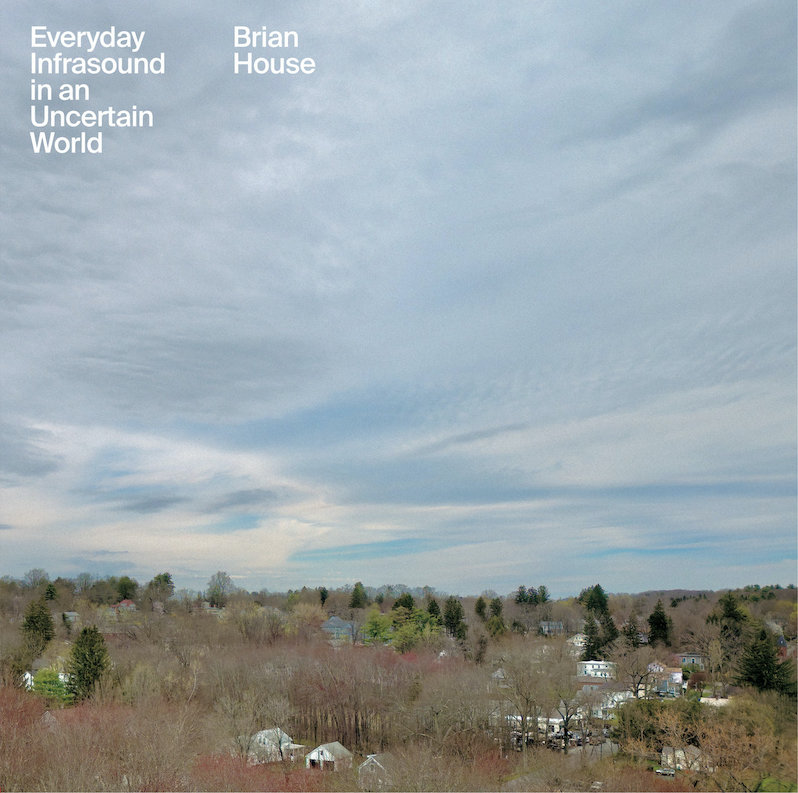
Brian House – Everyday Infrasound in an Uncertain World
Brian House’s latest project makes the inaudible startlingly present. Using self-built “macrophones” modeled after nuclear test detectors, House captures infrasonic vibrations. If you are not familiar (me either), those are the sub-20 Hz murmurs that normally pass beneath human hearing. House then accelerates 24 hours of recording into 24 minutes. The verdict is a planetary auscultation of sorts: It’s one where Amherst, Massachusetts (where the album was recorded) is a resonant body, with its atmosphere setting the tone. Insofar as it relates to the recording, that means transmitting signals from oceans, storms, machinery and seismic throes many miles away.
What we hear is both intimate and cosmic. Over two approximately 12-minute tracks, slow-motion pressures become tremulous drones, tectonic tones and surging resonances that feel halfway between field recording and synthesis. Even sped up by six octaves, the music retains its origin’s scale. What you will discover as you listen is how each tone carries the gravity of distance and time compressed.
Context deepens the sound’s weight: conceived amid Oregon’s wildfires and the artist’s own experience with Lyme disease, the work frames listening as ecological awareness, a reminder that the planet’s pulse runs through us whether we notice or not. It’s a humbling document. The album is scientific in method, yet spiritual in impact. It’s also one where data becomes elegy and atmosphere becomes an instrument.
Albeit brief, listening through Everyday Infrasound is like standing inside a musical nervous system. As the final tones recede, what remains is awareness itself. House creates a sense that the ground beneath us hums with stories too vast for melody. In this outstanding recording, he transforms geophysics into hymn, turning vibration into revelation.
Listen/Buy: Bandcamp
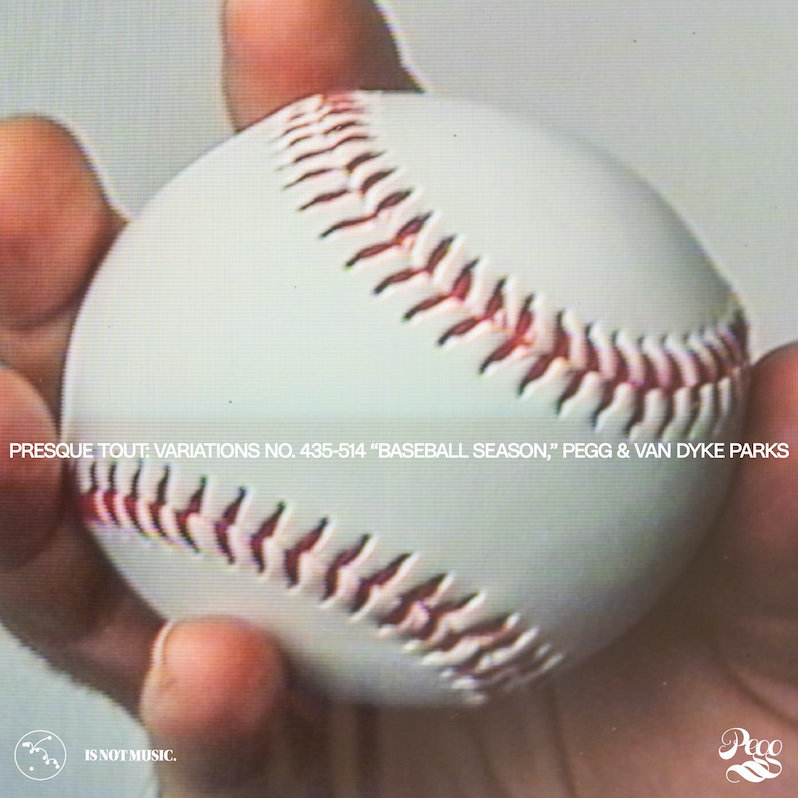
Pegg and Van Dyke Parks – Presque Tout: Variations no. 435–514 “Baseball Season”
Presque Tout: Variations no. 435–514 “Baseball Season” feels like a surreal chamber study. Pegg, which is Brooklyn composer Xander Duell’s collaborative vessel, joins forces with Van Dyke Parks to sculpt a miniature suite that drifts between mischief and melancholy. Strings twist in playful disarray, as if tracing forgotten hymns, while Duell’s vocals hover somewhere between confessional and cabaret. There are so many delightful turns here. Jesse Johnson’s production lends a tactile, dreamlike friction, blurring acoustic and synthetic edges until the whole thing churns with quiet instability.
How does this recording feel so remarkable? Each movement herein behaves like a vignette. For example, “No Dice” skips with lightness and optimism, while “Baseball Season” finds its grace in dissonance. Listen closely and you will find humor, but it’s a tad ghostly. Something like Gershwin seen through warped glass, an avant-garde tint that is both quaint and post-industrial. The project’s conceptual sprawl, extending from physical puzzles to live listening events, makes the music feel like part of an organism rather than a static release.
As it closes, Presque Tout leaves you smiling at its audacity. It’s a puzzle that beckons with charm and subversion. Pegg and Parks stretch sophistication until it frays into whimsy. The release ultimately crafts a miniature universe where absurdity and elegance dance in perfect counterpoint.
Listen/Buy: Bandcamp
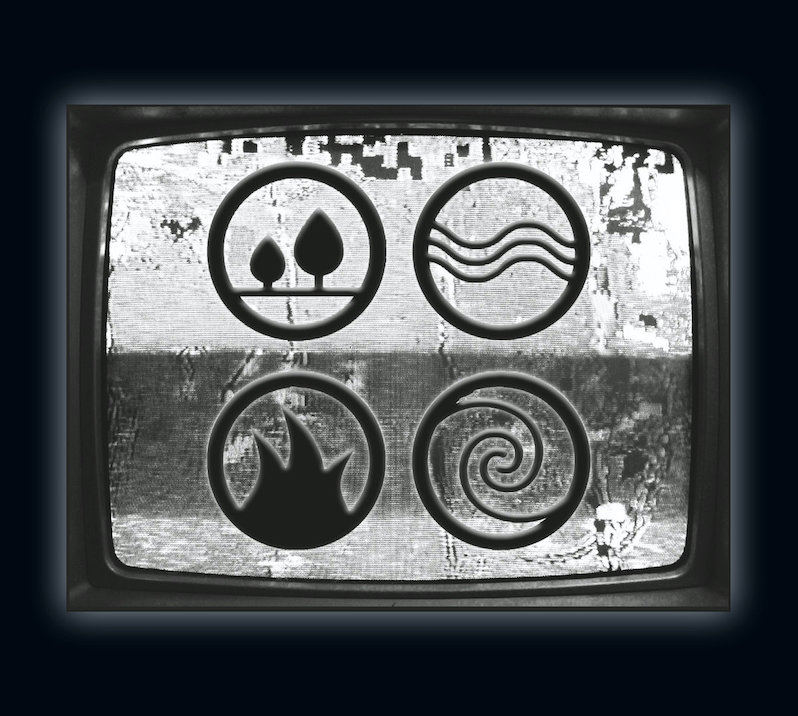
Various Artists – Elemental Studies
Compilations can be disjointed at times, which is troublesome given ambient’s proclivity for collections. However, Elemental Studies plays like a weather system in crossfade, with twelve concise originals mirrored by twelve reworks. You are likely to adore it, because each song traces the air with tactile precision. Jos Smolders’ “Airborn” is vaporous and weightless, Darren McClure’s “Flow” moves like capillary action, and Das Synthetische Mischgewebe’s “Ventilate” rasps with the grit of ductwork, Meanwhile, Vitor Joaquim’s “Dust” refracts Handel into a particulate shimmer.
Other instances feel dense and sedimentary—Simon Šerc’s “Landmass” feels tectonic, PBK’s “Terrestrial” is ferric and muffled. “Fire” arrives in quick flare-ups: In parallel, Mick Chillage’s “Blaze” glows, as Schneider TM’s “Flare” crackles with filament bite. Elsewhere, water pools and shears on songs like Porya Hatami’s “Lumière.” It’s a prismatic cut. In addition, Illusion of Safety’s “Adrift” is likely to pull you into the undertow, As well, Massimo Toniutti’s “Current” eddies, while Andrew Lagowski’s “Wake” leaves a pressure ridge.
The second half of the compilation keeps us the great energy. It doesn’t decorate so much as refract. Gaël Segalen’s “Flammerole” smears thermals, In addition, Hilde Marie Holsen’s “Støv” atomizes, and Stephanie Merchak’s “Slow Combustion” turns “Blaze” into a long fuse. Finally, Femanyst’s response to “Flare” sharpens the heat into angles. As a listening experience, the recording reads as compact climatology: featuring electroacoustic silt, cine-grain, tuned noise and hush. Short forms, big agency. The sound is auscultated.
Across its twin halves, Elemental Studies achieves rare balance, with each artist’s hand distinct, yet collectively attuned to the same sound. The compilation’s power lies in attentiveness to a listening so acute it almost feels geological.
Listen/Buy: Bandcamp
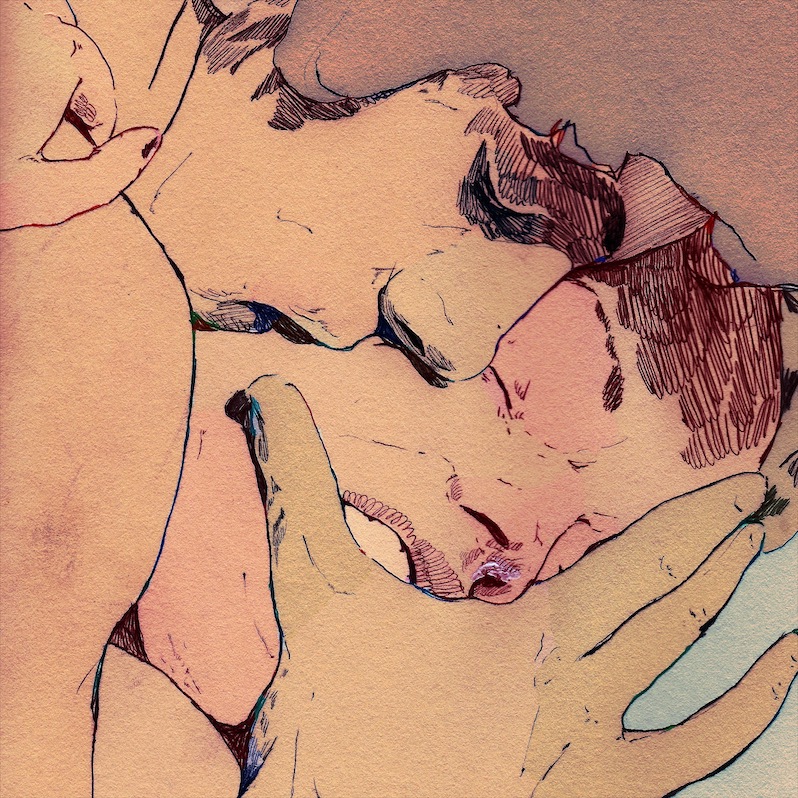
Aris Kindt – Now Claims My Timid Heart
Francis Harris and Gabe Hedrick’s return as Aris Kindt feels like correspondence from a sealed room. The marvelous duo delivered a stunning recording in 2017 with Swann and Odette and 2015’s Floods. With this latest release, these are letters written to no one, but the echo itself.
It’s less curiosity and more paradox. The challenge is how Now Claims My Timid Heart moves within that paradox. Fortunately, the pair make it feel relaxed. You will detect deeply personal yet chillingly remote, emotional resonance shaped through tone rather than melody. The long-form compositions saunter, with loops passing through layers of convoluted reverb until they feel more like environments than songs.
Each track suggests a private chamber in Franz Kafka’s imagined house of mirrors, with language collapsing under its own self-awareness. “Letters to Felice” stands out for its unsettling brightness, a pulse of synthetic life within an otherwise airless place. Elsewhere, “Time Measures” and “They Have the World Behind Them” trace the tension between intimacy and distance, mechanical pulse and fragile breath.
Harris and Hedrick’s precision yields a strangely human austerity. This is music that gazes back at the listener with surgical calm. Now Claims My Timid Heart doesn’t so much play as unfold, though. It feels at turns like this thing you were never meant to read. Almost a delicacy preserved in formaldehyde.
By its final passage, Now Claims My Timid Heart dissolves gently into vapor. Harris and Hedrick capture emotion at its molecular level. The record closes like a letter sealed, but never sent, You depart with meaning that is diffused yet unmistakably human.
Listen/Buy: Bandcamp
Lawrence English & Stephen Vitiello – Trinity
With Trinity, Lawrence English and Stephen Vitiello extend their long-running dialogue into something tenderly unpredictable. This is their third collaboration, and it builds a lattice of shared attention. Each of the five pieces is structured around a different guest whose presence subtly distorts the duo’s familiar terrain. There’s pianist Chris Abrahams (The Necks), who opens the record on “With Chris.” His measured phrasing goes glinting like moonlight on shaky water, while the surrounding electronics recoil with patient tension.
Elsewhere, Marina Rosenfeld’s turntable atmospherics scrape against the grain of English’s magnificent textures; and, on another song, former Fugazi drummer Brendan Canty’s percussive details animate the surfaces like rainfall. Meanwhile, Aki Onda’s contribution lends flickering intimacy, and the late Steve Roden’s appearance closes the album as a kind of invocation. Given Roden’s passing this feels fragile, luminous and nearly gone.
Throughout this LP, English and Vitiello balance the physicality of sound with its evanescence. Their use of space is painterly, a kind that makes each collaboration feel like a different piece within the same gallery. Trinity is a study in porousness. The artists cast forward five encounters that collapse distance, while letting collaboration become a form of listening itself.
Trinity concludes with absorption. It’s the sound of two artists disappearing into their collaborators’ frequencies. Each piece opens a portal. By the end, we the audience have wandered through five entirely different skies. There is quiet brilliance to this, and it lies in how these impressive performers teach us to listen to connection itself.
Listen/Buy: Bandcamp | Rough Trade (vinyl)
All Things Considered
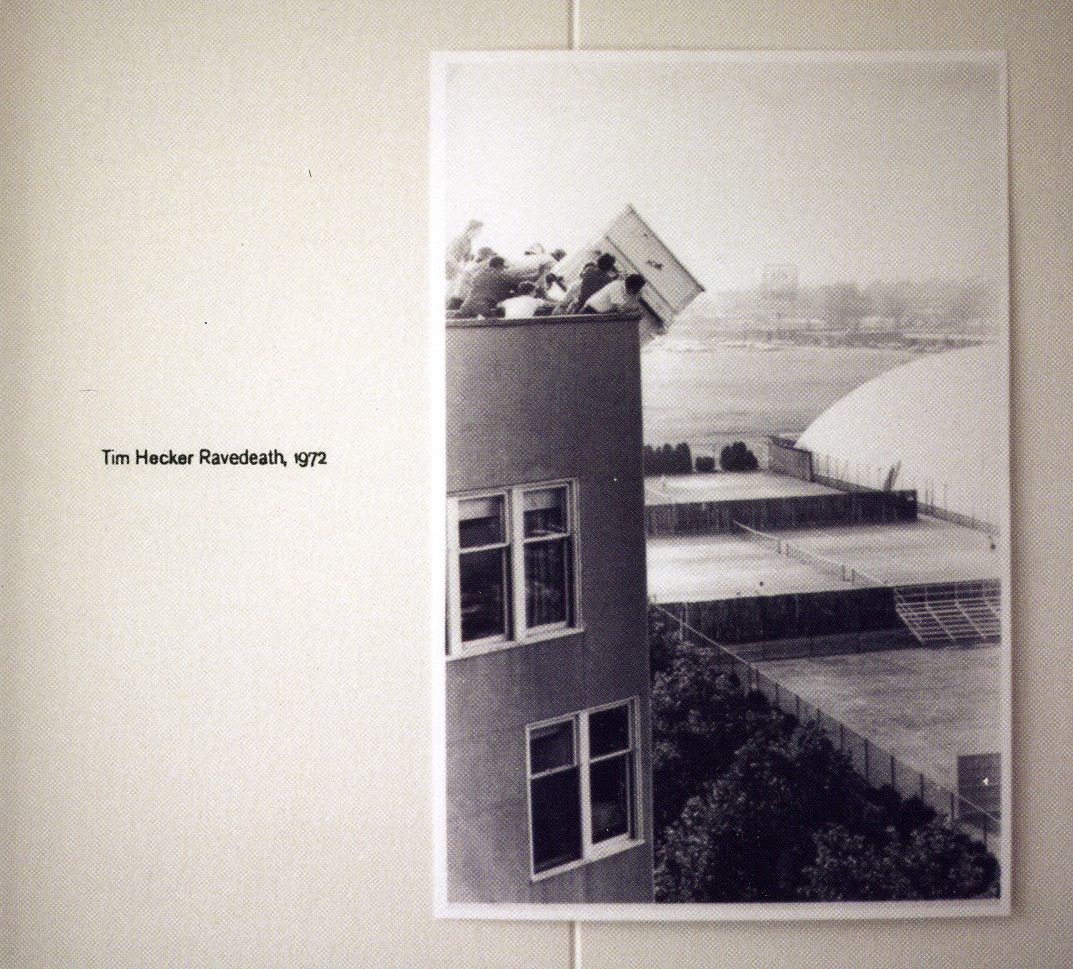
Tim Hecker – Ravedeath, 1972
Among the legendary ambient releases out there, Tim Hecker’s Ravedeath, 1972 has to me always felt like walking through a cathedral that is being demolished in slow motion. It was recorded around a pipe organ in Iceland, and its pieces move between reverence and wreckage, with the compositions constantly being threatened by distortion.
Leadoff track “The Piano Drop” sets the tone. Rhythms swell, then buckle under static and overloaded frequencies. It’s a fantastic opener, setting the pace for an album is less about beauty or noise alone than about how the two corrode and illuminate one another.
Across its length, Ravedeath, 1972 keeps returning to that tension between collapse and grace. Tracks blur into each other in a haze of organ smears, tape hiss and digital abrasion. Yet, within the fog, there are tiny phrases that feel almost heartbreakingly clear. You hear it on “In The Fog” and “Hatred of Music” where themes seem to rise, then dissolve before you can fully grasp them. Hecker leans into disorientation, but there is always a sense of structure. It floats like a stream beneath the interference that keeps the record from drifting into pure abstraction.
What makes the album so enduring (and loved among a catalog of many ambient bangers—if there was ever such a thing as an ambient banger) is how it plays with scale. At points, the album feels planetary, with low frequencies that move like audio fronts and with high tones that flash like distant alarms. At others, it shrinks to the size of dust. There’s the delicious decay on the organ, the way sounds rub out around the edges. Hecker suggests something recorded over, saved, then partly erased. It is music about the lifespan of media as much as it is about harmony. This 2011 classic is a reminder that every file and format carries its own built-in ruin.
By the time Ravedeath, 1972 closes, it leaves a strong impression of something that has been passed through the circuitry of the present and only partially survived. The full-length lingers as a vibe more than a set of songs. Moreover, it’s almost a space where drone and liturgical music are melted down into a single, uncertain glow. Hecker captures the feeling of watching a system fail in slow motion. Nonetheless, the gorgeousness of the record is finding strange solace in the artifacts that remain. It is a landmark album because it treats distortion less as damage. Rather it is another way of hearing the world come apart.
Listen/Buy: Bandcamp
Treble is supported by its patrons. Become a member of our Patreon, get access to subscriber benefits, and help an independent media outlet continue delivering articles like these.
