
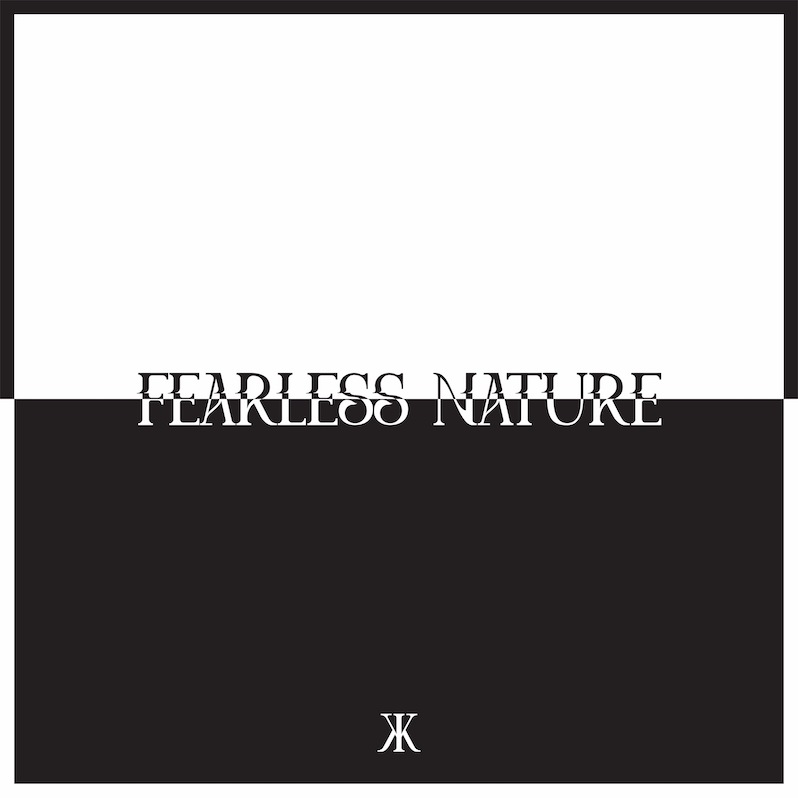
Kid Kapichi : Fearless Nature

It’s fitting that Kid Kapichi’s latest release represents a marked shift away from the grotty, angular punk rock sound that they established on their debut back in 2021, and that’s because their fourth album, Fearless Nature, is the first the band have released as a duo. Former drummer Ben Beetham and guitarist George MacDonald did have a hand in the writing and recording of the album (with Beetham also sporting a producing credit) but it’s vocalist and guitarist Jack Wilson and bassist Eddie Lewis who, following the amicable split, are set to carry this album forward—making it the de facto harbinger of the band’s brand new era.
What can we expect from the new incarnation of Kid Kapichi, then? Well, according to Fearless Nature, we’re looking at a lot less pummelling, punky immediacy, and a lot more eerie, atmospheric slow-burners. Which is not to say that the new record remotely compromises on intensity; rather, while former Kid Kapichi releases have represented something of a metaphorical bucket of water to the face, Fearless Nature finds the band far more interested in capturing the sense of being trapped in an underground room that’s slowly but surely flooding. The new record dips its fingers into an array of different genres—we’ve got the disco-tinged “Shoe Size,” for example, the country-inspired “If You’ve Got Legs,” and “Patience,” which wouldn’t sound too out of place on Beck’s Mellow Gold—but the common theme that binds each track together is a truly palpable sense of dread. The album quite expertly conveys a heavy, cloying sense that we’re never too far away from disaster —though one that’s inextricably baked into the numbing depravity of modern life, rather than anything that might eventually jump out at you and allow for the bliss that is the relief of tension. It’s true that there are a handful of songs on Fearless Nature that don’t manage to make this suffocating doom feel quite as immersive as it should be, and, given the seemingly intentional absence of the fierce, provocative sneering that defined the band’s persona on previous records, this does leave portions of the album falling a little flat. Thankfully, such missteps are quite comfortably in the minority.
The band’s decision to shy away from the sonic trappings of punk sees them explore fresh lyrical territory as well. Fearless Nature is easily Kid Kapichi’s most self-reflective effort to date, with perhaps just a smattering of sentences dedicated to getting in the political jabs that would once have been the focal point of an entire record. Instead, Wilson looks inward—at his toxic relationships (“Worst Kept Secret”), his mental health (“Head Right”), and at the pressures he felt from the expectations foisted upon him by the punk scene’s “live fast, die young” mentality (“Stainless Steel”). The result is some of the most biting, shocking, and impactful lyricism of the band’s career, and is without a doubt one of Fearless Nature’s most commendable achievements.
Breaching this new ground has allowed the band to mine far richer emotional seams and harness a very real sense of vulnerability that contrasts all too easily with the tone of their past output—the immensely enjoyable but distinctly one-note nihilistic mockery of the hard-partying punk-rocker. One only needs to compare “Tamagotchi” from the band’s last album, There Goes The Neighbourhood, with “Rabbit Hole” from Fearless Nature to see this exact kind of difference at play. The two songs deal with essentially the same topic—childhood nostalgia—but “Rabbit Hole” approaches subject matter with a beautiful mixture of bleak sorrow and battered optimism entirely that is inaccessible by “Tamagotchi,” which kicks off in a disengaged smirk and does everything it can to ensure that it’s still there when the song eventually comes to an end.
Perhaps this is all yet more proof that punk is dead. But if the trade-off is more songs that conjure up an all-encompassing bubble of emotion while plumbing ever-greater introspective depths, it’s hard to get that mad about it.
Label: Spinefarm
Year: 2026
Similar Albums: