

10 Great Ambient Albums from Spring 2026


I am currently reading Nathan Ballingrud’s Lunar Gothic series. As I wait for the final installment to drop next year, it has been a rich occasion to revisit his earlier work. His sense of cosmic and emotional dread can sit with you the way one sits with a long drone or a slowly evolving tone, allowing meaning to accumulate.
Among my favorites, from the collection Wounds: Six Stories from the Border of Hell, is “The Diabolist.” It’s framed around a young girl, Tina, whose father, an occultist, has died. Exploring his laboratory for the first time, she discovers an imp he summoned from Hell, who arrived in liquid form, imprisoned in a tank. After the father’s death, Tina gradually uncovers the strange relationship between her father and the creature, brought from the nether regions in a failed attempt to resurrect Tina’s deceased mother.
What makes the story remarkable is that much of it is narrated from the imp’s perspective. It struggles to understand why human beings experience themselves as isolated selves rather than as expressions of a larger whole. In this struggle, it maps something close to the phenomenology of ambient listening.
The imp is not malicious in any conventional sense—it’s curious, lonely and bewildered by human interiority. “I did not know my own individuality,” it reflects, “until I was peeled from a shared consciousness and from my own body, to be imprisoned as an isolated scrap of thought in a vat.” This is the terror of individuation—the shock of the bounded self—violently severed from a bulk with an almost clinical oddness.
As the imp observes Tina and her father, the story’s horror quietly relocates itself. Tina’s father was emotionally distant, consumed by his occult work, incapable of the very presence his research was meant to conjure. Tina grew up unseen and largely unloved. The imp becomes an unlikely witness to that human failure to close the distance between two people who ostensibly love one another. “The Diabolist”‘s deepest pain is not supernatural. It is loneliness built into individuality. Language and touch and longing may narrow it, but can never fully cross.
This is the emotional territory ambient music has always inhabited. Not escapism, exactly. Such feelings undergird this season’s selections.
Note: When you buy something through our affiliate links, Treble receives a commission. All albums we cover are chosen by our editors and contributors.

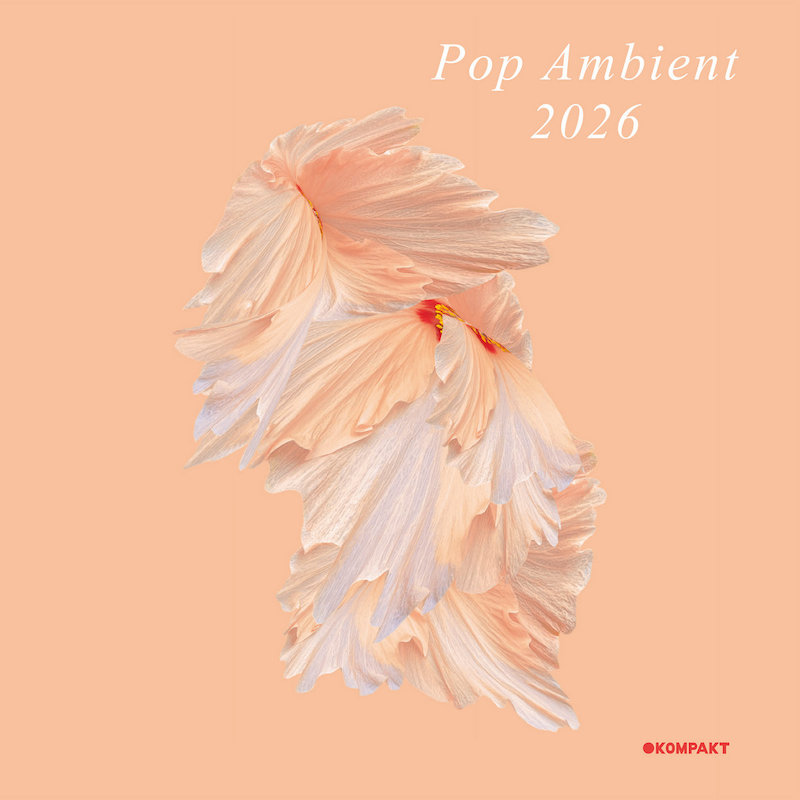
Various Artists — Pop Ambient 2026
For 26 years, Cologne’s Kompakt Records has released its annual Pop Ambient compilation as a kind of barometric reading of ambient music’s inner weather. The 2026 edition, curated as always by label co-founder Wolfgang Voigt, arrives less as a new statement than as a continuation of an unbroken philosophical argument: that stillness is never truly still.
This album arrives in ways that feel less decorative than genuinely structural. There is something always quietly shifting beneath the surface here, even when the surface seems unbroken. What distinguishes this installment from its predecessors is a tension between the human and the post-human that runs through the tracklist like an undercurrent. Japanese newcomer Micå opens proceedings with “Echoes of Blue,” a delicate piano piece whose effects buzz across an otherwise vacant sonic landscape. Segensklang’s entry unspools a two-note string figure at an almost geological tempo, like Debussy heard through the wrong end of a telescope. Pass Into Silence, a name once synonymous with the series’ earliest, most unguarded iterations, returns after a years-long absence to contribute “Pale Blue Dot,” which refits Brian Eno’s Apollo: Atmospheres & Soundtracks. Here, a Fender Rhodes wanders across a locked pedal steel drone, half-searching, half-resigned. Nearby, Morgen Wurde and Tetsuroh Konishi weave Jon Hassell-flavored trumpet through neon modular architectures and a woozy harmonium.
But the record’s deeper logic emerges in its second half, where the human gestures slowly contract. Max Wurden and Lukas Schäfer’s “Analysis of Variance IV” achieves something phosphorescent. The album sits notably closer to Eno’s original ambient template than the post-Tim Hecker granulations that have recently redefined the genre’s outer edges. Richard Ojijo’s “Verzettelung Live@Filmforum” traces the microglitch lineage of the series’ earliest volumes. Luis Reich’s “Distant Ort” is architectural in its austerity; there, a sustained harmonium drone, a sub-bass pulse and then, startlingly, a three-note figure that lands somewhere between Roy Orbison and Derek Bailey without quite resolving into either. Elsewhere, Dirk Leyers closes the sequence with “Regolith,” elegiac synth pads apparently adrift on solar winds above chords that Angelo Badalamenti might have scored for a moon landing that never came.
The album’s governing metaphor, then, is of enclosure from within. It is not isolation but a slow, dignified diminishment of the human, replaced by textures that don’t pretend to mean anything beyond their own presence. For an ambient series now in its third decade, Pop Ambient 2026 carries its longevity with a convincing nonchalance, as though it simply cannot imagine the conversation ending.
Listen/Buy: Bandcamp | Rough Trade
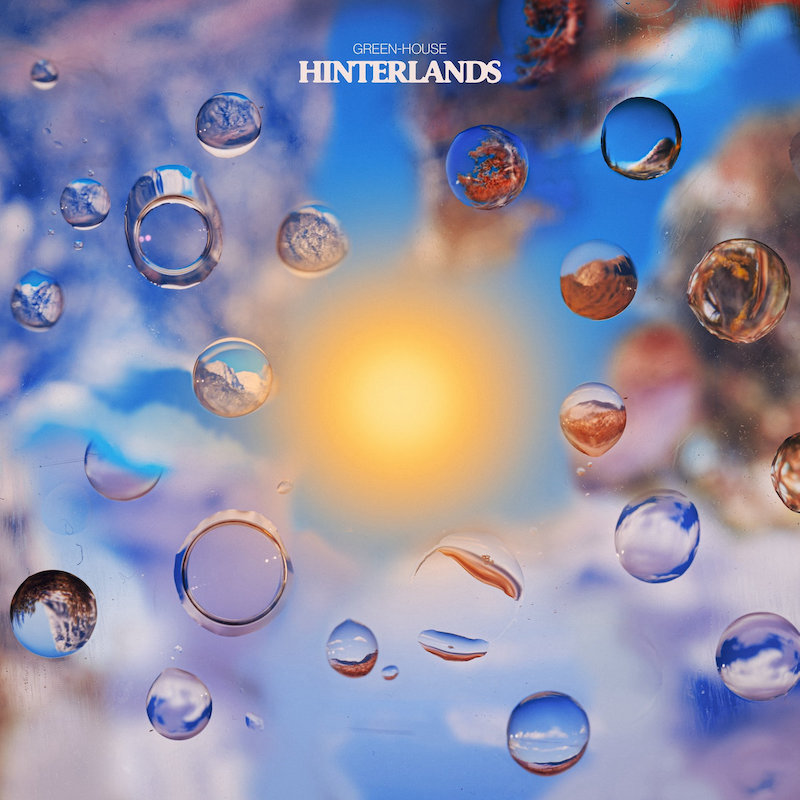
Green-House — Hinterlands
The third album from L.A. duo Green-House arrives bearing an idea that joy, rendered with enough precision and rigor, becomes a powerful act. Olive Ardizoni and Michael Flanagan make music with what they call “defiant, radical sincerity,” and Hinterlands, their debut for Ghostly International after two albums on Leaving, is the most expansive expression of that sincerity yet.
The duo’s creative method is structural as well as temperamental: Ardizoni gravitates toward melody, Flanagan toward harmonics, and the power of their collaboration lies in how those inclinations interweave to achieve a depth neither approach would reach alone. What strikes immediately is the album’s restlessness. Hinterlands contains passages that recall Haruomi Hosono’s environmental music experiments of the late 1970s. It offers a sense of sonic space as an object in itself, alongside gestures toward the Penguin Cafe Orchestra’s warm, counterpoint-driven folk miniatures. Listen again and you may catch the BBC Radiophonic Workshop’s methodical strangeness and the cinematic pastoral of Sándor Reisenbüchler’s animated films. Pieces like “Sun Dogs” fold languid exotica with quietly interwoven timbres and tones, while “Well of the World” is built on treated kalimba and xylophones, and “Dragline Silk” becomes a flute-and-guitar duet whose swing suggests a kind of chamber music. The album also draws on a touchstone its creators name directly: the Final Fantasy game soundtracks, whose composers understood that innocence, rendered with sufficient craft, could achieve something closer to sublimity than sentiment.
The ambient tag feels increasingly inadequate here, as the album drifts into IDM, modern classical and even synth-pop territory. What remains constant is the duo’s insistence that happiness and joy deserve the same aesthetic seriousness usually reserved for anguish or dread. Their hope, as the pair has explained, is borne of necessity: as Los Angeles artists whose creative lives were disrupted by the 2025 wildfires, imagining better worlds becomes less an escapist indulgence than a survival strategy.
The album’s 12 tracks rarely exceed three minutes, which gives Hinterlands something of the quality of a carefully assembled herbarium. “Under the Oak” is as lucid a piece of synth pastoralism as the year is likely to offer, sitting still long enough to reward sustained attention. “Valley of Blue” closes things with a kind of luminous uncertainty. Green-House have made the case, convincingly and without polemical machinery, that ecological attentiveness and musical pleasure are the same activity performed twice.
Listen/Buy: Bandcamp | Rough Trade (vinyl)
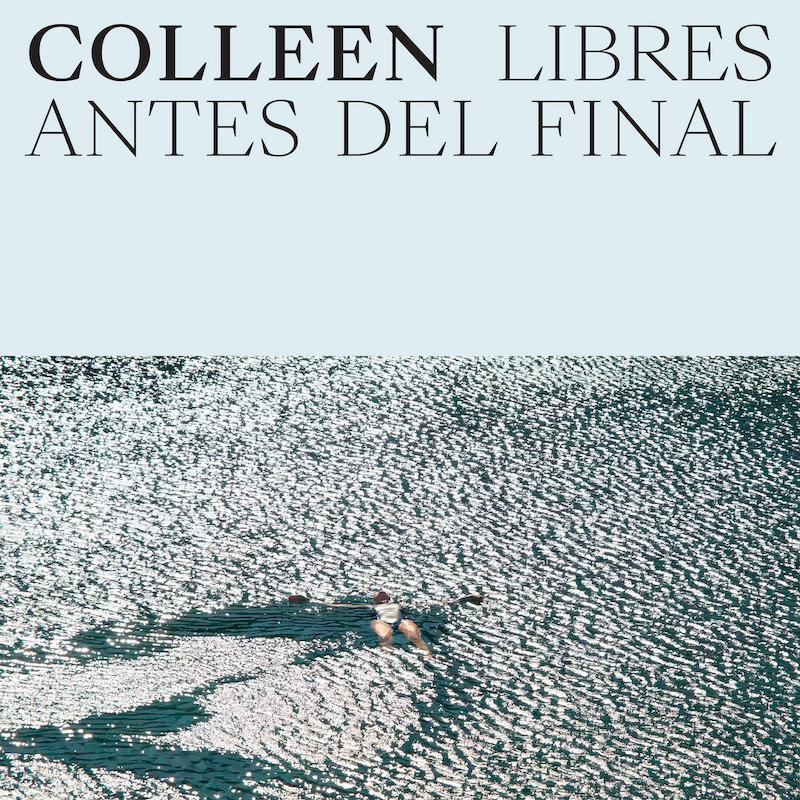
Colleen — Libres antes del final
Cécile Schott’s work as Colleen has always functioned as a kind of autobiography in sonic parameters. Her albums have arrived with unusual fidelity, onto whatever existential terrain she happens to be crossing. The music boxes of Colleen et les boîtes à musique, the baroque strings of Les ondes silencieuses, the synthesizer dub architecture of Le jour et la nuit du réel: each record announces both a new set of rules and a new state of mind. Libres antes del final—roughly, “free before the end”—is no exception, and its constraint is the Moog Matriarch synthesizer, recorded and re-amped in Schott’s Barcelona home studio, its signals sent through additional processing at a Lisbon facility to introduce spatial grit and textural unpredictability.
The album was born from a significant biographical rupture: Schott overcame a 30-year water phobia by learning to swim in the open Mediterranean, and the energy of that breakthrough is inscribed throughout the music. The album’s Spanish title and its five Spanish-language track titles (“Puertas de mi cuerpo,” “Aguas abiertas,” “Antídoto”) mark a geographic commitment, a deliberate rootedness in the coastal landscape that made this transformation possible. Such is not incidental. Schott has spent years in Barcelona’s modular synthesis community, and Libres antes del final reflects that deep immersion: the Matriarch is not treated as an instrument to be played, but as an environment.
The album’s emotional architecture is carefully divided: “Mis armas se habían caído al suelo” scatters sonar-like echoes across organ chords before dissolving into oceanic feedback; while the long-form “Aguas abiertas” dives through successive strata of intensity. “Antídoto,” by Schott’s own account the record’s bright counterweight to its prevailing darkness, crests in arpeggiated spirals that suggest something between ecstasy and defiance. The closing title track builds through accumulating urgency toward a resolution unlike anything in Schott’s previous catalog.
Colleen’s music has always been precise to the point of severity, but Libres antes del final introduces a new element: bodily insistence. These tracks offer somatic events, thresholds and crossings. For anyone who has followed this catalog across two decades, the feeling is of watching a musical intelligence arrive, with visible effort and genuine consequence, somewhere it has been approaching for a long time.
Listen/Buy: Bandcamp | Rough Trade (vinyl)
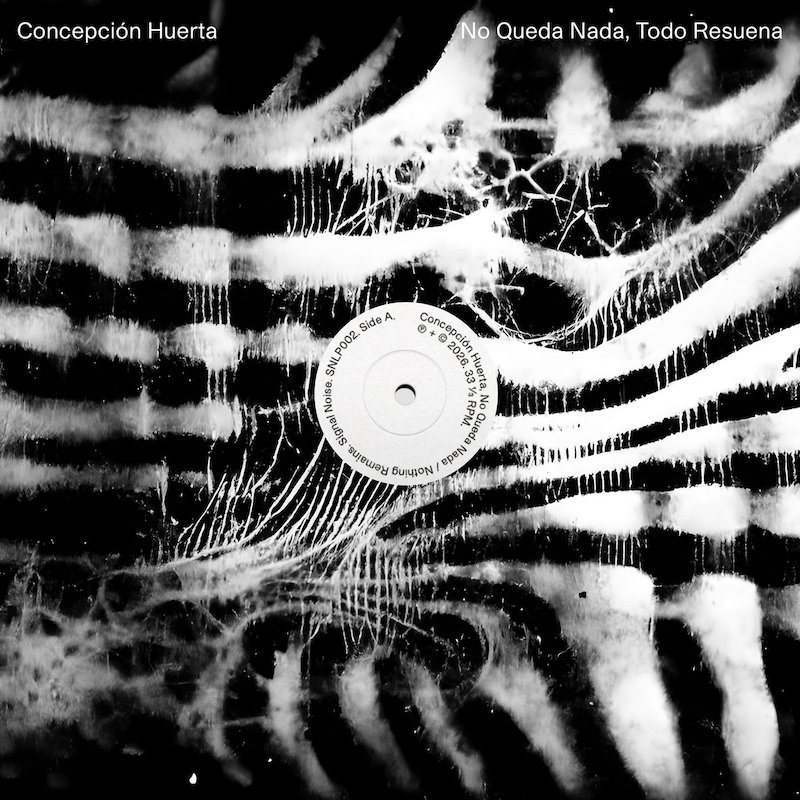
Concepción Huerta — No Queda Nada, Todo Resuena
There is a line of thinking in experimental music that treats the recording medium not as a neutral container but as a participant—a surface with its own grain and deformations. Daphne Oram, the pioneering British electronic composer who worked at the BBC and composed the first electronic soundtrack for a television broadcast, articulated a version of this position in her 1972 book An Individual Note of Music, Sound and Electronics, arguing that captured sounds constitute a form of written memory, not a reproduction of a moment but a transformation of it.
It is from this book that Mexico City and Berlin-based composer Concepción Huerta draws the title of her Signal Noise full-length, No Queda Nada, Todo Resuena—”nothing remains, everything resonates”—though Huerta notes the title represents a variation on Oram’s original phrasing rather than a direct citation. Huerta is drawn above all to the relationship between silence and noise, between politics and bodies. Her albums established her as one of the more consequential voices in Mexico’s experimental underground, a scene that features monumental contemporary figures like Mabe Fratti and the ensemble Amor Muere, of which Huerta has been a member. No Queda Nada, Todo Resuena marks a considered escalation.
The album emerged from a period of study in sonology at The Hague, followed by a residency at Elektronmusikstudion, Sweden’s storied electronic music research facility, whose inventory of antique analog hardware represents one of the most significant collections of its kind in the world. Access to that room of equipment gave Huerta what her prior practice had been building toward: a Buchla 200 modular synthesizer, a technology whose architecture treats voltage as an expressive variable rather than a simple control signal. Paired with magnetic tape and 4-track cassettes, the Buchla became the primary instrument for an extended process of degradation, duplication and deviation. Patches were altered mid-session through voltage manipulation and feedback injection; multitrack machines were used as compositional surfaces. The result, as Huerta describes it, is a kind of sedimented time.
Huerta’s practice has always centered on the manipulation of recordings to create atmospheric textures that hold ambient and noise in productive tension. What No Queda Nada, Todo Resuena achieves is the logical endpoint of that approach. The oscillations and smeared frequencies that characterize the album’s surface are evidence of a process wearing something stranger and more capacious than the original signal contained. The album offers a variety of hints of influence, from Oram through Pierre Henry and Éliane Radigue to contemporary practitioners like Sarah Davachi and Kara-Lis Coverdale, all of whom have treated analog synthesis and tape as generative environments. Still, Huerta’s sensibility is distinctly her own, and more interested in friction than in resolution. Her tracks contrast silence and noise in its most formally ambitious articulation yet.
Its decay, its echo, its residue in the medium that carried it is where the real compositional work takes place. No Queda Nada, Todo Resuena enacts its sound with a rigor and a physical presence that makes it one of the more substantial contributions to this tradition in recent memory.
Listen/Buy: Bandcamp
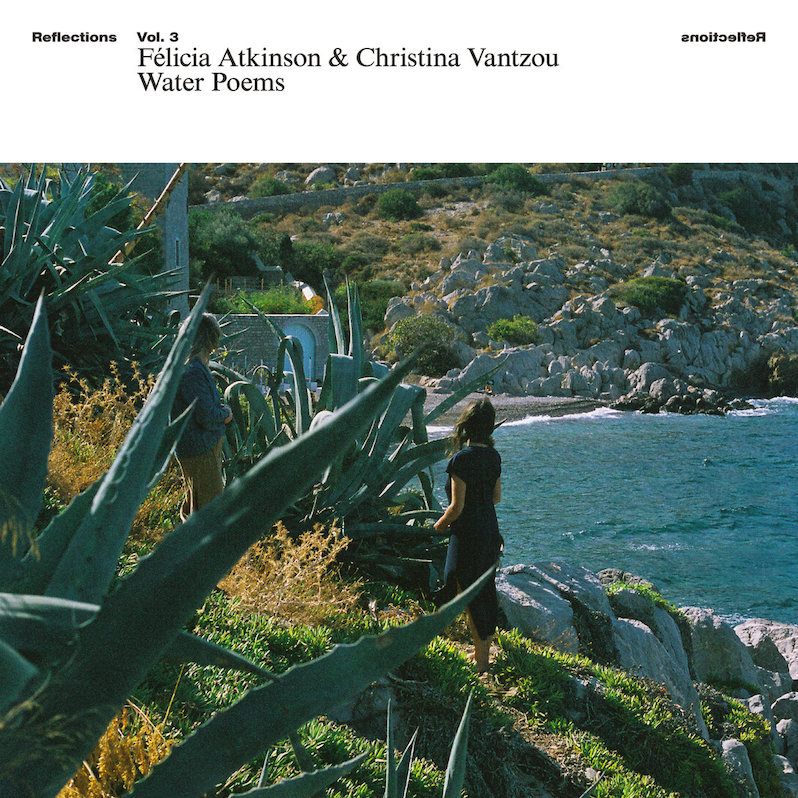
Félicia Atkinson & Christina Vantzou — Reflections Vol. 3: Water Poems
The third installment of RVNG Intl.’s ongoing Reflections series pairs two of the most idiosyncratic composers working in the overlapping territories of electroacoustic music and intimate spoken word. Félicia Atkinson, based on the Normandy coast of France, and Christina Vantzou, resident in Greece, met in 2009 and have performed together intermittently since; their creative relationship crystallized into an album following a 2019 concert at the Philharmonie de Paris. Here, the shared premise is transparent and productive as both artists live by the sea, and the album treats that adjacency as a complex condition.
The duo’s instrumentation is formidable in its breadth, with synthesizers, gongs, metallophones, piano, vibraphone, Fender Rhodes, Mellotron and guitars. John Also Bennett contributes electric lap steel and voice to the closing track. Field recordings from the archeological site at Delphi and from the natural hot spring of Eftalou on Lesvos ground the album in specific, charged topographies. That specificity matters. The field recordings are culturally loaded and seem aimed at situating the album within the heart of Western art history, even as it reaches toward something pre-linguistic.
Both artists’ voices are heard throughout, in English and French, alternately in whisper and in dialogue. When their voices move around each other, curling and overlapping, the words themselves become secondary to the mood they generate. The album’s language gravitates toward elemental wonder: “How can a boat float? How can a body swim? How can a person dream?”—questions posed with a radical innocence that has been earned rather than assumed. Vantzou, who with Adam Wiltzie formed the acclaimed duo The Dead Texan, brings an orchestral intuition that sits in productive friction with Atkinson’s more intimate, spoken-word-centered approach; the track “With / You / Movement / Creatures” draws from the same deep well as Japanese environmental music of the 1980s, with vibraphone and gong beneath Atkinson’s voice.
The closing “Scorpio Purple Skies,” featuring Bennett, is nine minutes of expanding cinematic space, Morricone-esque in its initial architecture before dissolving into something far more uncertain. Water Poems is not an album about the sea so much as an album that uses the sea to think about interiority. The album flows with a majestic poise that demands attentive listening. It arrives as a substantial addition to both artists’ catalogs, and to the ambient tradition’s long conversation with the natural world.
Listen/Buy: Bandcamp
Casts — Desire Path
When Chicago writer and musician Joshua Bohnsack began ketamine-assisted therapy for treatment-resistant depression, he found himself needing something the existing catalog of wellness-adjacent ambient music couldn’t fully provide: sound designed not for relaxation but for the specific, vertiginous work of ego dissolution and its aftermath. The resulting album, made under his Casts moniker, is called Desire Path, a term borrowed from neuroscience’s description of the neural rerouting that psychedelic therapy facilitates.
Bohnsack, known primarily for his work with Gold Dust and as a writer, had to develop an entirely new compositional language for this project. That biographical pressure is audible in the music, which carries the slightly improvised quality of something developed through actual use rather than conceptual design. Through months of in-session testing and recovery-day evaluation, the album was refined toward what was most effective in the moment and most useful in the hours that followed. This gives Desire Path an unusual functional specificity: it is not ambient music that happens to be introspective, but is music engineered for a particular mental state.
The two reference points the album invites, Arthur Russell and Aphex Twin, are more illuminating as a description of poles than of a midpoint. Russell’s work, at its most diffuse, had a quality of suspended, almost involuntary beauty: melody that arrived sideways, as though surprised by itself. Aphex Twin’s ambient catalog, particularly Selected Ambient Works Volume II, operates through a different logic entirely. Desire Path occupies a productive tension between these two registers, its surfaces warm enough to permit surrender while its underlying structures carry something more turbulent about the discomfort that ego dissolution actually involves.
What is curious about the album from the broader therapeutic music conversation is its resistance to the merely soothing. Music made for ketamine sessions has no obligation to be pleasant, only to be navigable, and Bohnsack seems to understand that distinction. The album’s title, after all, refers not to a destination but to a route carved by need. That the album works as a listening experience independent of its original context is a testament to its compositional integrity. For listeners attuned to the long tradition of ambient music made under conditions of psychological extremity, Desire Path is a searching and genuinely affecting addition to that record.
Listen/Buy: Bandcamp
miska lamberg — stillness in their isolation
There is a useful provocation buried in Finnish sound artist miska lamberg’s debut physical release. The two longform pieces that comprise stillness in their isolation are built from recordings of city traffic and air conditioning units respectively. Lamberg’s achievement is to make that noise not merely tolerable but genuinely absorbing, to reveal in it a texture and a depth that patient listening makes available.
The conceptual lineage here is traceable and legible. John Cage, who spent his career arguing that no frequency deserves categorical dismissal, is an obvious ancestor; Pierre Schaeffer’s musique concrète tradition, which first proposed that recorded everyday sounds could be reframed as compositional material, provides the broader historical context. But lamberg is working in a more phenomenological register than either predecessor and, in the process, is engineering an experiential shift. Thus the pieces do not transform their source material through heavy processing. Instead, they work through duration and attention, allowing the listener’s own perception to do the transformative labor.
“Transportation,” built from city traffic recordings, operates according to a logic of gradual differentiation. “Ventilation,” built from the sounds of air conditioning systems, is more abstract and more meditative, its sustained frequencies occupying the body in ways that conventional instrumental music rarely achieves. Both pieces share a quality that is difficult to name precisely and yet they hold an ontological distinction.
One of the pleasures here is the reclamation of sonic attention in an environment designed to overwhelm and fragment it. stillness in their isolation is ambient in the most rigorous sense: music that exists in the environment rather than apart from it. It is patient work from an artist whose subsequent output will be worth watching closely.
Listen/Buy: Bandcamp
The Thinking of the World World Began Pounding In Our Ears The Moment We Hit Shore — The Thinking of the World Began Pounding In Our Ears The Moment We Hit Shore
There is something deliberately, almost defiantly unwieldy about naming a musical project “The Thinking of the World Began Pounding In Our Ears The Moment We Hit Shore.” Awful branding and recall, and also a clear intention to operate outside the normal terms of legibility. Florian TM Zeisig, whose solo work and contributions to projects like Spool and NUG have established a track record of thoughtful experimentation, deploys the name as both provocation and protective camouflage: whatever happens inside the music, you cannot approach it casually.
What happens inside, it turns out, is a bipolar formal structure that feels less like artistic indecision than like a considered argument about genre’s limitations. The A-side is lopsided, slightly unstable indie rock — carried by Auto-Tuned vocals, saxophone and pedal steel, instruments whose tonal registers sit in discomfort with one another. What’s more, the collaborators Zeisig assembles here, including Mari Maurice Rubio of more eaze, as well as Cal Fish, Róisín Berkeley, Don Lyons, K, Seán Being and JQ, bring distinct musical personalities rather than unified ensemble thinking. The resulting clashing is precisely the point.
The record’s second half slides into what could signal dissolution, but here suggests something more like liquefaction, The form becoming temporarily permeable without disappearing entirely. The warmth that other reviewers have noted throughout the album is of sustained company. These are sounds made by people in a room together, negotiating in real time, and the heat generated by that negotiation persists even across the album’s most abstract passages.
The Auto-Tuned voice is a recurring signature in this moment’s experimental underground, such as those appearing in more eaze’s work, in ambient-adjacent folk and in the fringes of noise. For listeners attuned to the conversation this record enters, The Thinking of the World Began Pounding In Our Ears The Moment We Hit Shore is a compelling new voice. The beauty is in being unpredictable in its movements, and honest in its contradictions.
Listen/Buy: Bandcamp
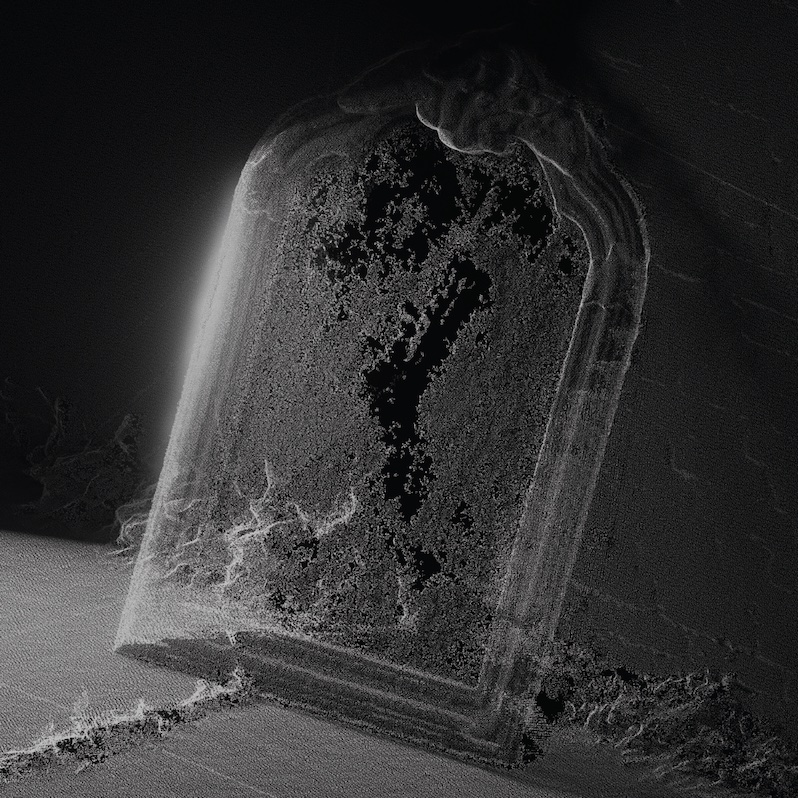
Visible Cloaks — Paradessence
“Paradessence” (as Spencer Doran discussed with Treble recently) is a term coined by the novelist Alex Shakar in his 2001 debut The Savage Girl, in which a cynical marketing guru describes the “broken soul” at the center of every consumer product. Spencer Doran and Ryan Carlile, the Portland duo behind Visible Cloaks, have borrowed this concept as a structural blueprint, organizing their third full-length album around exactly the kinds of productive internal contradiction that Shakar identified as engines of longing. So, you are treated to an album that is artificial and organic, chance-derived and meticulously composed, intimate and cosmological. It holds all of these simultaneously without resolving into any of them, which turns out to be the right way to make electronic music in 2026.
Paradessence arrives nine years after Reassemblage, the 2017 album that established Visible Cloaks as one of the more consequential voices in the RVNG Intl. constellation. The intervening period has been substantive for both members. Doran compiled the Grammy-nominated Kankyō Ongaku: Japanese Ambient, Environmental & New Age Music 1980-1990, a project that cemented his status as one of the most influential curators of the environmental music tradition, and later scored SEASON: A Letter to the Future, a meditative video game whose spatial audio design required thinking about music as three-dimensional sequence. Carlile, meanwhile, has continued developing generative music systems using code-based environments and synthesis software. Both threads feed directly into Paradessence’s 14 tracks.
The album’s instruments move collectively, in what Doran describes as herd behavior—the way wind across a field of leaves makes air briefly legible. Individual tones protrude, recede and metamorphose, giving each piece the quality of biological process. The album’s pieces breathe and redistribute themselves in ways that are usually reserved for acoustic chamber music.
It bears saying that the collaborators who populate Paradessence constitute something close to a constellation of the RVNG Intl. extended family. Motion Graphics, the producer alias of Joe Williams, who also co-mixed the album, contributes virtual woodwinds to “Disque,” a track that builds through a series of expanding spindles of sound. The interlinked pair “Shapes” and “Thinking” were developed with Yoshio Ojima and Satsuki Shibano, the environmental music pioneers who collaborated with the duo on the intergenerational serenitatem album in 2019. “Thinking” also features Félicia Atkinson reading Ojima’s text in French, a trilingual piece that treats translation itself as a sonic medium. Romanian composer and violinist Ioana Șelaru contributes to “Intarsia,” a piece built around the blurring of her acoustic instrument against virtual string textures. The closing track “System” features Componium Ensemble, Doran’s aleatoric project of self-composing software instruments, in what he describes as a Pessoa-ian gesture of heteronymy.
That Visible Cloaks can sustain this orientation without tipping into wishfulness or irony is a significant achievement, and one that places Paradessence among the more formally accomplished ambient-adjacent records this year. The idea at its center, to borrow Shakar’s phrase, turns out to be rather more intact than the concept implies.
Listen/Buy: Bandcamp | Rough Trade (vinyl)
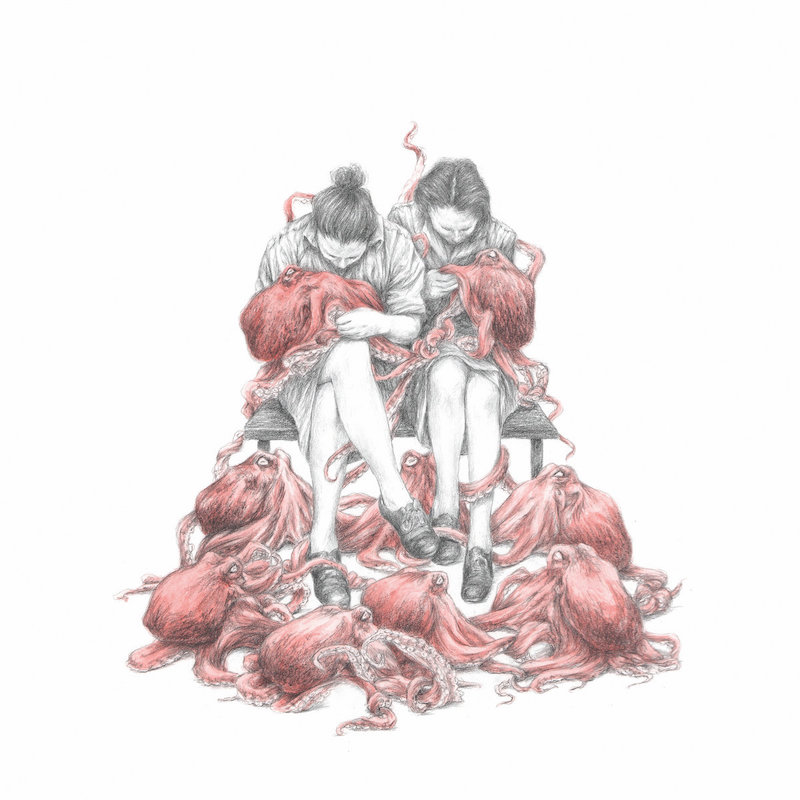
more eaze — sentence structure in the country
Mari Rubio has been one of the more quietly consequential figures in the American underground, moving through noise, glitch-pop and ambient Americana with an intelligence that tends to reveal only in retrospect. sentence structure in the country, her debut for Thrill Jockey, is a consolidation of the moment at which the various competing vocabularies of the more eaze project begin to resolve into something that feels unified without being predictable.
Rubio grew up playing fiddle in folk and country traditions, and while her playing here bears little surface resemblance to those origins, the record’s title acknowledges the vernacular that shaped her musical thinking. This release is thus understood by Rubio herself as a definitive statement of the more eaze approach. The full ensemble she assembles, including percussionist Ryan Sawyer, cellist Alice Gerlach (who also records and performs under the name alice does computer music), and guitarists Wendy Eisenberg, Henry Earnest and Jade Guterman, gives the album an inhabited quality at odds with the digital dissolution one might expect from an artist of Rubio’s lineage.
Auto-Tuned vocal processing produces something quietly unsettling on the opening “leave (again).” Eisenberg, one of the more creative guitarists and improvisers working, contributes not only to the textures but to the album’s emotional scaffolding; her piano on “bad friend” functions as a counterpoint that keeps the song’s electronic center from becoming sentimental. “Distance” creates a landscape of dense harmonies that are inviting, yet impenetrable.
The album’s most striking structural gesture is its refusal to rest. There is country pluck and electronic dissolution. The final track, “move,” has a lullaby-like simplicity that closes the record with something approaching resolution without quite claiming it. sentence structure in the country reveals new layers of intention with an economical surface that turns out to be exceptionally rich.
Listen/Buy: Bandcamp | Rough Trade (vinyl)
Treble is supported by its patrons. Become a member of our Patreon, get access to subscriber benefits, and help an independent media outlet continue delivering articles like these.
