
Various Artists : Help(2)

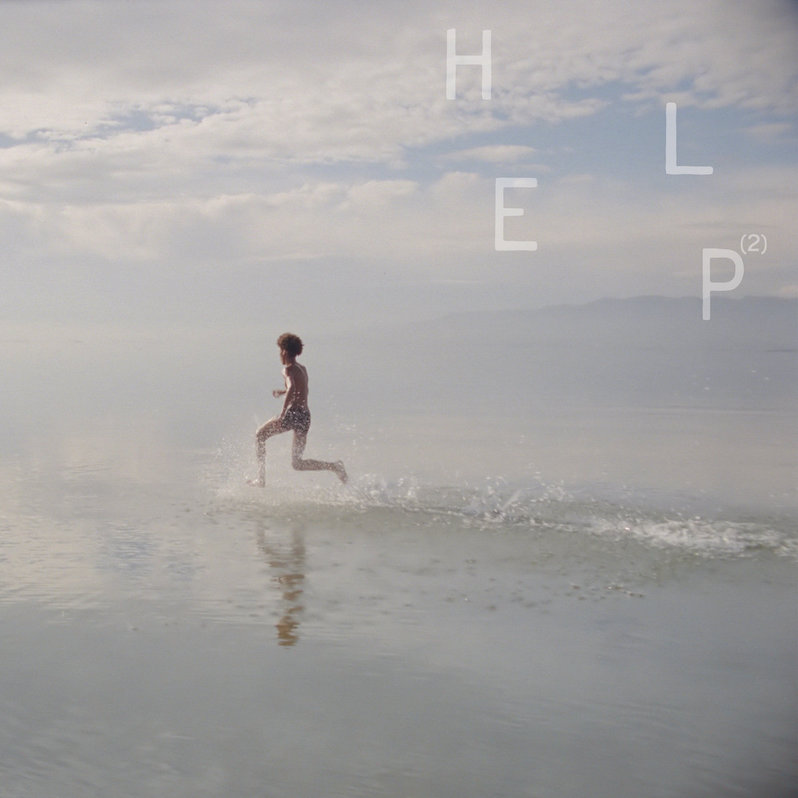
Two weeks after the Battle of Britpop, supposed rivals Oasis and Blur both appeared on a compilation titled Help, giving at least the appearance of a burying of the hatchet for the sake of raising funds to benefit War Child. Never mind the fact that the rivalry was more or less a media creation, one that still seems to provide fodder three decades later, the two bands nonetheless participated in something bigger than a tabloid feud, each playing part in an assemblage of artists that would come to be regarded as a canonical entry in the great Britpop discography. The conceit behind the Brian Eno-produced Help—which also featured Paul McCartney-fronted supergroup The Smokin Mojo Filters, Suede, Portishead, The Stone Roses and the first taste of Radiohead’s OK Computer in the form of “Lucky”—was to bring together some of Great Britain’s greatest contemporary artists to record a full compilation’s worth of songs in a single day, and release the finished product, to benefit victims in war-torn areas, within the week. It’s a pretty good gimmick, and an even better set of music, with more than a million pounds raised for the charity.
More than 30 years later, following a handful of similarly themed War Child benefit comps including A Day in the Life and Heroes, Help sees a proper sequel in the form of Help(2), a double-length collection that recaptures the spirit of its predecessor if not the literal process of creation. Rather than tracking in a single day, producer James Ford (Simian Mobile Disco) invited artists into Abbey Road Studios over the course of a week’s time, the final tracklist comprising music recorded during his residency. And much like the first Help, it’s a cultural time capsule as well as something worth celebrating, even during a time in which acts of war and genocide give us few reasons to do so.
Parallels abound between Help and Help(2), with a handful of the original artists returning in some form. Blur’s Damon Albarn trades verses with Kae Tempest and Fontaines D.C.’s Grian Chatten on the gospel-tinged trip-hop of “Flags,” and Portishead’s Beth Gibbons provides a gorgeously understated cover of the Velvet Underground’s “Sunday Morning.” Oasis is here as well, sort of (though Johnny Depp isn’t, which is for the best), with a live version of “Acquiesce” as a bonus track. And while the absence of Pulp from the original album may or may not be a case of Mandela Effect, their contribution here, “Begging for Change,” is among the best of the bunch, a raucous barnburner reminiscent of Jarvis Cocker’s Further Complications album, its chants of “We are being stripmined by the powers that be/We are being stripmined by the new bourgeoisie” reminiscent of Cocker’s righteous anger on “Running the World.”
Yet while returning artists number in the single digits, there are echoes of the 1995 album to be found throughout Help(2), particularly through its selection of well-chosen covers, like Depeche Mode’s sinister synth-pop take on Buffy Sainte Marie’s “Universal Soldier,” Arooj Aftab & Beck’s stunning version of the jazz standard “Lilac Wine,” previously performed by both Nina Simone and Jeff Buckley, and Beabadoobee’s cover of Elliott Smith’s “Say Yes.” And much in the same way that Help captured the sounds of parallel scenes in trip-hop and Big Beat as well as Britpop, Help(2) casts a comparably wide net, showcasing a diversity of sounds that also includes Mercury Prize-winning jazz ensemble Ezra Collective, the booming and buzzing sounds of genre-shifting group Young Fathers, and the future R&B of Sampha. Though its most resonant echo comes in the form of Fontaines D.C. delivering a breathtaking cover of Sinéad O’Connor’s “Black Boys on Mopeds,” honoring the late singer/songwriter—who covered Bobbie Gentry’s “Ode to Billie Joe” on the original compilation—with a beautiful rendition of one of her most poignant songs.
Notably, not every artist here is British, with Beck, Big Thief, Cameron Winter and Olivia Rodrigo all representing the other side of the Atlantic. Though there’s a strong contingent of younger artists here, including Windmill scenesters The Last Dinner Party and Black Country, New Road. Yet some of the strongest material comes from artists somewhere between the old guard and the new generation, like Arctic Monkeys, whose tense, darker approach on “Opening Night” results in one of their strongest songs in years—maybe ever. And the haunting ambient pop of Bat For Lashes’ “Carried My Girl” will wreck you. It just will.
That Help(2) arrives as the U.S. and Israel have launched a new campaign of attacks against Iran lends it an extra sense of urgency, even though aid to children living in war zones is, sadly, never not needed in this broken world. But much like 1995’s Help brought together the leading lights of British music for something greater than pop success and genre dominance, its successor draws focus on the necessity of giving a shit through a similarly fantastic set of music. It wouldn’t have to be for the cause to be worthwhile, and indeed not every charity album, just by law of averages, is going to be great. The win ratio is astonishingly high on Help(2), however, only reinforcing how rare a thing a compilation like this.
Label: War Child
Year: 2026
Similar Albums: