

Hear Wailin Storms’ harrowing post-punk song “Dead End,” and read our Q&A with the band

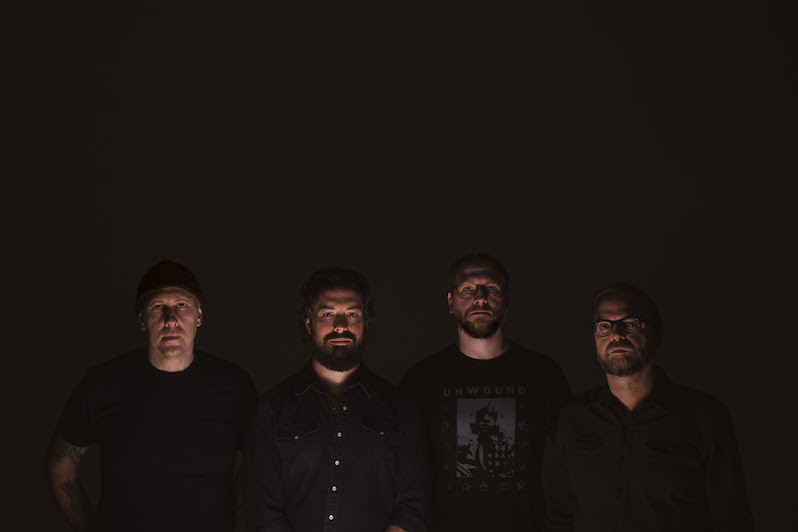
Wailin Storms is in the midst of a fiery return in 2026. The Durham, North Carolina southern gothic band boasts post-punk and folk influences embers of their blaze of doom rock. It curls and rises in a scintillating display of The Arsonist—their first album in four years.
Treble has the premiere of the album’s lightning strike of an opening track, “Dead End” alongside an interview with the band. In pure surreal fashion, “Dead End” opens The Arsonist by taking a harrowing post-punk turn down on a dead end road. The song’s driving drums mixed with convulsing car crash guitars jolt the passenger straight into a waking fever dream filled with cryptic messages from beyond.
Wailin Storms welcomed Ben Melton to their roster and then were welcomed to the Season of Mist roster after previously releasing music with Gilead Media. The new-look North Carolinians lean further into minimal, primitive songwriting that nods to old Baptist chants and blues holler. There are also darker post-punk and metallic elements—alongside new vocal harmonies and analog recording.
The culmination of their efforts results in the band’s strongest record to date—and it all begins with “Dead End.”
Listen to an exclusive stream “Dead End” now. The Arsonist arrives July 10 through Season of Mist. Preorder the album before the release. Wailin Storms will play an album release show in their hometown Durham on July 17, then head out on the road at the end of July. Their tour dates can be found following the interview with the band.
What makes “Dead End” special compared to the other tracks on The Arsonist?
Steve Stanczyk: “Dead End” was one of the first songs we wrote for this record, and it ended up setting the tone for the whole album. It established where we were headed while keeping enough familiar DNA that longtime fans will recognize the sound. It was also one of the first tracks where Ben really dug in as a collaborator, bringing his own sense/style to the lead guitar melodies and adding a new layer with backup vocals.
Ben Melton: I’m pretty sure this is the first song I ever wrote with the band, so that definitely makes it special for me. I also am partial to tribal, tom-heavy drum parts like the verse of this song, so the first time I heard Mark play that at practice I was pretty much immediately sold on it.
Justin Storms: “Dead End” is a whirlwind of sounds and is unlike anything we’ve written so far. It captures the immediacy we felt when starting to write the record. This song ignited the fire inside and served as the catalyst for the rest of album.
There are some other new things in addition to the new album. You have a new member in Ben Melton and a new record label in Season of Mist. How do these changes amplify the message or sound of Wailin Storms?
Steve: Bringing in a new member changes the songwriting dynamic in a real way. We’ve always been collaborative, with everyone feeding their own influences into the mix and Ben’s brought something new to that. He leans toward riffier, more noodle-y metal (in my opinion) but also has roots in traditional country, and you can hear both of those sides coming through in his parts. As for Season of Mist, it opens us up to a new audience and a level of exposure for this record that we’re excited about. We think this is our best work yet, and we’re hoping it connects with fans the same way.
What did you want to build on from previous albums? What did you want to change going into this album?
Steve: We wanted to hold onto the loud-soft dynamics and the big, powerful moments that have always been part of our sound but handle them with a bit more maturity this time around. There’s a real moodiness running through the whole album. Delicate tracks like the title track, “The Arsonist,” “Heart of Mine” and “It’s All Dark Now Where Your Eyes Used To Be” carry a distinct somberness, which reflects the times we’re living in.
Ben: As the outsider coming in, I knew from the get-go I wanted us to push ourselves to step outside the box as much as we could while still being true to the original spirit of the band’s sound, which is certainly a delicate balance. It’s all too easy to default to familiar dynamics and progressions within songwriting, so finding ways to shake things up was very important to me, provided it actually improved the song rather than just being different for the sake of it.
Justin: For the vocal melodies and rhythm guitar parts I gravitated towards a more primitive approach. This type of songwriting felt very reminiscent to early days of songwriting where I tried to embrace that dark gospel feel you hear in early blues holler or old regular baptist chants. I kept things stripped down and tried to be as minimal as possible to have the band either fill in the rest of the flesh or let certain parts breathe. Editing and pulling back is always an interesting challenge and one that I embrace the older I get.
We challenged our usual sound and vocal dynamic and instrumentation when recording. Ben’s vocal range enabled me to embrace this blood harmony dynamic that I’ve always wanted to try, even though we’re technically not family. Sonically, it felt like we were. The vocal harmonies were definitely new territory for us. I look forward to doing more of that type of that in the future.
Were there ideas or talents that you as individual musicians wanted to showcase on The Arsonist?
Steve: We’ve always wanted our albums to capture how we actually sound live. Recording together live, leaving in the string clicks, snare rattles, vocal breaths, all the little human details. On The Arsonist we took that further and recorded the entire album fully analog, no computers involved. You do a take, and if you fuck up, your options for fixing it are extremely limited. In a world where so much creative expression is getting filtered through AI, we wanted to make something that’s unmanipulated and real. You’ll hear the breaths, the clicks, even the tape hiss when you listen to it closely.
Mark Oates: On this album, we really focused on the melody and harmonies. Both Justin and Ben really worked their ass off to get that right, where we didn’t make that a focus on previous albums.
Ben: As the others have said, I really wanted to lean into the vocal harmonies on this. That’s always been an element of every band I’ve ever played with and is one of the things I enjoy doing most as a musician. I thought it would be a fun challenge to see if we could make this record have an element of Simon and Garfunkel, except they’re in hell.
Justin: Recording to tape and choosing to do things purely in analog was a challenge but great experience. It gives this record a lot of heart and soul which is my preferred result.
Vocal harmonies stand out on this record as others have mentioned. Ben and I have this blood harmony thing happening that makes me think of the Carter family, X, The Kinks, The Louvin Brothers, and even the Beach Boys—but after they took acid and became severely depressed.
The Arsonist has a lot of fiery imagery. The album title, of course, and several lyrics allude to fire. Justin, how has your history, fascination, and obsession with fire over the years changed? How do you handle it now given the nature of this new album?
Justin: When I was younger, I was fascinated by fire and starting fires, as some kids are. Early on in my art making days I would also incorporate fire elements into my paintings and tried to tap into symbolic and surrealist painting. Like Frida Kahlo, Magritte, and Lenora Carrington.
It was nice to revisit this theme both lyrically and visually with “The Arsonist” and come full circle to something floating around in the ether.
The Arsonist also has touches of surrealism, namely inspiration from David Lynch and René Magritte. What are some specific or favorite examples of work or philosophy from Lynch or Magritte?
Justin: The main thing I try to tap into that we see in art, film and music from Lynch and paintings by Magritte is to make the art you want to make.
Also, I think in a very simplistic way both of these artists are able to tap into this mystery and magical realm using objects from every day life. These two artists in particular are able to use the mundane things in life and make them extraordinary and jarring. I also like to attempt to describe the stuff that’s underneath the surface: dreams, love, fear, death, etc.
The art concept for The Arsonist painting is influenced by René Magritte’s “Gaspard de la nuit.” For those who haven’t seen this piece yet let me set the scene: imagine a burning house in a desolate landscape sitting there underneath a fingernail moon. The tiny scythe moon is tucked between clouds that look like they’ve been pulled apart like a fresh hot dinner roll. A jet-black raven side eyes the viewer in foreground while standing there motionless like a black statue looking over the whole scene. The bird just lingers there behind a red curtain like an Egyptian deity.
If there is a reoccurring theme in David Lynch’s Wild at Heart, it’s fire. The opening credits show a match being lit, flames engulfing the screen like a raging oil fire illuminating the night. There are many close-ups of smoking throughout the film like some film noir cigarette advertisement. Another reoccurring image is the house fire flashbacks that involve Lula’s father. This memory is an ominous event that haunts the lovers throughout the movie and gives the film that mysterious gap.
In the end of Andrei Tarkovsky’s movie The Sacrifice we see a house burning. The protagonist, Alexander, burns down his own home as a spiritual bargain to stop an impending nuclear apocalypse. I’d be lying if I said this scene didn’t influence the art for The Arsonist.
Wailin Storms 2026 The Arsonist U.S. Tour
July 17 – Durham, NC @ Stanczyk’s [Album Release Show] [TICKETS]
July 29 – Johnson City, TN @ The Hideaway [TICKETS]
July 30 – Atlanta, GA @ Star Bar [TICKETS]
July 31 – Knoxville, TN @ The Pilot Light [TICKETS]
August 1 – Cincinnati, OH @ Motr [TICKETS]
August 2 – Youngstown, OH @ Westside Bowl [TICKETS]
August 3 – Columbus, OH @ Dirty Dungarees [TICKETS]
August 4 – Pittsburgh, PA @ The Government Center [TICKETS]
August 5 – Baltimore, MD @ Metro Gallery [TICKETS]
August 6 – Brooklyn, NY @ The Gutter [TICKETS]
August 7 – New Hope, PA @ John and Peter’s [TICKETS]
August 8 – Richmond, VA @ Cobra Cabana [TICKETS]
