

Iceage : For Love of Grace & the Hereafter

It sure didn’t seem like it at the time, but the Iceage song that seemed to most accurately point toward their future was 2014’s “The Lord’s Favorite.” A smirking cowpunk song on an album full of abrasive post-punk dirges, the first single from Plowing Into the Field of Love seemed to break the Copenhagen band’s dour sensibility and nihilistic aggression, adding a dose of humor and levity to a record that in hindsight otherwise feels like their darkest. “After all, I think it’s evident that I am god’s favorite one,” Elias Bender Rønnenfelt sings in a deadpan croon, winking implicitly even as he gazed directly into the camera in its video. “And now is the time I should have whatever I desire.”
Each of the band’s subsequent albums has featured at least one song on the same yeehaw wavelength as “The Lord’s Favorite”—”Thieves Like Us” on 2018’s Beyondless, “Drink Rain” on 2021’s Seek Shelter—but less illustrative is its literal sound than that it allowed the group some room to breathe or even crack a smile. Where Iceage cracked open a door more than a decade ago, a wider range of emotion made its way into their songwriting, with Seek Shelter—released one decade after their debut—ultimately showcasing the band at their most earnest and big-hearted. After a five-year hiatus—roughly half the length of their furious first decade of activity—Iceage return with For Love of Grace and the Hereafter, an album that maintains a bit of the soulful melodicism of its predecessor but with a lighter and breezier sensibility. It’s the first Iceage album that feels less like a significant shift and more like they’re easing into a groove.
The early singles from For Love of Grace, more than anything, suggest that Iceage are simply enjoying playing rock ‘n’ roll music at the moment. And really, how couldn’t they be, with standouts like “Star,” its sonic textures somewhere between scrappy garage punk and shoegaze, or “Ember,” wherein Rønnenfelt cryptically declares, “I love you in an ominous way.” Its major key melody seems to pull the rug out from any suggestion of menace, however, its raucous punk rock immediacy carrying a brightness that their earlier bruisers never did. Meanwhile, “The Weak” harbors the rollicking cowpunk energy of “The Lord’s Favorite” (see? here’s another), with a little more gravity behind its rollicking sensibility, Rønnenfelt echoing XTC’s “Generals and Majors” in a depiction of destruction and subjugation as a pick-me-up for ogres in high towers: “Yeah, I’ve had it with peace times/I found a new home in a war crime/Yet none of my issues have gone away.”
The group doesn’t entirely let go of the brooding atmosphere of their earlier material, “Tender Blades” in particular being a standout moment that seems to carry the blend of swagger and tension that drove much of their best material. And “1835” finds the band engaged in an effective back-and-forth between more abrasive choruses and dreamier verses. But For Love of Grace is often at its best when Iceage simply allow the songs to be beautiful, like on “No Fear,” a gorgeously shimmering post-punk-pop song with splendidly sparkling guitars, freed from the weight of fuzz or feedback.
It’s hard not to feel the reduction in gravity on For Love of Grace, a quality that reflects how far the band’s come since they first began playing together as teenagers. They’re in their thirties now, some of them husbands and fathers, and after a long break, they simply picked up where they left off, going on instinct rather than bothering with blueprints or outlines. That it all feels so cohesive, so refreshing even, is a testament to how solid a core they’ve built, so much so that when they’re hammering away at a glockenspiel on “Match Head Girl,” and Rønnenfelt indulging in a light-hearted “doot-doot-doo” hook, it’s still impossible to miss the architecture of a great rock song underneath.
Label: Mexican Summer
Year: 2026
Similar Albums:
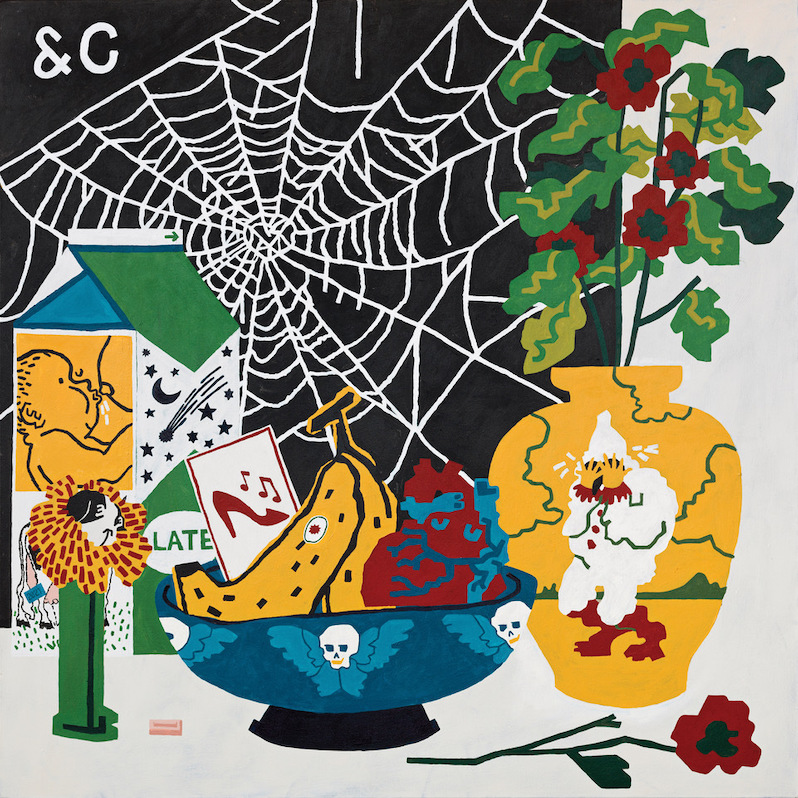


Iceage : For Love of Grace and the Hereafter
Note: When you buy something through our affiliate links, Treble receives a commission. All albums we cover are chosen by our editors and contributors.