


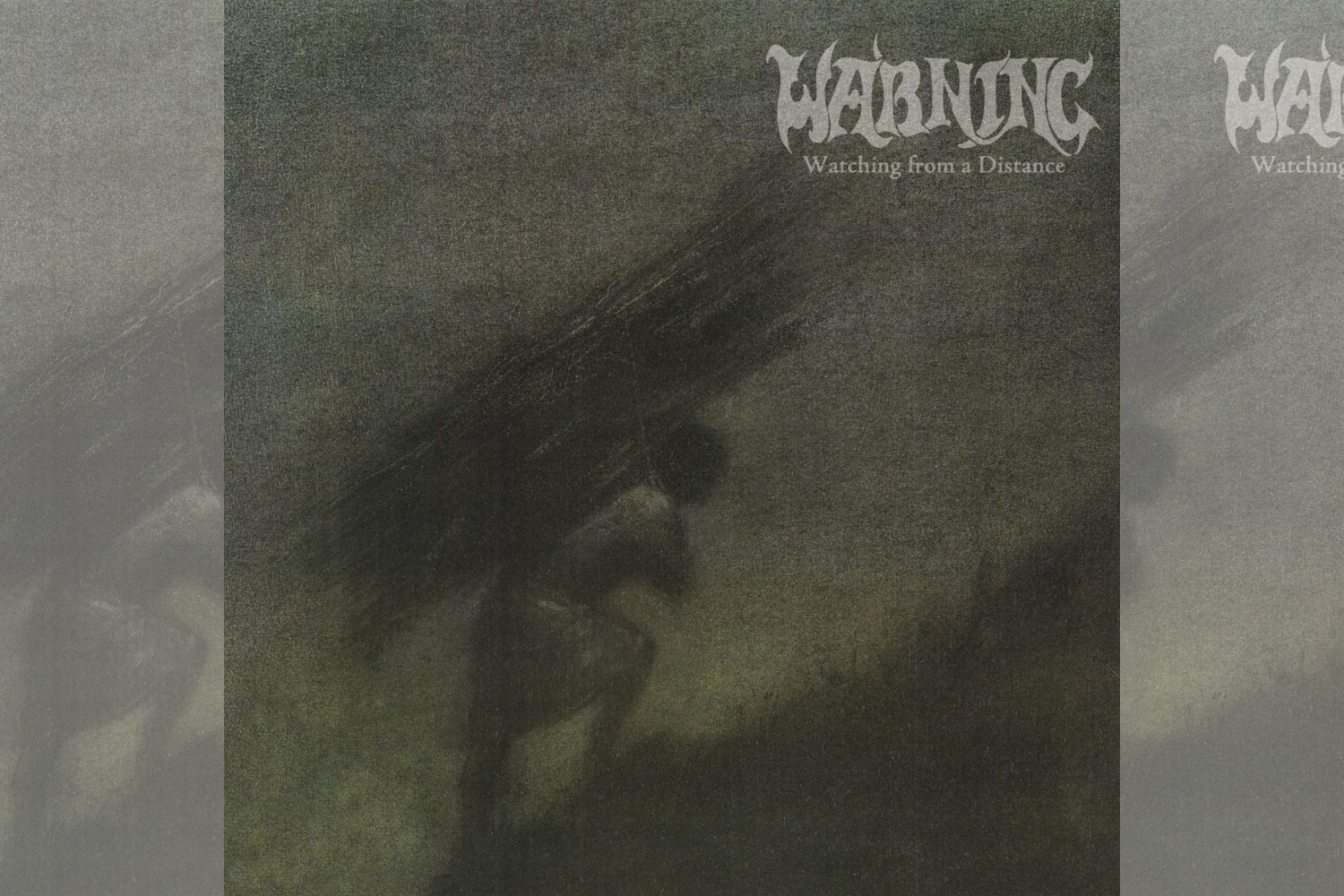
Doom metal holds a special place for me. I’ve written about my relationship to doom before, and for as dark as the music can be, it’s inspired a great deal of positivity in my life. Since its beginnings, metal has always been an outlet for exploring dark themes, and few bands approach darkness in the way that English group Warning does. While they embody the qualities of drone and distortion common to the genre, they embrace melody to a greater degree, as evident by their 2006 album Watching From a Distance, a quintessential doom experience and one of the most sorrowful metal records ever made.
Much of Warning’s legacy stems from Watching From a Distance. Founded in 1994 by vocalist Patrick Walker, the group released one other album before Watching From a Distance, but the uniquely emotional sound of their sophomore album, driven by Walker’s potent lyricism, cemented their reputation. The instrumental side of Watching From a Distance is intense on its own, but when combined with Walker’s lyrics of heartbreak and grief, the overall delivery can be overwhelming.
Central to each song on the record is an unnamed individual Walker sings of; his struggles all center around them. Though never explicitly stated, his lyrics give the impression of a romantic relationship, the likes of which isn’t that common of a topic in metal, a genre built on horror fantasy, rebellion, and aggressive instrumentation. However, Walker approaches the subject with a poetic depth that resonates tremendously with the band’s doom instrumentals. Without leaning into tired tropes, Walker speaks of a relationship that’s in the past but still haunts him.
Toward the beginning of the title track, Walker sings, “Looking at you, I find again / I am starving in your mystery / So far away, and some kind of helplessness / And then I remember that I know you love me, I know you do.” Walker establishes a sense of physical and emotional distance from the person; though they remain in some level of proximity to one another, their connection is gone. In “Bridges,” Walker sings, “In the darkness I unravel / New truths I have suffered / For so long to embrace / They will change me from here on / But I can’t share it with anyone / I wish you were with me tonight”.
Outside of metal there’s no shortage of break-up songs that come across less than flattering to those singing them. Whether it’s grown men going off on name calling or dog-piling blame, the presentation feels juvenile. In Walker’s words, he approaches this topic with maturity; there isn’t blame as much as there’s regret, anxiety, and questions. In fact, unlike other works based on break-ups, the point isn’t so much who did what, but rather the focus is on the feeling that comes with absence.
Walker’s beautifully crafted lyrics are further intensified by his vocal performances —weary, yet gentle—and the band’s revamped approach to doom instrumentation. On their first studio album, The Strength to Dream, Warning play riffs that hit hard, but are relatively straightforward in delivery. On Watching From a Distance, drummer Stu Springthorpe maintains a consistent and steady pounce throughout each song; he rarely wails on the kit, introducing variety into his rhythms in each track. Bassist Marcus Hatfield follows in a similar flow as Springthorpe, but the instrumental standout of the band goes to Walker and his guitar.
For a doom metal album, Watching From a Distance sounds relatively serene. With bands exploring dark subject matter, the instrumentals tend to reflect a more ominous tone. However, Warning’s instrumentation takes on a much more melodic and melancholic tone throughout Watching From a Distance. This feeling primarily stems from Walker’s performance, as the guitars embody a tone of dreary radiance. It’s a presentation that pays off considerably, forming a compelling blend of elegant doom.
Watching From a Distance is draining, one of the most intensely soul crushing works to come out of metal. And yet, for as emotionally demanding as the record can be, there’s more to it than bleakness. In the record’s final track “Echoes,” Walker concludes the song with the following: “And I know that I’m wrong / I know that I’m wrong / But casting shadows, there’s a light that shines on / But when I look into your eyes I know I’ll find it there / So I don’t understand the pain I thought was never there / And when I see you smile, I know there’s something stronger yet / Than any dream I ever placed at someone’s feet.”
There is pain in his words, but also acceptance—that while this unnamed person is gone in his life, he will move on; for as much as it hurts to think of them, he’s thankful for the time they had together. We never learn who this person is. However, Walker’s vagueness inadvertently creates an opportunity for listeners to further connect with the material. While the songs have their personal meaning for him, the unnamed character becomes a vessel for you to project an absent person in your life—parent, sibling, friend, lover. Whoever it is you see in the distance and can’t reach.
Warning’s Watching From a Distance is an emotionally brutal experience about how loss can haunt a person, and yet it shows that we’re capable of moving forward. In the two decades since its release, Watching From a Distance remains one of the most devastating metal records ever made. It’s also an amazing testament as to how we can take the most difficult moments of our lives and turn them into something beautiful.
Warning : Watching from a Distance
Note: When you buy something through our affiliate links, Treble receives a commission. All albums we cover are chosen by our editors and contributors.
Treble is supported by its patrons. Become a member of our Patreon, get access to subscriber benefits, and help an independent media outlet continue delivering articles like these.