



When breakbeats and looped samples become the norm, an acoustic guitar can be a breath of fresh air. Beck Hansen, née Bek David Campbell, was well adept at both approaches, making his name on the slacker-but-also-kinda-anti-slacker anthem “Loser,” juxtaposing hip-hop beats and a sing-speak lyrical delivery with a bluesy slide guitar riff, captured in a video clip featuring him dragging around—what else?—an acoustic guitar. Beck’s hybrid sound, novel if not entirely without precedent (Beastie Boys, Ween, Gary Wilson), frequently earned him the description of “folk-hop,” a label that proved marketable enough but somewhat discounted the genuine weirdness at its foundation.
“Loser” wasn’t a fluke, exactly; Beck didn’t have a high opinion of his 1994 breakout single, a one-off experiment made between lo-fi recordings of warped folk and sound collage like the mindfuck exercises of his debut cassette Golden Feelings that he considered a mediocre effort on his part. But Tom Rothrock and Rob Schnapf, the co-founders of Bong Load Records, heard something special in it. Though the initial pressing of the single was limited to only 500 copies, the song became a runaway hit, earning heavy rotation on radio stations like KROQ and eventually selling more than a half-million copies, certified gold in a little over a year. The sound of “Loser,” by happenstance, became Beck’s signature—dadaist lyricism, hip-hop beats and a kind of rustic, ramshackle charm. Though even the latter was smoothed out in favor of a widescreen production from the Dust Brothers on 1996’s Odelay, an album that widened Beck’s oddball appeal with bigger hooks and a more commercial sensibility. If you didn’t hear “Where It’s At” several dozen times during the summer of 1996, you probably weren’t there.
When Beck signed to Geffen prior to the release of his 1994 album Mellow Gold, however, he reached an unusual, non-exclusive agreement with the label that allowed him the freedom to release some of his music on independent labels, such as Flipside (Stereopathetic Soulmanure) or K (One Foot in the Grave). That bargaining chip ultimately helped Geffen win what became a competitive bidding war, and a creative victory for an artist whose ability to write radio hits didn’t preclude him from creating bizarre, lo-fi pisstakes and tape experiments. But even amid that mish-mash of weirdo indulgences were moments of melodic folk brilliance, like Stereopathetic Soulmanure‘s “Rowboat,” which in 1996 was covered by Johnny Cash. Though, in all fairness, even Beck’s major-label albums are loaded with some pretty weird shit; outside of “Loser,” and to a slightly lesser extent “Beercan” and “Pay No Mind,” Mellow Gold is pretty hostile to mainstream sensibilities.
After “Where It’s At”‘s radio domination—followed likewise by “Devil’s Haircut” and “The New Pollution”—Beck began to see the alt-rock landscape remold itself in his own image. Eels, Cibo Matto, Bran Van 3000, Cornershop, Soul Coughing, Primitive Radio Gods—the list of artists swirling hip-hop beats and production into indie and alternative rock songs grew exponentially in the immediate and long-term aftermath of “Loser.” And though Beck remarked that it had become “a beautiful playground,” he likewise acknowledged that it became “a little crowded.”
The opening strums of “Cold Brains,” the leadoff track on Beck’s 1998 album Mutations, evoke only the faintest whiff of the psychedelic beatbox pop of Odelay, yet the song is lusher, prettier than the Radio Shack fuckery of Golden Feelings or Soulmanure. It’s something else entirely, a gloriously melodic psych-folk wonder, equal parts Bowie and Dylan. And though here Beck is still taking a kaleidoscopically dadaist lyrical approach, “Cold Brains” harbors a darkness behind its oddball imagery, suggesting something bleak beneath the whimsy: “A worm of hope/A hangman’s rope/Pulls me one way or the other.” But in its chorus, it transcends, its twinkle of keyboards taking its otherwise earthy strums into space.
That otherworldly lushness can be credited in part to producer Nigel Godrich, who in the previous year produced Radiohead’s OK Computer. But it’s also one of the finest examples of Beck’s continually rewarding unpredictability, showcasing aspects of his music that fell farther outside his output as either junk-store troubadour or sampladelic patchwork pop star. Mutations embodied an unusually earnest classicism, but one that still dared to reshape and remold itself into unpredictable shapes.
“It’s not a pastiche. But at the same time, it’s not pure,” he told Rolling Stone in 1998, explaining the meaning of the title Mutations. “Certain elements are country rock or folk rock; but even though you don’t hear it, these songs were written in a time when hip-hop, drum-and-bass, all manner of musical hybrids exist. Whatever imprint that’s left on me, it’s part of the music.
“I wanted it to feel like a group of people sitting in a room, the vocals live, that synergy of people playing together,” he continued. “That my music has characteristically been cut up and sewn together wasn’t entirely willful. I was working within the means I had, working with computers and technology.”
Beck’s most organically eclectic album, Mutations puts a contemporary spin on everything from blues (“Bottle of Blues”) to vintage country (“Canceled Check”) and Tin Pan Alley pop (“O Maria”). But within its eclecticism is a uniform sense of beauty; though it’s not as gentle as 2002’s Sea Change, it remains Beck’s prettiest album, rustic at its core but twinkling with wonder. Take, for instance, the sprightly flamenco waltz of “Lazy Flies,” bolstered by the sounds of fluttering theremin and clattering castanets. Or the first single “Tropicalia,” with its Brazilian inspired samba-rock groove, horns, infectious rhythms and the persistent squeak of the cuica. Though arguably the closest thing here to Beck’s prior release, big on hooks and a dense array of sonic layers, it also signaled the possibility of countless new directions. “Tropicalia” also notably puts an additional spin on the album’s title Mutations, given that it takes influence from one of the Tropicalia movement’s key players: Os Mutantes.
The greatest moment on Mutations is “Nobody’s Fault But My Own,” a song easily in the running for the best that Beck’s ever written, and not just as a semi-finalist. It stands out for its subtlety, a psychedelic raga that pairs an open-tuned guitar with flourishes of sitar. It’s likewise the rare pre-Sea Change song that’s stripped of irony or absurdity, Beck employing gritty imagery in his exploration of regrets after a break-up: “Treated you like a rusty blade/A throwaway from an open grave/Cut you loose from a chain gang/And let you go.” On the Sea Change tour, he would perform this song on harmonium, sitting at the edge of the stage. It remains one of the most arresting moments I can remember in more than 25 years of seeing live music.
When the sessions for Mutations wrapped, Beck planned to cash in one of the options in his Geffen contract and release the album on Bong Load—the label that originally released the “Loser” single—under the assumption that its songs were too slow and not as marketable as what he’d delivered with Odelay. It’s solid reasoning—though it’s by no means in accessible, Mutations is a sharp turn away from the sampladelic pop that made him a household name, more “indie” in its aesthetic feel than its fidelity, perhaps.
But Geffen ultimately did decide they wanted to release the album upon hearing it, reneging on the original agreement. The end result was a string of lawsuits: Beck being sued by both labels for breach of contract, and then Beck countersuing Geffen with a claim of copyright infringement. All parties settled, Beck commenting that Bong Load ended up with a “shitload of money,” but that effectively ended his side quests while on Geffen. The legal limbo also likely contributed for the relatively minimal promotion for the album, one of the few major-label Beck records with no videos.
There’s a conversation to be had about where Mutations sits in the Beck canon. It’s not a defining work in the same way Odelay is, perhaps, but I’d argue it’s a more consistently strong and engaging work, one driven more by songwriting than production, though Godrich’s touch certainly brings more life to these earthier, prettier songs. Among its many other selling points, however, Mutations is the Beck album that very literally saw two labels fight over the privilege of releasing it.
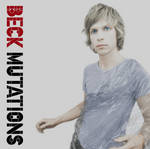
Beck : Mutations
Note: When you buy something through our affiliate links, Treble receives a commission. All albums we cover are chosen by our editors and contributors.
Treble is supported by its patrons. Become a member of our Patreon, get access to subscriber benefits, and help an independent media outlet continue delivering articles like these.