



If you subscribe to the notion that 1997 became the year hip-hop finally got over as a dominating cultural and financial force, outselling rock music here in the states, then look no further back in the rearview to 1994, as the schematic model indicating that a paradigm shift was not too far off.
For serious hip-hop fans, the fact that Lollapalooza in 1994 added Beastie Boys, A Tribe Called Quest, and George Clinton & the P-Funk All Stars as headliners alongside Cypress Hill, The Pharcyde, Fu-Schnickens (don’t know them? hit the Google machine), and Souls of Mischief on the side stages was a sign; things were changing. As always, commerce usually leads the way as a cultural indicator. That lineup reflected what was happening both above and underground, post-Nirvana. Things, as unfortunate as they were, kept moving quick.
West Coast G-Funk continued, bobbin’ and mobbin’, to Uncle George Clinton, Bernie Worrell, and the entire P-Funk catalog. As Clinton told me in a 1993 interview over the phone before he was set to perform with the Red Hot Chili Peppers at the Grammys, he intentionally made that catalog available and sample-ready for the next generation through a series of CDs in the early 1990s designed specifically for producers and DJs to sample P-Funk beats, known as his “Sampledelic” or “D.A.T.” (Digital Audio Tape) series. He noticed many “old heads” criticizing the younger generation, and realized that if they were digging P-Funk and reusing his music, he wouldn’t just remain relevant but could play a key role in hip-hop’s growth. It seems that, by 2026 standards, his plan succeeded.
But for hip-hop to be more than just a coastal-dominant art form, it needed stars, musicians, wordsmiths, thinkers, cultural ambassadors, and, for that matter, avatars for young Black folks growing up in the South and the Midwest to balance out that New York, L.A., Bay Area dominance. Outkast was just starting to rev their mighty engine of “The South Got Something to Say,” and then 22-year-old Lonnie Rashid Lynn, aka Common, from the south side of Chicago, dropped a sophomore coming-of-age manifesto with impeccable production from No I.D., making Resurrection one of those hip-hop albums that got folks everywhere, East and West, turning their heads. Whispering to themselves, “Who’s that?”, while moving to the kick-drum, engaging with the dusty vinyl samples, laughing at the inside jokes, following the scattershot inner line rhyme scheme, digging in on the compressed “soul by the pound” jazz-soaked, kick drum symphony cooked up by No I.D., and how Common fit his flow within it. Not over it.
This young Black man asking questions with a deep baritone resonance one second, then making bizarre, quizzical, and entertaining mouth sounds the next. All of which documents his life at the time, slowly pieces together a mindful, somewhat realistic view of his existence—all the while improving those emcees’ skills on the fly for the world to hear.
Resurrection—released first under the name Common Sense until Lynn changed it a few short years later for legal reasons—didn’t go platinum like Da Brat. Nor become a commercial success like Warren G’s Regulate…G Funk Era. But neither did early De La Soul, The Roots, Mos Def (Yasiin Bey), and so on.
It attained status among the namecheck-reputation economy within so-called backpacker hip-hop, and yes, I hate that name too. That currency traveled far and wide with swiftness. Common was getting those spins on The Stretch Armstrong and Bobbito Show, straight outta New York, a crucial lodestar showcase that broke hip-hop stars nationally, located at WKCR 89.9 FM in NYC from 1990 to 1998, very far left on the terrestrial radio dial. Rap fiends used to stay up late Thursday night, wait for the show to begin at 1 a.m. on Friday, and go until 5 a.m., taping that show directly off the radio and onto cassette. Weekly.
Common was keeping company song-wise right in between Biggie, Nas, Gang Starr and Jeru the Damaja. That’s weight. East Coast acknowledgment. And understand, these are the pre-times. Pre-J Dilla, pre-Kanye, and pre-International Anthem, for that matter, having a stranglehold on the indie jazz world. To the rest of the landscape, minus house music, Common was Chicago.
In those days, there was this poster of John Coltrane’s 1958 album Blue Train that was gaining visibility among certain hip-hop heads, artists, DJs, producers and lyricists. Listen, I had it up on my wall in college, right next to the traditional Malcolm X poster as well. The one where he’s pointing a finger in the air? Yeah, that one. But the Coltrane poster served, at least for me, as an artistic visage of a past aesthetic. Just art, no noise. It was quiet-loud, you know? Common had the same John Coltrane poster on his apartment wall. Inspired by the Last Poets too, he aimed to get his Chuck D, Bob Dylan and KRS-One lyricism on. That sense of immortality flowing perfectly in sync. If you look at the cover of Resurrection, the side with his picture? It’s filtered in blue. Vibes, man. That’s what he and No ID brought, 55 minutes’ worth, with no warning. Rewriting his own on-wax persona came about from listening to jazz, reading spiritual scriptures—not putting people off through judgment but just questioning his own life choices. Moving away from fast food, turning down the malt liquor, turning up the boom-bap in his beat-up Toyota Celica, and just looking out at his city and letting it talk back at him.
I’m not from Chicago, but this cassette was on serious bump in my vehicle at the time. It had those low-end theory-type tendencies, not as busy as The Bomb Squad or peak DJ Premier productions, where you hear the New York subway, feel that Big Apple tension with each bell or horn, and see folks trying to hustle through those productions. But No ID pulled this rhythm jacket that complemented the newfound mentality and smoothed it out with classy, aged samples (including two different uses of the Modern Jazz Quartet’s 1956 rendition of Gershwin’s “But Not for Me”).
On “In My Own World (Check The Method)”—with the producer blessing the track with bars at the top, the momentum swing of those differentiating xylophone tones to and fro, with a Large Professor sample in the batter, and that boom-bap kick drum meditation at the bottom—Common goes off on life, asserting changes made to get to this phase of artistry. It’s a mark and a moment of a star stepping into his spotlight. There were rumors that No ID was assisted by the tutelage of the almighty Beatnuts, JuJu and Psycho Les, highly respected New York producers, crate-diggers and loop-assasins who ran New York underground hip-hop for a spell. But even if there was help, No ID provided the canvas for Common to get lost and found on.
Meanwhile. The hit, “I Used to Love H.E.R.,” which brought Common notoriety in several ways, with its message that was so vivid that it inspired a damn film, 2002’s Brown Sugar, now sounds a bit preachy. But there’s a treasure trove of deeply rich vignettes, accompanied by textured, smoothed-out production here, that propelled Common into his next phase of performance. Some claim his next project, One Day It’ll All Make Sense, the last time he’d work with No ID, was better. And after he was on his way to work alongside The Roots and later the Solquarians, taking a big swing with the wildly alternative Electric Circus, which bombed when it was released but is now being hailed as a lost masterpiece in step with Paul’s Boutique and Illadelph Halflife. He’s one award away from earning an EGOT, and held it down against Keanu Reeves in a killer John Wick sequence.
But Resurrection gave everybody the heads up; this was an artist who’s not a punk, but always in the process of evolving as a human.
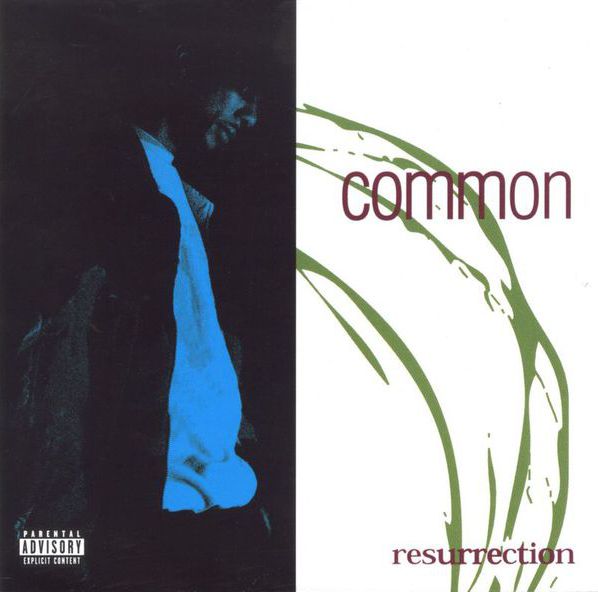
Common : Resurrection
Note: When you buy something through our affiliate links, Treble receives a commission. All albums we cover are chosen by our editors and contributors.
Treble is supported by its patrons. Become a member of our Patreon, get access to subscriber benefits, and help an independent media outlet continue delivering articles like these.

