


Legacy grows in the soil of blunt self-criticism. From 1989 to 1996, De La Soul would bicker both internally and with others over each of their releases, reacting to what they had already put out into the world as they grew, matured, and lived life. High school friends Kelvin “Posdnuos” Mercer, David “Trugoy the Dove” Jolicoeur, and Vincent “Maseo” Mason, founding members of the authoritative hip-hop group De La Soul, created four out-of-the-box, classic hip-hop albums—a feat among feats within the genre’s golden age era. Nuthin’ to sneeze at, Jack. According to super producer and Beats headphones billionaire Dr. Dre, De La heavily influenced his use of comedic album skits on his West Coast G-Funk cinematic experience, The Chronic.
That debut album, 3 Feet High and Rising, allowed their label, Tommy Boy—which could never provide this pioneering act with the imprint stability of, say, a Columbia, Blue Note, or Motown in their heydays—to make the group stick to the Daisy Age motif just a little too much.
More than miffed with everyone thinking they were “the hippies of hip-hop,” which could be read as “soft,” the most profane four-letter word in rap circles, that’s what they were introduced as to the entire viewing nation on the Arsenio Hall Show. Hence, Black America. That day-glo gimmick thought up by the label transformed members of the group into people you didn’t want to be beefing with out there in the wilds. De La, made up of three nice guys from Long Island, earned a solid rep for their hand game in the streets, and it improved with every challenge, town to town, from every so-and-so trying to test their manhood. So for their second album, De La Soul Is Dead, the project became a complete reset for the group, including the genius concept of a daisy plant kicked over, looking unwell, as the lead graphic. It remains the most gangster, punk-rock art move known to marketing. That’s how they topped their previous effort, a debut record which cost around $20,000 to make and blew up outta nowhere. An album that no one had expectations for (enshrined in the Library of Congress in 2008) that flew them around the globe, plastered them on MTV, and made them overnight stars. Built mostly on a Tascam 242 Portastudio, the same four-track that a little band out of Bristol, England, by the name of Portishead would use to ignite the trip-hop genre.
But how did these high school friends top that initial achievement? It was real easy; they cancelled themselves. Talk about stones, arrogance, or just belief in how talented you are.
Buhloone Mindstate, their third album, included big-time musicality; featured Maceo Parker’s soulful instrumentation and sparse jazzy production, with top-shelf cerebral penmanship as usual; and had creative cameos from the late Guru of Gang Starr, among others. Compelling art for sure. According to Danyel Smith, a freelancer for Spin in 1993, she appreciated the high-mindedness of the album but also scolded, “You curse them for doing that cryptic shit,” but when Posdnuos spits out that “gangsta shit is outdated / Posdnuos is complicated,” the album finds its frozen kernel, the spot around which the rest of the album revolves.
For that tour, De La was on the road with ATCQ promoting their mega-hot album Midnight Marauders. So as David Jolicoeur, aka Trugoy the Dove, was coming home after the tour, he heard friends in his neighborhood reciting Tribe’s lyrics. Maybe De La Soul was “just a little too creative,” which led him to actually hate Buhloone Mindstate due to its lack of accessibility to the average hip-hop fan.
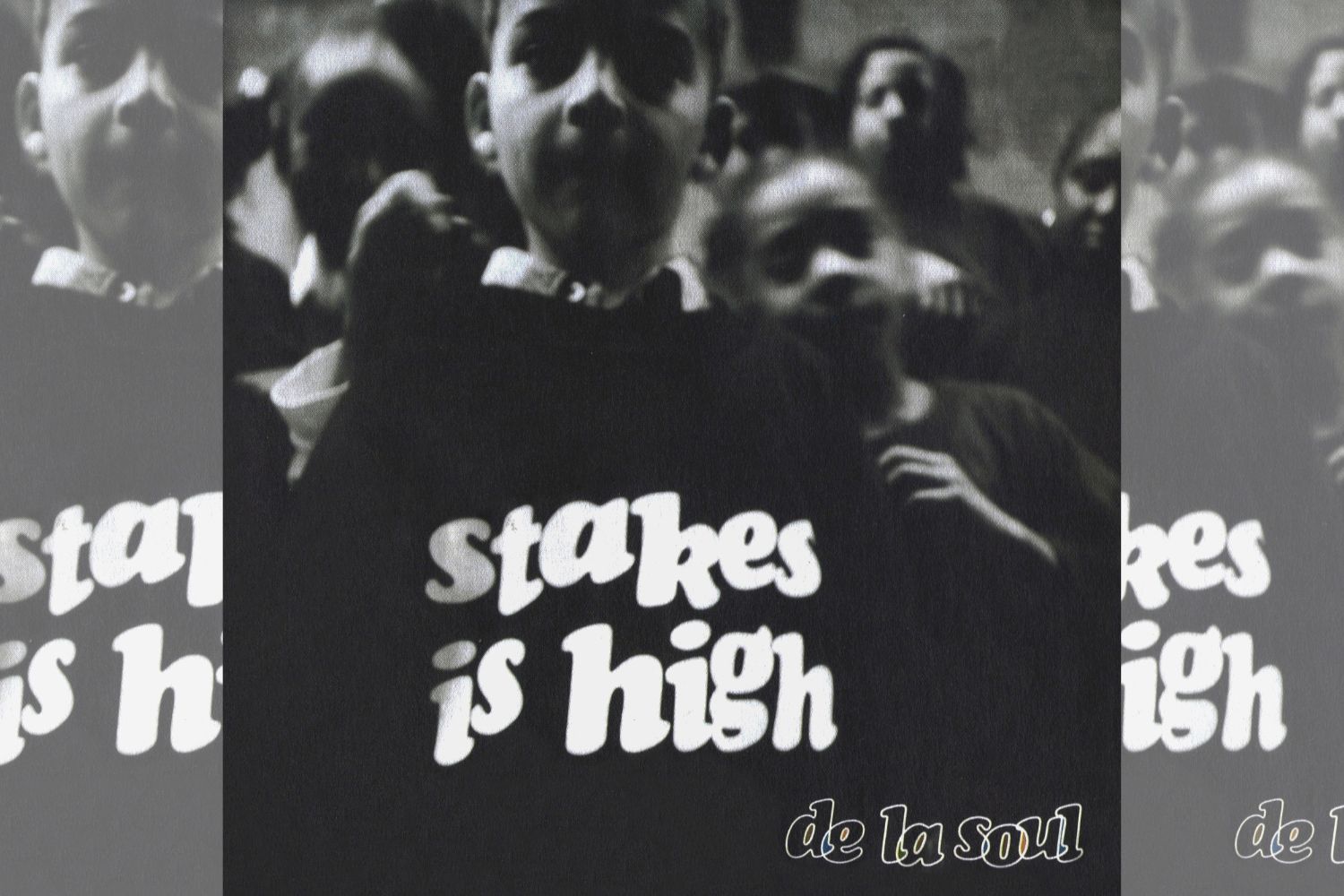
Stakes Is High, among many things, streamlined their message by holding up a mirror to show how hip-hop was changing, one shiny suit at a time, quite possibly not for the better. Gone were the comedic skits and producer Prince Paul, for that matter.
Materialism, drug use, and R&B vocalists singing over subpar tracks were the topics here. The self-produced album, a first for the trio, emphasized their always above-par pen game and grabbed an anthemic track from some young upstart by the name of J Dilla, who used the pensive and mysterious chord progressions from the 1974 song “Swahililand” by jazz pianist Ahmad Jamal for the album name and lead track, which set the record’s ominous tone as a call to arms.
Listen. I don’t say this lightly at all. But at the time, you felt that heaviness in the air. The oncoming deaths of both Tupac Shakur, who died on September 13, 1996, just months after the release of this album, July 2, 1996, and The Notorious B.I.G. (Biggie), who died on March 9, 1997, at the age of 24. Two Black men, spokespeople of their generation, were cut down early in life by gun violence, caught up in a larger chess game they had no control over.
“Stakes Is High,” grumpy as all get out, was De La’s warning: A course correction was desperately needed in hip-hop. This was their first reintroduction to the genre’s young, growing fanbase. (2004’s The Grind Date would be their second) De La had become elder statesmen and took the job seriously. With the role, they brought new artists along with them, including Common (who, in 2026, is merely a Tony Award away from an EGOT), Truth Enola, and Mos Def (who would change his name to Yasiin Bey), a class of recruits who abided by that credo for love of the art form. Those collective voices reached new and old fans alike.
Where “The Bizness” discusses writing, “Forget all them playas; we the rhyme-sayers,” stated by Common, it would become an entryway to Mos Def’s double-sided 12-inch from 1997, “Universal Magnetic” on one side and “If You Can Huh! You Can Hear” on the other. Both singles championed that energetic, underground boom-bap that Stakes Is High so emphatically espoused. And fascinating enough, upon hearing of Jolicoeur’s passing on February 12, 2023, at the age of 54, Mos Def, aka Bey, wept while stating, “I came up in the school of Dave.”
History can be fickle and fair all at once. Stakes Is High sold roughly 250,000 to 300,000 units upon release and received widespread critical acclaim as one of the socially conscious hip-hop albums of its era; however, it still had only modest success within the genre at large. Yet I can personally account for a stretch in San Francisco and the Bay Area at large from ’96 to 2004, where all types of raves, music festivals, and other gatherings would take place; if De La Soul were booked to play a side room at one of those raves, when they went on, the rest of the rave went dead. As a matter of fact, I knew local DJs who purposely got booked to play raves so they could go see De La Soul. That street cred, which they built up for over 30 years, endures while Stakes Is High in 2026 remains more relevant than ever.
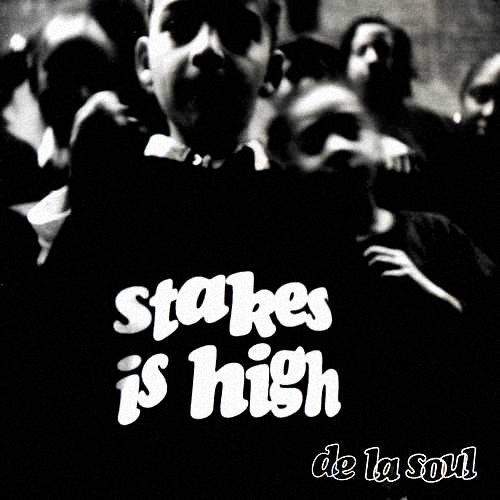
De La Soul : Stakes Is High
Note: When you buy something through our affiliate links, Treble receives a commission. All albums we cover are chosen by our editors and contributors.
Treble is supported by its patrons. Become a member of our Patreon, get access to subscriber benefits, and help an independent media outlet continue delivering articles like these.

