

The best scene in Tony Scott’s 1983 erotic horror film The Hunger is its first three and a half minutes. Against a glowing field of blue, and seemingly encased in a cage, gothic rock icons Bauhaus perform their 1979 signature song “Bela Lugosi’s Dead” in an underground nightclub. It’s as appropriate an anthem as you can find for a movie about vampires, even if trimmed of more than five minutes, and the shots of hedonistic night creatures behind indoor chain-link fences watching Peter Murphy lurch in a cell of his own establishes the vibe of the stylized, early MTV-era fang feature better than its actual script. It’s perfect enough that you could separate it out from the film itself and call it a music video, because that’s essentially what it is.
Eleven years after The Hunger, Alex Proyas’ 1994 supernatural superhero film The Crow took a similar idea and ran with it. The film saw the placement of more goth bands in sinister club settings, certainly, but more than that, it employed music as an essential element of the film, with all 14 of its goth, industrial and alt-rock songs prominently heard in scenes throughout the movie. Adapted from a comic book series created by James O’Barr, The Crow translates its black-and-white ink pages of resurrection and revenge into an after-hours MTV-worthy series of action sequences and live performances that draw as much from the glory days of Wax Trax! as they do the soundstage on 120 Minutes.
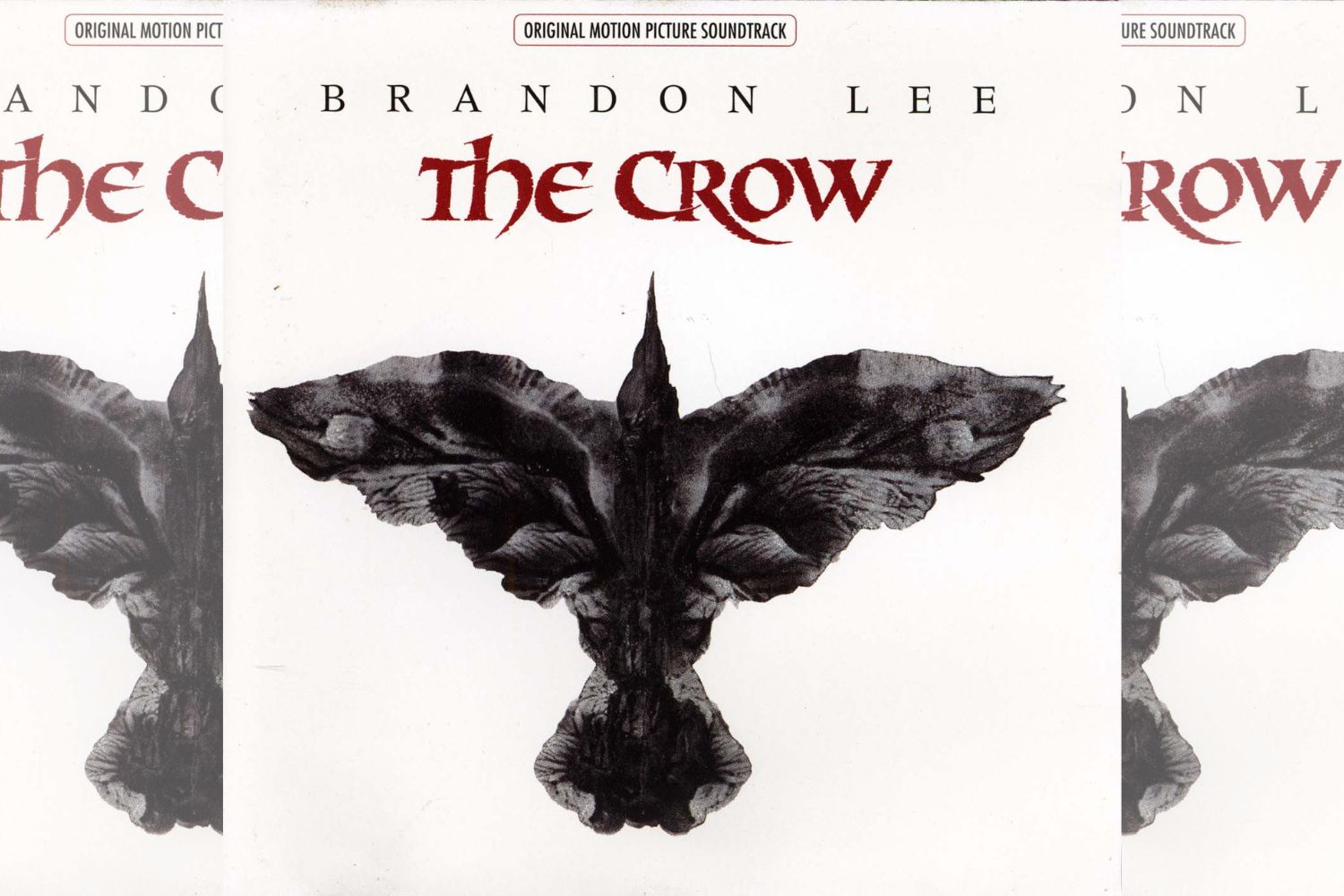
Released at the height of the peak years of commercially successful, curated soundtrack albums to Hollywood productions, The Crow made a blockbuster out of a mixtape of countercultural sounds. The singular soundtrack year of 1994 saw the release of Forrest Gump’s double-disc Vietnam era boomer-rock canon, Above the Rim’s g-funk essentials, the runaway success of Lisa Loeb’s “Stay” and the Reality Bites soundtrack, and the mostly ‘70s-era cult jukebox of Pulp Fiction. Yet The Crow, featuring all new recordings from bands that leaned heavily on goth, industrial and post-punk sounds (and a little metal, for that matter), draws an appropriately dark palette from the major influence that Joy Division and The Cure had on O’Barr and his creation of the original The Crow comics.
Songs by The Cure and Joy Division are, in fact, featured prominently in the film, the former an original by the band and the latter reinterpreted by Nine Inch Nails. Where Trent Reznor and company turn the Joy Division b-side “Dead Souls” into a roaring take worthy of their then-newly released The Downward Spiral, if slightly less intense, New Order were actually approached by the film’s producers to re-record Joy Division’s “Love Will Tear Us Apart,” as Peter Hook tells it. That didn’t end up happening. However, The Cure leads off the soundtrack with their phenomenal epic “Burn,” a song that recaptures the driving, ominous mood of their Pornography years, driven in large part by Simon Gallup’s bassline. In recent tours, the group have made it a staple of their live setlists, and it’s lost none of its power three decades down the line.
Two more veteran bands from the post-punk era, Violent Femmes and The Jesus and Mary Chain, turn in a pair of outstanding originals, while Elizabeth Fraser of Cocteau Twins lends her vocals to a re-recording of “Time Baby II” by L.A. shoegazers Medicine, retitled “Time Baby III.” Yet alongside some of the ’80s-era ringers are a number of lesser known younger bands, including the never-quite-took-off Oklahoma City grunge outfit For Love Not Lisa, as well as Tucson brooders Machines of Loving Grace, whose trip-hop-meets-industrial-metal “Golgotha Tenement Blues” is not only one of their best songs, but an underrated highlight of the album overall. And Helmet, just a few years removed from a million-dollar contract, offer up the brawny riffer “Milktoast,” re-released sans droning sonic treatments as “Milquetoast” later that year on their Betty album. The lead single, however, belonged to Stone Temple Pilots, whose soaring-but-bluesy “Big Empty” (and by extension their 1994 album Purple) was far better than the critical assessment of them.
Notably, like “Dead Souls,” several songs on the album are covers, which became something of a standard operating procedure for film soundtracks in the ’90s (see: Type O Negative covering Seals & Croft on I Know What You Did Last Summer). Rollins Band slows Suicide’s 1977 Marvel Comics proto-industrial synth-punk twister “Ghost Rider” into a sludgy crawl, while Pantera pull off a faithful rendition of Poison Idea’s ripping 1990 screed against law enforcement, “The Badge.” And Rage Against the Machine, the one band here who seemed to match Nine Inch Nails’ of-the-moment heat, dug deep into frontman Zack de la Rocha’s past as frontman to hardcore group Inside Out with a proper studio recording of that band’s “Darkness of Greed,” here titled simply “Darkness.”
There are also two significant parallels to Bauhaus’ unforgettable opening scene in The Hunger. The first is courtesy of Medicine, who perform “Time Baby III” at the nightclub beneath villain Top Dollar’s headquarters—with similar industrial-factory decor as that in The Hunger. That same stage is graced with another performance by industrial-disco troupe My Life With the Thrill Kill Kult, who perform their pulsing, pistons-firing banger “After the Flesh” as a shootout takes place upstairs, with plenty of stage-diving crowd action of their own on the ground floor.
In remembering my tween-millennial thrill at hearing the compilation for the first time, I felt the urge to call it an introduction to a new sphere of music, but that’s not really true. I was already a fan of the bulk of the bands on here, sneaking listens of my college-aged brothers’ copies of Rage Against the Machine and The Downward Spiral every chance I got. (And if my math is right, I eventually got CD copies of my own through BMG or Columbia House—The ’90s!) “Dead Souls” was certainly my go-to track at the time, along with “Milktoast,” and both are still top-tier highlights from two of the best bands of the alt-rock era. But these days, it’s “Burn” I listen to most, and I’d take it further by dubbing it the best song of the bunch, a legendary band still delivering some of their best material well into their second decade.
Yet I don’t doubt that The Crow and in particular its soundtrack introduced an entirely new generation to gothic aesthetics and sounds—I don’t have the sales figures for eyeliner and fishnets, but I’d wager they got a boost. Before the release of The Crow, the bulk of its publicity stemmed from the on-set death of its star Brandon Lee due to a prop gun accident—an unfortunate mark that still clings to the film. But the legacy of the soundtrack ultimately eclipsed that of its tragic backstory, selling more than 3 million copies and capturing a moment in alternative music that might have been fleeting but cast a long shadow. Both were successful enough to lead to a series of sequels, however, albeit with diminishing returns but still some gold (and “Gold Dust Woman“) to be found, 1996’s The Crow: City of Angels featuring a mixed bag of PJ Harvey, Deftones, Tricky, Seven Mary Three and Bush.
The critically maligned reboot in 2024 starting Skarsgard and FKA twigs, for its part, featured songs from Canadian goths TRAITRS, UK industrial beatmaker The Bug and, naturally, FKA twigs, but without a proper soundtrack album release, and with mostly previously released material, it felt like a missed opportunity. Though given how well the movie was received, perhaps it’s a blessing in disguise.
A frequent playlist exercise I engage in is imagining what a soundtrack to a contemporary version of The Crow should look like, with as many one-to-one parallels as I can think of. And given how many contemporary bands carry echoes of the heaviest hitters on the original, there’s no shortage of possibilities. Chat Pile in place of Rollins Band? HEALTH subbed in for Nine Inch Nails? Portrayal of Guilt pinch hitting for Pantera? It gets a little more complicated to contemplate a band like The Cure, who just five years removed from Disintegration at the time, were somehow both living legends only 15 years after their debut and still arguably in a creative peak. Funny enough, my first thought goes to a band like Robert Smith favorite and City of Angels alums Deftones, but at 30-plus years into their career, they’ve been at it even longer than The Cure was by 1994. Seeing the numbers in front of me reinforces how time reshapes all of it, that what seemed like a blending of different generations of music wasn’t even that vast of a gap after all—even if a band like The Cure left an indelible impression on its other featured artists. As far as the album’s impact, however, we keep feeling the aftershocks more than three decades later.
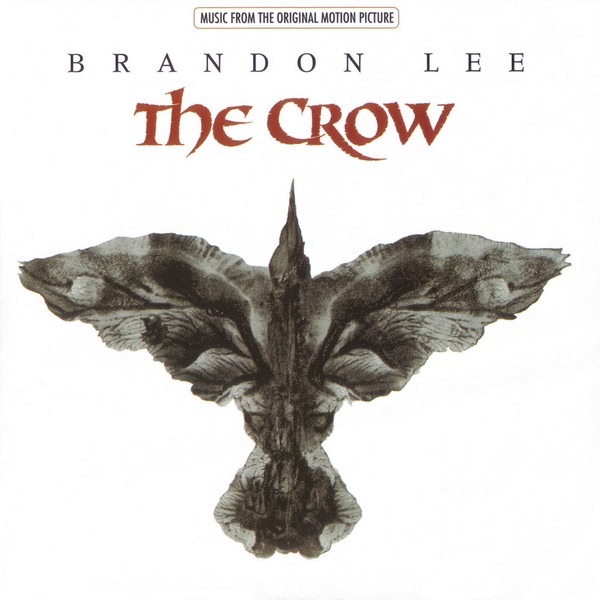
Various Artists : The Crow
Note: When you buy something through our affiliate links, Treble receives a commission. All albums we cover are chosen by our editors and contributors.
Treble is supported by its patrons. Become a member of our Patreon, get access to subscriber benefits, and help an independent media outlet continue delivering articles like these.