
Failure’s Ken Andrews on the band’s new documentary Every Time You Lose Your Mind

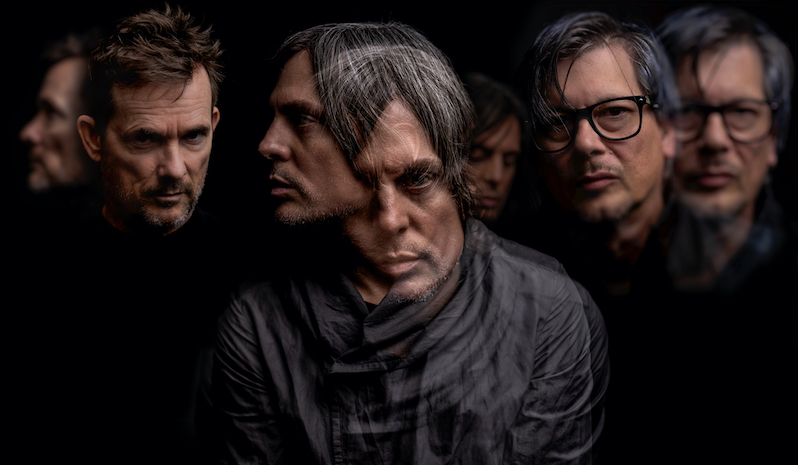
A year after Failure released their epic, conceptual third album, Fantastic Planet, the group fell apart. Ken Andrews, Greg Edwards, Kelli Scott and then-guitarist Troy Van Leeuwen had toured with Tool, played the Lollapalooza mainstage, and even landed a single, “Stuck On You,” on mainstream radio. Their label, Warner Bros., pleased with its performance, was ready for them to deliver another album. But as the group’s members struggled with addiction, they couldn’t function as they once did, and by 1998, Failure was over. But within 16 years, getting clean and finding a renewed sense of purpose, the band reformed, the story of which is told through a new documentary about their career.
Every Time You Lose Your Mind, out Friday, June 27 on Hulu and Disney+, chronicles the three-decade story of Failure’s early years and dissolution and eventual reformation. Directed by Andrews, the film is a years-in-the-making work that includes interviews with the likes of Paramore’s Hayley Williams, Tool’s Maynard James Keenan, Motley Crue’s Tommy Lee, Margaret Cho, David Dastmalchian, Mastodon’s Troy Sanders, Jason Schwartzmann, Butch Vig and more. It tells a story of redemption and renewed inspiration, with lots of archival footage, entertaining anecdotes and more than a little brutal honesty.
We spoke to Andrews about telling the band’s story, finding unexpected fans, changes in the music industry and more.
Treble: What was the genesis for Every Time You Lose Your Mind—what brought about the idea to release a documentary?
Ken Andrews: Originally it was through other people, who came up with that idea. I was actually involved in a different project they were involved in, that didn’t pan out. It was a technology company, actually. And they heard about the story of my band, Failure, and they got interested in it and they started capturing interviews in 2015. And I think it was kind of a combination of—they were casually grabbing them when they could. But they did shoot a few interviews over the course of five years. I remember them talking about, “Can we make a doc about the band?” And I was like, “yeah, sure.” Somewhere around 2020 they lost interest in the project and the pandemic was affecting everybody in ways that, if you were doing a project on your own without any financial backing, those things were getting dropped. So they were basically backing out of the project and they sent me some of the footage they already captured. So I saw a few interviews and thought they were kind of interesting, like Margaret Cho’s interview, when she talks about the connection between creativity and addiction. That really struck me as an interesting thread to pull on. Also telling the story of a band, and kind of a biopic that goes into that specific question. So I decided to take over and do it, and shot a whole bunch of interviews after that, and spent about two years cutting it.
Treble: Having that early footage and interviews, did that help push you in a particular direction once you took over?
KA: Yeah, to a certain extent. The bio part of it, the story of the band breaking up and reforming, that hadn’t been really covered. It was kind of disjointed, so I started formulating in my head, what angles could I come up with to make it feel like an actual story that flowed. But you know, I didn’t conduct any of the interviews. I think maybe I asked Kelli some questions for one of his interviews. But as we kept doing interviews and I kept doing edits of each interview, getting the best parts, and I started watching them, I formulated a flow of the story.
Treble: The doc covers a lot of ground—was it important to you to tell as much of the story as possible?
Yeah, because I felt like the story of the band was interesting on a couple levels. One being that we survived, the ’90s and addictions, but the other was that we reformed and made music, that we were able to pick up where we left off. We were certainly proud of what we were doing. Those were the tentpoles of what the story was about. A redemption story on a couple different levels.
Treble: There are some interviews in the film that reference your early tours with Tool, and how Maynard would tell the audience, “This might be a little over your head,” even though he was a supporter. Is that something you heard a lot—that maybe people didn’t quite get it the first time around?
KA: Yeah. The best press that we ever got was our first album after we rebooted. There was not a cohesive understanding of the band in the ’90s, when we were actually making those records. That came later, after we broke up and people kind of discovered Fantastic Planet, specifically, during that big break. And not only were people discovering it, but a different, a younger generation of listeners started sharing that record. Like “have you heard this record, it’s really cool? Like it’s of the ’90s, but I don’t think the band exists anymore.” It was kind of a mystery for newcomers.
We were called “Nirvana lite,” there were a few people in the press that got what we were trying to do. But overall there was confusion at the labels that were trying to promote us, they weren’t sure if we were grunge. Because there were bands that were doing such big business at the time, there was this sense that, “Are you in this vein? Because if not we don’t have to waste our time.” So often there was this confusion, and people that were fans of the band were saying we weren’t getting a fair shake. I remember reading reviews that were like, “mmm… that doesn’t feel great.” Or it wasn’t clicking. But we did have bands that supported us, and we got opportunities like playing Coachella in 1997 because Tool was headlining and said “we gotta have this band.” But there was also a kind of fatalism, and Maynard kind of encapsulated that by saying, “This is gonna go over your head.” And maybe we just needed time to get out of that period to listen to our band without having to classify it as much, just accepting it on its own, and that’s what’s happened now. We’ve kind of transcended that early problem that we had. And now we have a body of work that’s large enough to where people can tell we have our own sound.
Treble: Was there a moment where it kind of clicked that a new generation or a new base of listeners had kind of discovered the band in its absence?
KA: Yeah, it was the first show back at the El Rey Theater in 2014. I think it was February.
Treble: I was at that show!
KA: You were at that show, wow! OK, so, basically people had been telling us in the two to three years up to booking that show that we should book a show and just see what the reaction is because a lot of our friends were convinced that there was a larger audience for the band now than when we had broken up in ’97. Greg and I were pretty unconvinced but we got together and played a little bit in my studio and realized we could put a live set together if we had to. And this old stuff was coming back pretty easily. And we also wrote some new songs that we really liked. And we realized it was really fun working together again. So we decided to book a show, and the booker called us back once the onsale happened, and said the show sold out in less than five minutes. And that had never happened to us in the ’90s. And all these people who wanted to go to the show couldn’t come. And it was like, what’s going on with Failure—people are getting it now. At the show, and you maybe noticed this too, but people at the show in the front row were all in their early twenties. And the older people were there too, but I was not expecting that. To see that in person and talk to some people after the show, it really changed my perception of the band and what the possibilities are.
Treble: Failure went through a moment of transition when Slash collapsed, and then your subsequent projects, On and Year of the Rabbit, ended up with label problems too. How much of a blow was that as it was happening?
KA: It was unbelievably discouraging. Both On and Year of the Rabbit were heartbreaking for kind of similar but slightly different reasons. The initial one, we broke up. We did have label troubles, but Warner Bros. in ’97 exercised the option for another record and it was gonna be a healthy budget. They said, we got to about 100,000 (copies), we made a good dent, let’s get you guys back in the studio. But we couldn’t do it because of our internal drug issues. That was heartbreaking for obvious reasons, but those two projects were definitely heartbreaking because I felt like there was an audience, and it was proven by some radio stations in the country, despite the label saying we’re not pushing this anymore, kept playing us and we’d play to like several thousand people. And yet we couldn’t get our own label to help us out. And all of those experiences informed our decision to forgo labels after the reboot.
Treble: It’s interesting to hear that Warner Bros. was ready for another record, because it’s so rare now to see a band like Failure aligned with a big label.
KA: Yeah, because why? You know. It’s shifted so much with streaming, and it’s still shifting, it’s essentially a fifth of the size in terms of revenue. It’s a shadow of what it used to be as an industry. The remnants are very different now. A lot of bands use labels for label services, where they retain their masters and they’re essentially paying labels to do promotion. So it’s kind of upside down in a lot of ways. There’s still some bands getting to a certain point with their following and signing kind of a traditional record deal. But yeah, it’s weird. There’s now big artists whose deals are running out and they’re not signing to another label or even their own label and they could get a huge windfall advance. They’re just not seeing the advantages, since digital marketing—anyone can do it, you know? In the ’90s they had this infrastructure where they could organize street teams, but now you can just do it with Instagram. But it’s an interesting conversation we’re having with our team, so we could be on a label in six months. So don’t hold me to that. (Laughs)
Treble: I’m actually sort of curious about something. Given the way that streaming and algorithms have shifted things, and this has happened with other bands, have you seen a rise in streams for a song that wasn’t a single or maybe is kind of a hidden gem in the catalog?
KA: Absolutely. “Another Space Song,” we loved that song when we were making it and it was a personal favorite of the band, but being signed to a record label, it didn’t have any of the hallmarks of what’s considered to be a single or a video song. The song doesn’t really change. The vocal melody changes, but the music is very static in a way, and yet that’s become our most played song by a large margin, across all the records. And I mean, for Greg and I, we’ve talked about it, it’s super vindicating. We love that song. It’s one of our favorites on the album. But we thought it was more like a deep cut. You know? And for it to be the song that is our most popular song, it feels really good. But similarly, or in addition, it kind of tells you record labels don’t know shit. They would have never picked it in a million years, but the audience did.
Treble: I was a little surprised to learn that certain people were fans or early adopters of Failure’s music—like there’s a scene where Tommy Lee is talking about how Cher’s son (Elijah Blue) told him about the band and he immediately loved the music. Were there any people who you were similarly surprised to learn were fans of Failure’s music?
KA: Yeah, Tommy Lee was definitely one of them. I think it was three or four years after we broke up, 2000 or 2001. He called me at home, I’d never spoken to him before. He just called me at home and was like “Hey Ken,” and it was like 10 a.m., like “Oh, hey dude!” I did know he went to some of the shows, because people had noticed him and Pamela watching the shows. But I ended up playing guitar on his first solo album. So yeah, that was really unexpected and really cool. He says in the film, he didn’t take the landscape change in music personally, he thought it was cool. He wanted to be a part of it rather than be like, oh this is bullshit. So that was interesting.
There’s been a lot of full circle things with Failure, finding out people were into us. Some of it is bittersweet, because if all these bands that are doing well commercially well are interested in us, why isn’t that happening for us?
Treble: What would you say is the biggest takeaway you’d hope people get from watching the film?
KA: You know, keep going. It’s definitely a story of resilience and sticking to your guns, especially artistically. When we came back to make The Heart Is a Monster, we had maybe two goals. One, make a record that’s good, that is of quality. But also make it be a Failure record and keep the thread of the sound of the band going. That was a really important and healthy challenge for us to do that, and it’s kind of what made that record and the subsequent records so rewarding, sticking with our blueprint for the band’s sound. It did ultimately connect with an audience. So, yeah, it’s about surviving obstacles and sticking to your guns.
Treble is supported by its patrons. Become a member of our Patreon, get access to subscriber benefits, and help an independent media outlet continue delivering articles like these.