



“Feel Good Inc.” by Gorillaz is seared into my memory. Animated videos and virtual bands are nothing new, but as a teenager, I was in awe of these humanoid apes rocking out on their floating island in the sky, set to a soundtrack of hypnotic beats and bass. Gorillaz had already garnered fans through their debut LP and their single “Clint Eastwood,” but “Feel Good Inc.” and their sophomore album Demon Days pushed them to greater heights.
While Gorillaz is a conceptual project featuring virtual band members, it’s important to remember that there’s a real person steering the ship. Gorillaz is the brainchild of Blur frontman Damon Albarn (the primary songwriter) and artist Jamie Hewlett. Albarn formed Gorillaz in 1998, and has used the project to explore a diverse collection of sound, encapsulating everything from hip-hop, rock, trip-hop, electronic, and jazz. Together, Albarn and Hewlett created the characters portrayed as Gorillaz’s virtual act. There’s bassist Murdoc Niccals, guitarist/keyboardist Noodle, drummer Russel Hobbs, and vocalist/keyboardist 2-D.
Throughout Gorillaz’s self-titled debut LP, released in 2001, Albarn mostly embraces conventional pop structures in his songwriting. Yet, the record is far from straightforward, presenting exhilarating genre fusions, offering an array of atmospheric presence that keeps the overall progression refreshing. Though it offered a promising glimpse of the project’s potential, the record didn’t garner major recognition or acclaim, a missed opportunity they made up for with Demon Days. Released in 2005, Demon Days sees Albarn stepping up his game with both stylistic experimentation and songwriting.
In the early 2000s, mainstream and underground hip-hop were both undergoing shifts, with rappers like Aesop Rock introducing listeners to a revitalized spin on beats and rhymes. Rather than stick to the pop-friendly sounds on the charts are the more aggressive-sounding production of gangsta rap, a new generation of emcees and producers were creating unique sounds of their own. This shifting hip-hop sound is reflected throughout Demon Days, with Albarn and company presenting an equal display of riveting and tranquil songs.
Throughout the record, Albarn is accompanied by an impressive team of talented guest musicians. Among these guests, the greatest contribution comes from producer Danger Mouse. Following his work on 2004’s The Grey Album (where he remixed Jay-Z’s The Black Album with The Beatles’ White Album), Danger Mouse became a sought-after producer, and capitalizing on that rising prominence, Albarn reached out to Danger Mouse and invited him to help produce Demon Days. Though Albarn’s willingness and ability to play with genre is a major factor in the record’s success, Danger Mouse’s production is what allows for that vision to fully come to life.
The guitar performance and drum programming on “Kids With Guns” create an infectiously catchy rhythm; its sound sits between hip-hop and funk, with a vibrant, psychedelic flow. Though Albarn is playing with numerous genres, his exploration of sound never feels congested. Even in the record’s more intense moments, his songwriting allows room for each melody and rhythm to breathe.
Between the use of beat programming and guitar, Albarn, Danger Mouse, and the guest musicians offer a balance between intensity and melodic ambiance. “Dirty Harry” and “Feel Good Inc.” are prime examples: they’re both beat heavy, with moments of greater instrumental heaviness, yet also contain sequences that are stripped back and allow for serene melody. Between all the stylistic variety, Demon Days captures a wide range of moods. From melancholy (“El Mañana”), raging (“White Light”), to disco party flair (“DARE”), Albarn and company consistently deliver a diversity of sound.
Along with being a producer and composer for the project, Albarn serves as Gorillaz’s main vocalist. While he sings throughout the record, the best vocal performances on Demon Days come from its guest rappers. From Neneh Cherry to De La Soul and the late MF Doom, there’s an abundance of superb wordplay that captures the record’s dark themes. In the post-apocalyptic setting of Demon Days, Albarn and company touch upon the damage done to the environment, America’s invasion of Iraq, and humanity’s self-destructive nature. In a 2005 conversation with MTV News, Albarn said, “The whole album kind of tells the story of the night—staying up during the night—but it’s also an allegory. It’s what we’re living in basically, the world in a state of night.”
On “O Green World,” Albarn expresses a longing and concern, hoping to not lose a “green world.” “O, green world / Don’t desert me now / Bring me back to Fallen Town / Where someone is still alive / Fighting for something new in this / When no one needs the heart of me / And I’m looking out somewhere I’ve never been before / Been before.” In the chorus for “Don’t Get Lost in Heaven,” there’s a sense of fear behind the words sung by the London Community Gospel Choir: “Don’t get lost in heaven / They got locks on the gate / Don’t go over the edge / You’ll make a big mistake.”
On “Demon Days,” Albarn reflects on the depressive nature of modern society; the London Community Gospel Choir sings about people numbing themselves in order to get through the day, given the barrage of horrible news. Though this specifically spoke to the climate of 2005, in the years since, the song’s (and record’s) themes have only become more relevant. While it may feel surprising to hear these dreary lyrics among such vibrant instrumentation, the juxtaposition never feels jarring. It’s not meant to be defeatist—Demon Days is cathartic. The world is burning, we need to do something, but we also still need to find joy, a reason to keep going. It was true then, and remains so 20 years later.
With the exception of their 2010 follow-up Plastic Beach—arguably the band’s peak—no other Gorillaz record captures the magic of Demon Days. In its blend of poignant lyrical themes, Danger Mouse’s production and Albarn’s approach to genre fusion, Demon Days built up Gorillaz’s critical reputation while building on the foundation of their debut. In his effort to play with multiple genres in Demon Days, Albarn ended up creating a post-genre experience. While conventional pop songwriting hasn’t gone anywhere, the past 20 years has seen tremendous growth in experimentation between genres and styles. From Tyler, the Creator to Bring Me the Horizon, more artists have grown willing to defy the expectations of their given genre; to push their work to more challenging, thoughtful heights. A major contributor to growth of genre hybrids on a mainstream level, Gorillaz’s Demon Days didn’t just predict the future of music, it set the course.
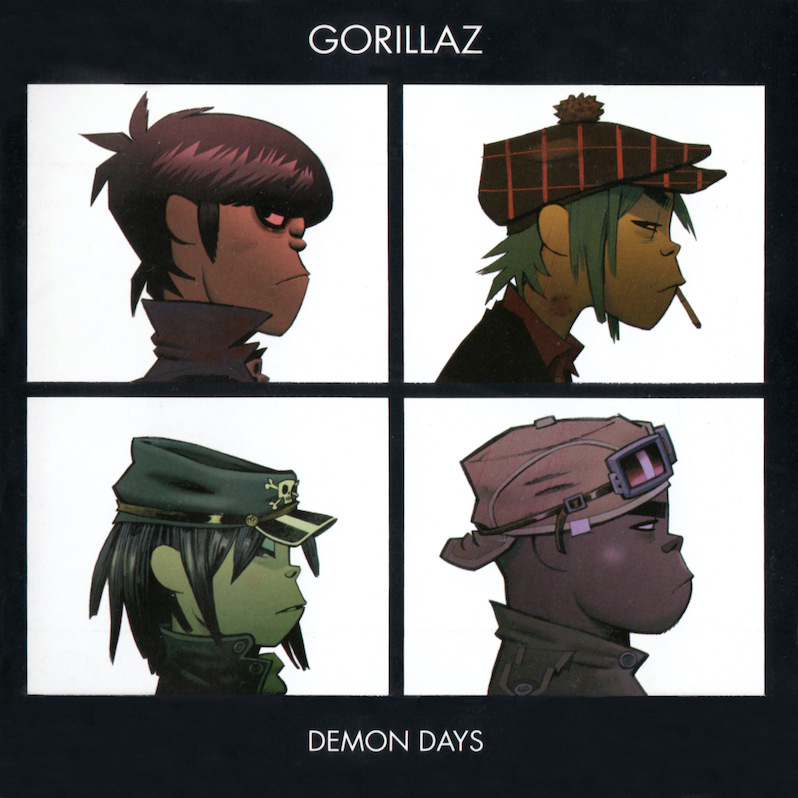
Gorillaz : Demon Days
Note: When you buy something through our affiliate links, Treble receives a commission. All albums we cover are chosen by our editors and contributors.
Treble is supported by its patrons. Become a member of our Patreon, get access to subscriber benefits, and help an independent media outlet continue delivering articles like these.