
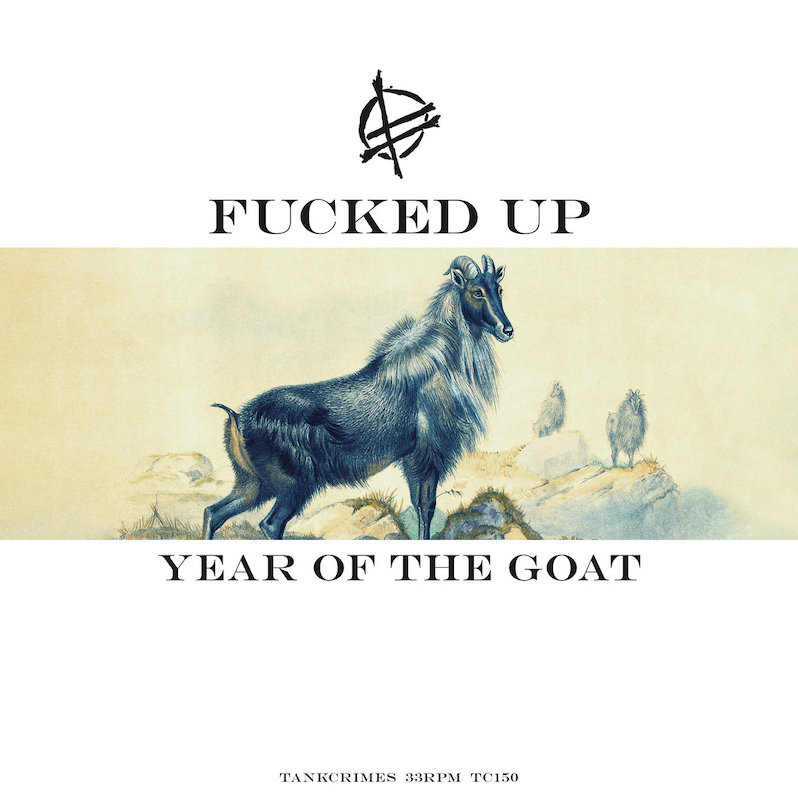
Fucked Up – Grass Can Move Stones Part 1: Year of the Goat

Fucked Up has had one hell of a career. Starting as a singles and 10-inches focused hardcore band before eventually expanding to incorporate alternative rock, psychedelia, prog and heavy rock influences, the group has seen an explosion of ambition over the past couple decades, especially because no addition to their sound sees a subtraction of some other element. Their unearthly productivity is almost comical; one example is their Day album set, currently a trilogy, in which each album is written in a single day, a series that has seen all three volumes released within 22 months from first to last. There is almost always a release coming out by them it seems, be it a special 7-inch with unique songs that won’t make it to an album, a conceptual 10-inch focused on a style of music they’ve never tried before or, in the case of This Mother Forever, a two-song 45-minute behemoth of a psych record released comically as a side EP of all things.
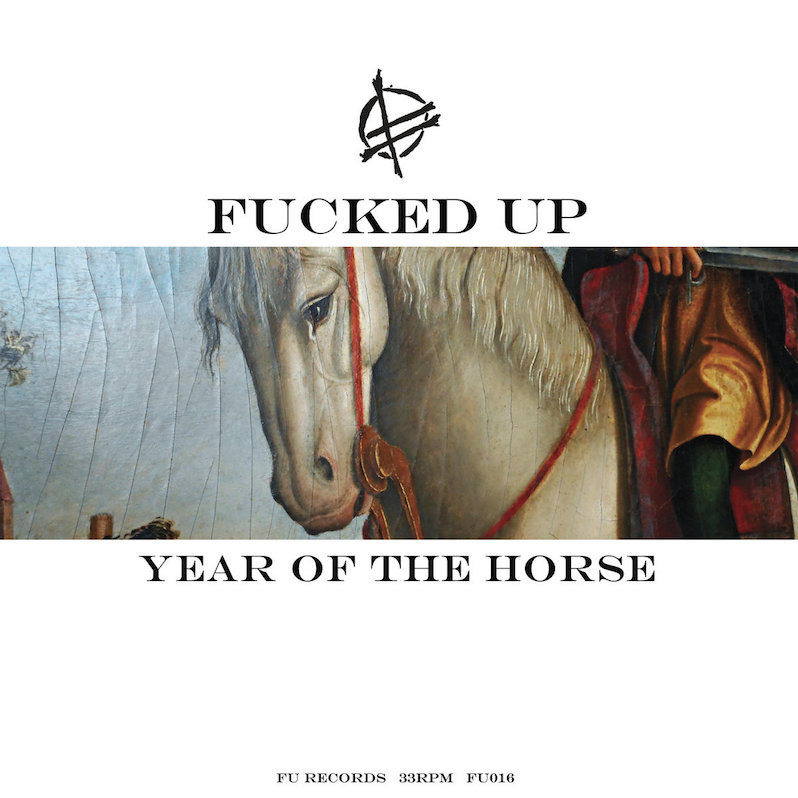
It is on this last release that the story of Year of the Goat really begins. The band has been putting out records based on the Chinese zodiac their entire career; you may even recall my rapturous praise of their previous release in this subseries, Year of the Horse, now approaching five years old. And as much as the prog inclination of the group certainly found its firmest root there, previously having been teased at by things such as the extended structures on Hidden World and The Chemistry of Common Life before the concept-driven David Comes To Life meta-project of conjoined releases, it is on This Mother Forever that the group first took their stab at macro-scale composition with the 30-minute “Our Own Blood.” Prior to this, the zodiac series had seen what in the prog world are considered normal, respectable song lengths, those between 10 and 18 minutes. In the land of prog, this is long enough to express a set of related ideas, do permutations of them, jam a bit, then bring it all home. But to cross the 20-minute barrier is something else. In my country, that of progressive music, this is known as an “epic,” a general term that has fairly specific usage in the subculture. Crossing that boundary is scary; the normal ways of extending a piece from 4 minutes to 10 fail; even the ways to extend a two-part song that might otherwise be 6 or so minutes up to 17 minutes no longer work. The way you have to approach a piece of music beyond the half-hour mark is effectively a sequence of ideas only one to a few minutes in length, with recapitulations and multiple choruses and refrains to make the whole structure make sense. It is, in a word, hard.
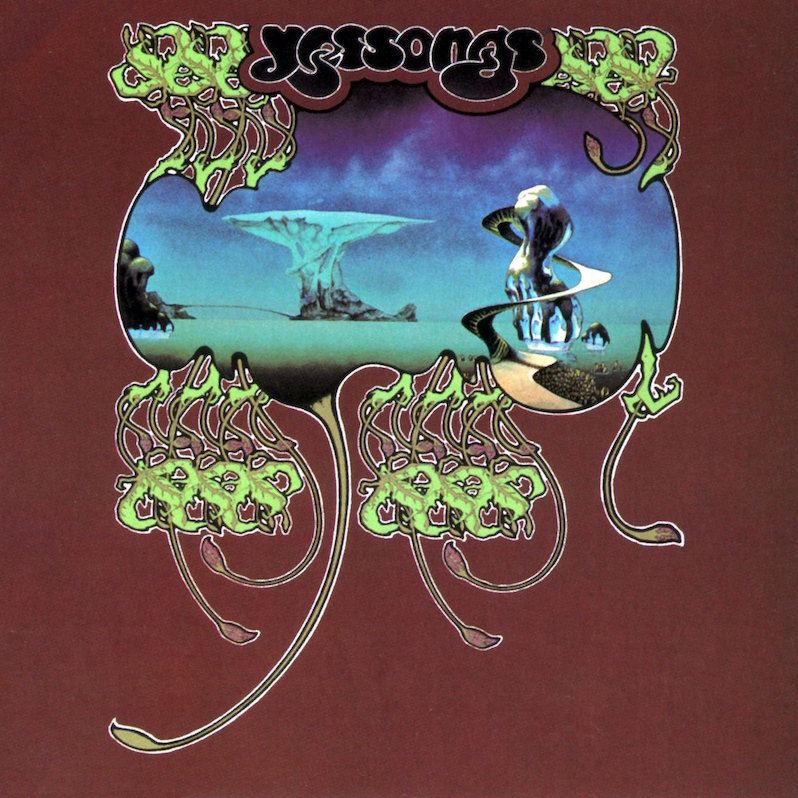
So Year of the Horse comes and, as I mentioned before, blows me away with its mastery of the form. This is 90 minutes we are talking about, playing out either as 4 epics a la Yes’ exceptionally challenging Tales from Topographic Oceans, which I love, or a single 90-minute piece a la Transatlantic’s final record The Absolute Universe. Either of those are monumentally ambitious; achieving them as necessary pieces of music is a Herculean feat, one that cows most bands into meek obsequiousness in its shadow. So, lo, my wonder and delight when they announced a single mega-project titled Grass Can Move Stones, a five-disc album comprising the final three zodiac installments of goat, monkey and rooster, with the first and shortest being released as two gargantuan 30-minute pieces of music and each subsequent record seeing whole sides sequenced as single tracks for 10 huge pieces of music over a roughly five-hour span. My dear editor (and the band’s brave PR rep) can attest to this; I was ravenous.
So, Year of the Goat. Part one of the epic. And surprisingly I have to say the opening 30-minutes is somewhat middling.
Why? Well, it falls into the trap of most openings of great projects; without an overture to be action-packed and jam in all the musical themes that will be encountered over the great journey, we are instead thrust into a lengthy stretch of music that has to, per the language of opera, establish the mise en scene of the libretto, place us in the world, introduce the characters. Oh yeah, I forgot to mention; this is a loose adaptation of Journey to the West, picking up the themes of spiritualism that have been an undercurrent of the group since the beginning, the first tell of their future mystic prog leanings. There is nothing offensive about the first cut “Long Ago Gardens.” It simply has a role to fill that is difficult to perform sans overture and as a result spends much of its runtime living in the same riffs and melodic patterns repeated over and over as the necessary exposition is unfurled.
But wait! This is where it gets good. It turns out the lyrics are good. I say this only half-jokingly; most lyrics exist to serve a functional purpose, to be words sung in the context of song and not poetry to be read alone. This is fine. It embraces the form. But Fucked Up, always quite literary with their work that isn’t designed to be straight up punk bangers, haven’t just upped their game narratively here but instead feel almost like an existing novel set to music. This review is already long, fitting given the material, so I’ll spare you cues from the lyrics sheet, but the available PDFs of the lyrics prove my point. It’s ruminative and heady, poeticism passing like a calming breeze and like mighty thunder both. Musically, it may leave something to be desired, but lyrically, it’s a fucking masterclass.
And so the final track “Rivers and Lakes” starts and you might expect a similar almost droning performance. Wrong. Here, the band suddenly invokes a quiet long-standing influence of theirs, the German progressive band Nektar, wielding a riff and organ combo that is shockingly reminiscent of their brilliant A Tab in the Ocean. In fact, on making that connection, the previous piece suddenly made sense to me, seen as Fucked Up’s interpretation of the German’s previous record Journey to the Center of the Eye. Where before Fucked Up may have been prog by structure but not always clearly by sound, here they embrace fully the label. The organ playing calls to mind the earliest Genesis albums when Tony Banks’ literary lyrics came out of Peter Gabriel’s mouth in charmingly stilted banners unfurling, or the mad hellscape of peak Van der Graaf Generator. The group even seems to nod to those first three Yes albums featuring Tony Kaye on organ with some parts, echoing the simpler but still expansive sonic ideas of those earliest years of the group. The progression of musical complexity also retroactively explains the opening epic somewhat; it is clear that the coming eight epics of this mega-project will likely also be of increasing complexity, mirroring the complexifying drama of the highly allegorical libretto.
With these critiques, why Album of the Week? Simple: ambition. There is absolutely nothing wrong, to be clear, with a short and sweet record that gets to the point. This is and in many ways should be the bread and butter of the musical world. But these kinds of macro-scale ambitious projects are necessary for the ecosystem, the explosions of conceptual heft that allow music to be a more totalizing artform, one that can capture any idea no matter how small or how large, even if they are very large indeed. Fucked Up has always been thrilling because they’ve always been ambitious. Now, to close their longest-running project, they drop the first part of their most ambitious project to date. All they had to do was not fuck it up to make it compelling. That it’s even better than that is icing on the cake. The, uh, five-hour long cake featuring talking animals. Love that cake.
Label: Fucked Up/Tankcrimes
Year: 2025
Similar Albums: