A beginner’s guide to the intricate hip-hop of Aesop Rock


Back in 2016, a full seven albums ago, Aesop Rock was meditating on the possibilities of longevity as a rapper. “To be honest, the older I get, the less often I see role models doing rap music and aging gracefully,” he told Bandcamp Daily. “There are exceptions, but you’re more likely to see rock ‘n’ roll or jazz musicians who get old but still have a lot of interesting things to say. I don’t see that much with rap.”
And yet, Aesop Rock has pulled off the very thing that once seemed so elusive.
Over nearly three decades, a dozen albums, a film score and a running mix commissioned by Nike, Aesop Rock has proven himself one of the most consistently compelling artists in hip-hop. While the emcee born Ian Bavitz is known for having one of the biggest vocabularies in rap, he’s a lot more than his Thesaurus. The native New Yorker has shown a tendency toward evolution and experimentation over time, pairing introspection with abstraction, dizzying flows with memorable hooks, musicality with intricacy, and humor with poignancy. And while over time his songwriting has matured to reveal a wiser, more grounded person behind the mic, his production has grown into richer headphone fodder alike. And somehow, in all this time, his output has only quickened, though not having toured in nine years probably contributes to that.
Following an extra-productive 2025 that saw him release two full-length albums—a peak year in what’s turning out to be a prolific streak this decade—I put together a Beginner’s Guide to the 5 best Aesop Rock albums, plus next steps and advanced listening.
Note: When you buy something through our affiliate links, Treble receives a commission. All albums included are chosen by our editors and contributors.
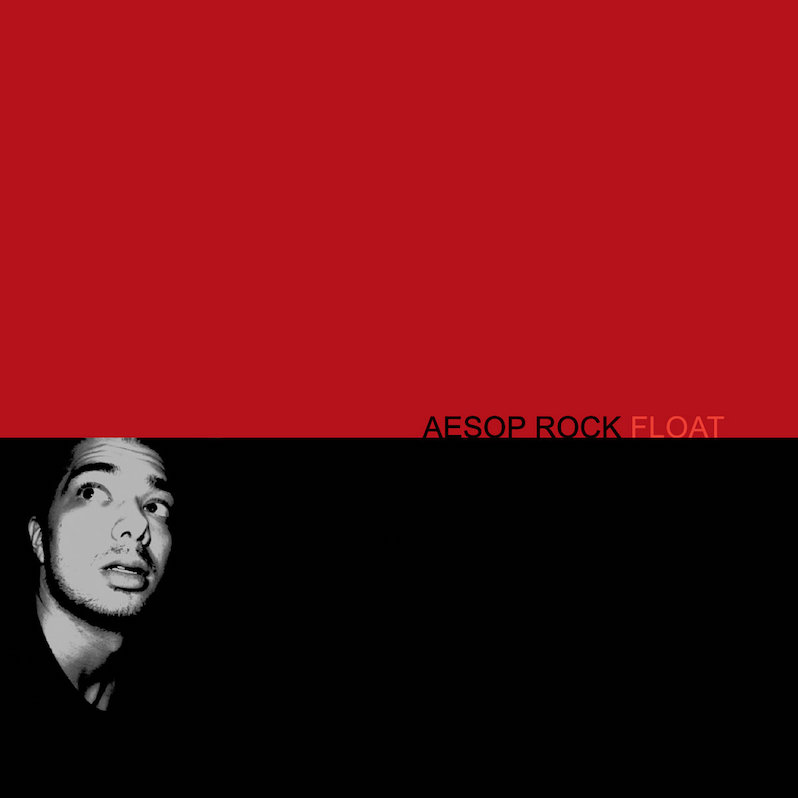
Float (2000)
With Aesop Rock, it’s easy to determine the best place for newcomers to dive in: You start at the beginning. Sort of—his 1998 self-released CD-R Music for Earthworms was the beginning beginning, but 2000’s Float is the New York emcee’s proper debut, a cohesive and comprehensive showcase of his sensibilities and skills with no shortage of outstanding songs to boot. One listen to standout “Oxygen” should be enough to prove that the combination of his labyrinthine lyricism paired with Blockhead’s cinematic production would be an enduring combo. Released on Mush a year before he’d make the leap to Definitive Jux (RIP), Float feels representative of a different era of underground rap, at least on the surface, and appearances from the likes of doseone and Atmosphere’s Ant bear out that turn-of-the-millennium indie-MC aesthetic. But in practice, Float presents Aesop as a fully formed and self-possessed artist with a unique perspective and a singular sound, one he’d only build upon from here.
Listen/Buy: Bandcamp
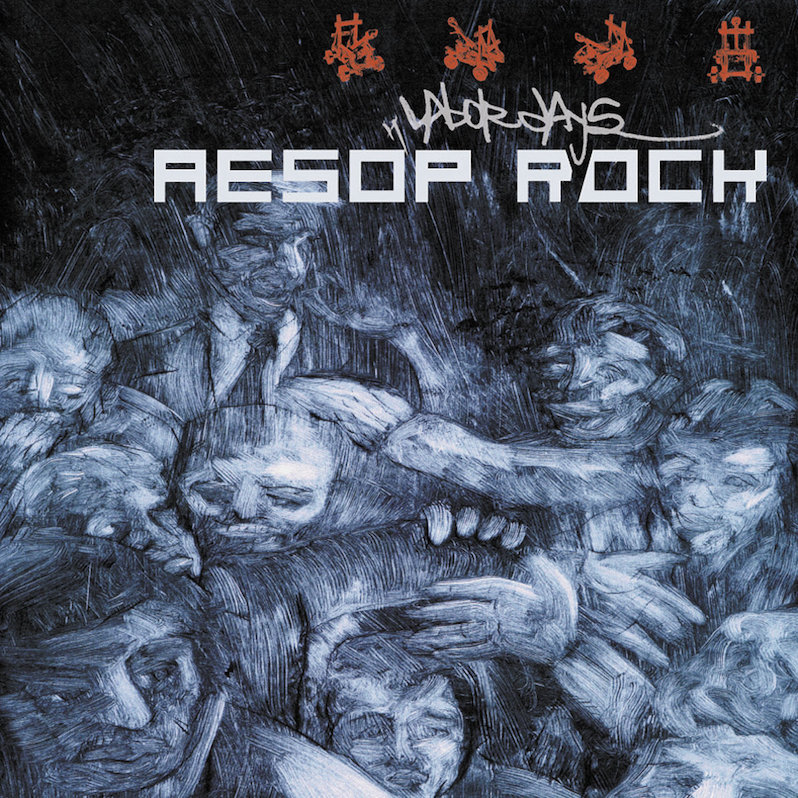
Labor Days (2001)
“We the American working population/Hate the fact that eight hours a day/Is wasted on chasing the dream of someone that isn’t us.” Aesop Rock was radicalized from the beginning. His sophomore album Labor Days—to date still his most critically celebrated release, and justifiably so—is an hour-long opus about not wasting your life pursuing anything other than what moves you. It’s not a political album per se; Aes isn’t examining the commodification of labor in a capitalist society (there’s some of that, though mostly for the sake of saying “Why work a day job when I can do something I actually give a shit about?”). But in a lot of ways, Labor Days is also kind of a love letter to the act of artistic creation itself, which bears out in moments like the whirlwind linguistic tangle that opens “Daylight”: “Put one up for Shackle Me Not/clean Logic Pro-creation/I did not invent the wheel, I was the crooked spoke adjacent/While the triple-sixers’ lassos keep angels roped in the basement/I was the block with a halo on a stick, poking your patience.” Labor Days is endlessly quotable, a bottomless well of phrases to follow into a deeper labyrinth, with split production duties from Blockhead and Aes himself, each providing darkly cinematic musical companions to these mesmerizing lyrical feats.
Listen/Buy: Bandcamp | Rough Trade (vinyl)
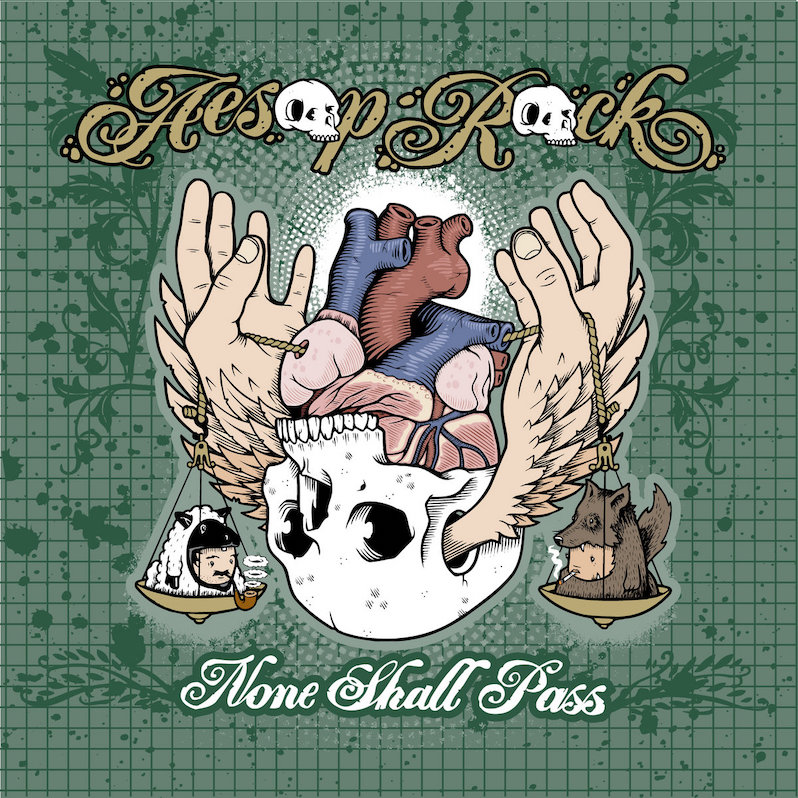
None Shall Pass (2007)
Both Spotify and Last.fm confirm that the title track of None Shall Pass is Aesop Rock’s most streamed song (mine, too, which I neglected to mention in my recent survey of 20 years of scrobbling), not counting “Preservation,” his appearance on Wu-Tang Meets the Indie Culture. (Who saw that ending up with 50 million streams? Not me!) But unexpected viral orphan songs aside, there’s a reason “None Shall Pass” remains undefeated—it’s one of the two best disco-rap songs ever recorded, the other one being “A Rollerskating Jam Called ‘Saturdays’,” obviously. A couple years ago when I briefly tried to put together a dancepunk/electroclash night, it was on the longlist of songs I planned on playing, despite technically being rap. But the title track is a microcosm of what’s a greater indisputable truth: None Shall Pass is the Aesop Rock album that just plain goes the hardest. What it might lack in terms of Labor Days‘ mission statement or recent albums’ earned wisdom, None Shall Pass simply delivers banger after banger. Blockhead mostly trades the cinematic mysticism for heavier basslines and bap that booms a bit louder, with occasional forays into moody trip-hop like on standout “No City,” while Aes laments the demotion of our ex-ninth planet (“Bring Back Pluto”), rails against a zero-sum game (“Dark Heart News”), and lashes out against gatekeeping and conformity on that all-timer of a title track, with intricately woven couplets like “Eye for an eye, by the bog life swamps and vines/They get a rise out of frogs and flies.”
Listen/Buy: Bandcamp | Rough Trade (vinyl)
Skelethon (2012)
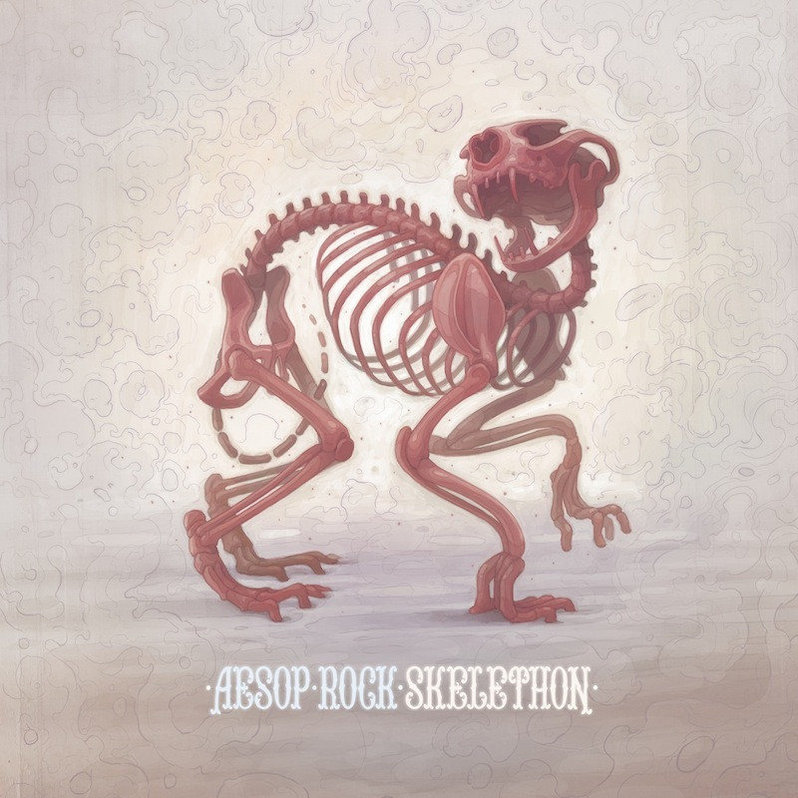
When Aesop Rock released Skelethon, he said of the morbid pall cast over it, “it felt like everything around me was dying: people, relationships, all plant life in my apartment, you name it—it’s dead.” On a purely lyrical level, the album—his first for Rhymesayers after Def Jux closed up shop—features some of the darkest material he ever released, haunted by the ghosts of friends who passed, dead cats and a kind of slow emotional decay. Though even in its most ghoulish moments, Aesop Rock still keeps it playful and infectious, working in references to Crocea Mors and The Search for Animal Chin, while his self-produced beats are as headphone-worthy as any of his tracks with Blockhead. In spite of its every corner being haunted by the specter of death, Skelethon ironically is Aesop Rock’s highest charting album, reaching as high as 21 on the Billboard album chart. But while it’s far from his most obviously commercial release, it features some of his best storytelling, as on the chorus-less tension-builder of a drowning baby saved by a dog on “Ruby ’81,” as well as some of his most vulnerable material, particularly closer “Gopher Guts,” with a third verse rife with an unflinching litany of perceived slights and failures: “I have been completely unable to maintain any semblance of relationship on any level/I have been a bastard to the people who have actively attempted to deliver me from peril.” Or as Aesop himself put it, “it’s me owning up to being a piece of shit,” coming clean in as captivating a manner as he could muster.
Listen/Buy: Bandcamp | Rough Trade (vinyl)
Integrated Tech Solutions (2023)
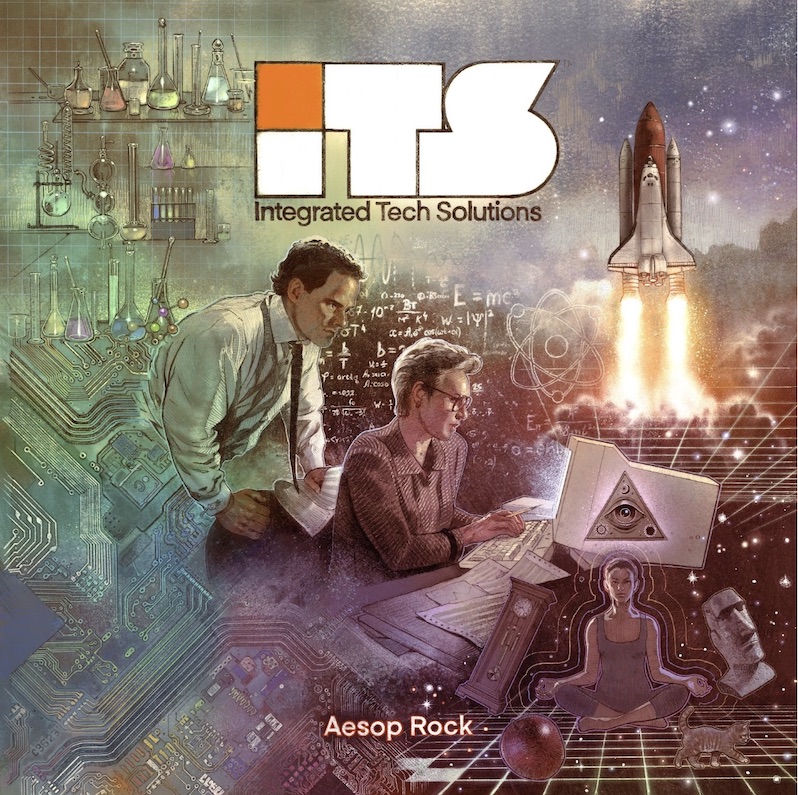
The 2020s has seen Aesop Rock hit a prolific streak that saw him release two albums last year alone (as well as a non-album track, “Roadwork Rappin’,” aimed at a younger cohort of listeners). The strongest of this consistently excellent five-year stretch is 2023’s Integrated Tech Solutions, built around a satirical technology and corporate culture conceit, which feels particularly suited to the techbro dystopia we’re living in. It’s not all enshittification and cubicles though; Aes touches upon, among other things, pigeons, rivers, and an unhoused person who broke into his apartment on “Aggressive Steven,” a captivating story song with both empathy and a social conscience woven into its verses. But if I’m being honest, the biggest reason for it being here is that it’s perhaps the single best set of productions from Aes himself, a talent that’s come to match his lyrical dexterity over time.
Listen/Buy: Bandcamp | Rough Trade (vinyl)
Next Steps: Maybe it’s just me but Aesop Rock’s 2019 collaboration with Tobacco, Malibu Ken, strikes me as some of his most enjoyable material, full stop. I was this close to including it in the first five above, but while it might be a little bit of an outlier, its twisted psychedelia is a hell of a lot of fun. Aes’ 2016 album The Impossible Kid is, like Skelethon, a self-produced affair featuring some of his most gripping lyrical moments, while 2003’s Bazooka Tooth is a solid follow-up to Labor Days. And his latest album, Black Hole Superette, proves that the current phase of his career is one of his most fertile, delivering a set of affecting and thought-provoking songs that prove his maturity as a rapper is something worth aspiring to.
Advanced Listening: When you start getting into Aesop Rock’s wider catalog of side projects and collaborations, it gets a little harder to keep up, but that said, his three EPs as Lice with Homeboy Sandman, and two albums with Rob Sonic as Hail Mary Mallon are definitely worth a spin. Otherwise, just keep digging through the studio albums—Spirit World Field Guide, Garbology, etc. It’s all good.
Treble is supported by its patrons. Become a member of our Patreon, get access to subscriber benefits, and help an independent media outlet continue delivering articles like these.