

Genesis Owusu pushes the envelope

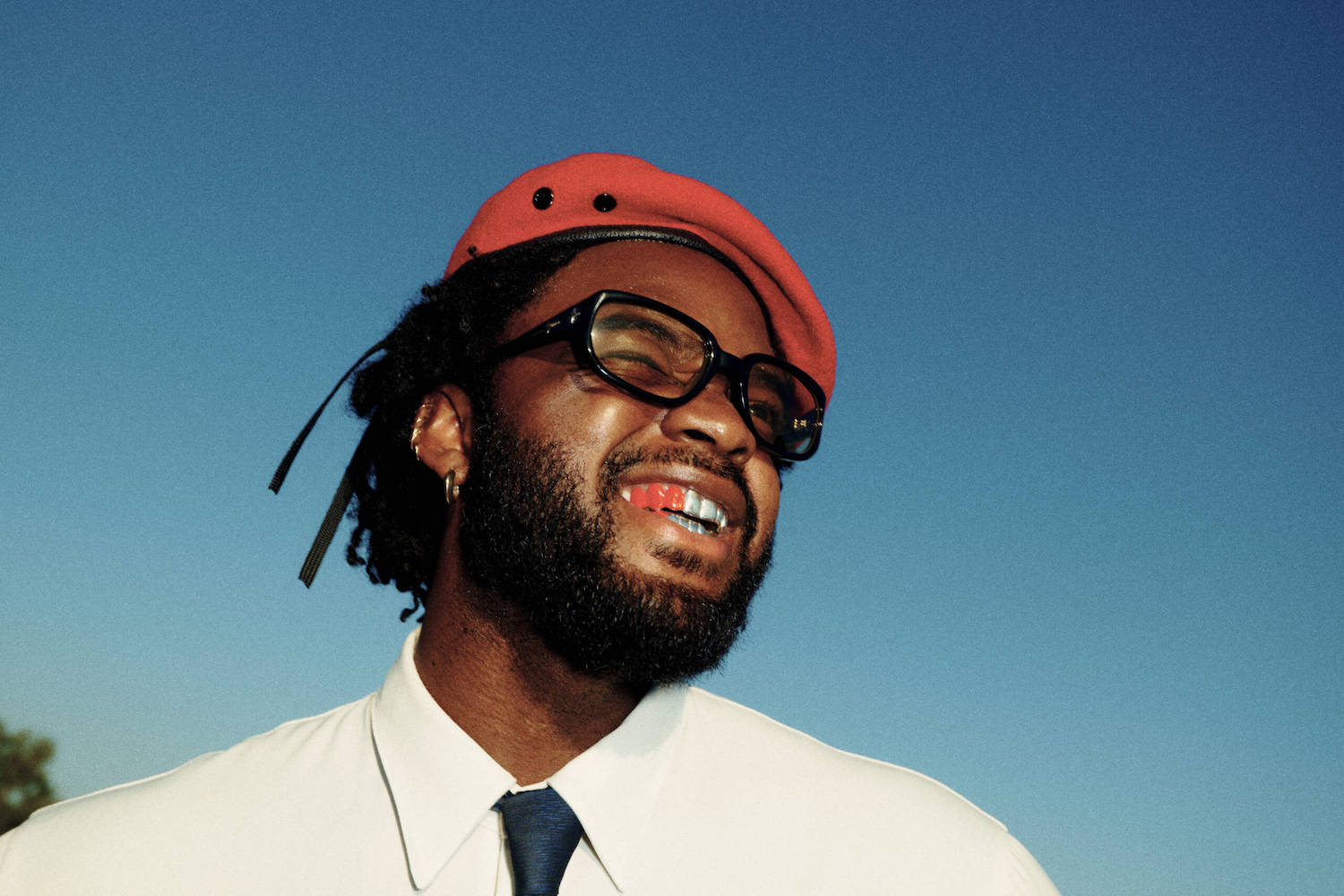
Few artists want to be put in a box when it comes to genre, so naturally, the best way to avoid this is by defying the notion in its entirety. This is how the real outliers are created, the ones who expand creative horizons and confront limitations while often surpassing them. Genesis Owusu belongs in this exclusive group—he harnesses infectious energy in a melding of aesthetics that are purely his own. This shape-shifting sensibility is exemplified in his third studio album Red Star Wu & the Worldwide Scourge, out this week via the Sydney-based label Ourness. With songs like the ominous synth pulse of “Pirate Radio,” the infectious melodies of “Stampede,” and the Britpop-leaning “Death Cult Zombie,” there’s a vast range of styles to dive into.
Owusu and I recently had a talk about the making of Red Star Wu & the Worldwide Scourge, making a music video in a desert, and how he views his progression through music.
Treble: Red Star Wu & the Worldwide Scourge is viewed as your most politically charged work so far. You do a lot of commentary on social and economic issues while being inspired by what you’ve seen going on in the world through an observant point of view, so when it came to exploring these themes throughout the record, how were you able to channel it towards your music?
Genesis Owusu: I feel like I have been a pretty political artist throughout my life along with being a very political person throughout my life as well, so it didn’t really feel like that much of a challenge for me. My first album [Smiling with No Teeth] was a concept around two black dogs with one representing depression and the other representing racism, and the singles before that, even though they were funky and jamming, I was talking about things like cultural appropriation. When I started talking about the racism I’ve experienced through my music, some people said verbatim, “You don’t have to get so political about it,” and I don’t even know what that meant at the time. I was just speaking about my life, so I guess that was the first time I recognized what “speaking politically” was, and I guess for me, that’s literally speaking about life and speaking about experience. It’s never been something that has been separated from me as a person or as an artist, so it didn’t really require any change in mindset or anything like that, it kind of required me to be a bit more brash and relentless.
When you’re speaking about politics, it’s not something that everyone is going to enjoy or like, so you have to be a bit fearless.
Treble: I definitely got that vibe, especially in terms of your stylistic approach—how you meld hip-hop and synth with punk rock and various other elements to make a unique sound. What would you say influences this approach? Do you view styles like paint brushes where you’re crafting music like a collage of sorts?
GO: Yeah, it’s definitely a collage. I’m a Ghanaian man who was raised in Australia, traveled to America to make music, and I’ve toured all over Europe in places like Lithuania, so I’ve had all of these different cultural touchpoints. I’ve always loved all of this different music and I feel like my experience on this Earth has kind of been a fusion, so I guess when I express it through music, it has to be expressed in different kinds of sound.
Treble: You’ve released a few music videos leading up to the release of the new album, including one for the single “Death Cult Zombie,” which I really enjoyed, where there’s a zombie crawling through a desktop computer, you’re driving in a dune buggy around a desert, and you have all of these different silhouette shots. What was the experience like making this? Did you collaborate with a theater troupe to get all of the actors playing zombies?
GO: It was really fun. All of the videos that I made for this album were all done with the same director, Isaac Brown, and we love working together, it’s been really cool to collaborate. For the one for “Death Cult Zombie,” it was around Halloween and we had just decided to drop another single, so it wasn’t really in the cards at first. I was performing at a festival in Adelaide, in Australia, and maybe an hour or two out from there is this crazy desert with all these dunes and stuff like that, so when we figured that “Death Cult Zombie” was going to be a single and it was right around the corner from Halloween, we decided to make a little Halloween-themed music video. We have a bunch of crazy dancer friends, so we painted them up in zombie prosthetics.
The greatest Halloween music video of all time is “Thriller” [by Michael Jackson], so we wanted to pay a little homage to that. It came together really quickly, but it was so cool to film.
Treble: Outside of music, you run your own fashion line called Pur and you design your own clothes, as I understand it?
GO: Yeah, we’re not really doing it anymore, but we did that for a long time, and then we kind of turned that into making clothes for the live show, so a lot of what I wear when I perform is stuff that me and my friends designed.
Treble: When it comes to translating your taste in fashion to the releasing of Red Star Wu & the Worldwide Scourge, do you have any influence on the merchandise pertaining to t-shirts and other things?
GO: Yeah, for sure. At this point, I’m not hand designing every single piece, but I still have a huge overarching vision for everything that comes out merch wise, advertising wise, and everything else under my name. I’m making sure that it’s cohesive and I’m making sure that it’s to my taste so everything has to be in one package. That’s why I started making music and fashion, it feels like I get to build a whole world rather than just the music or the visuals that I get to do from the ground up.
Treble: From a fan’s perspective, I always see a lot of bands and musicians when they put their third record out it usually shows a creative apex. They build off of their debut with the third release being their artistic pinnacle while also leaving the door open for what the listener can expect in the future through experimentation. Do you view this record to be that way for yourself where you’ve reached a certain point for this unique sound you have going on and the messaging you’re putting forth through your audiences?
GO: I’ve never thought about it like that, honestly. Whether it’s music or whether it’s life, I just take it one day at a time, and I view my albums as going through different chapters. Every album is just like a snapshot in time and how I thought and felt during that moment, so this is how this album was to me. It’s a reflection of my time living in the 2020s and I hope it’s not my creative peak because I still have lots of life left in me, so I’m going to keep kickin’ and keep making music far beyond this one, but up until today, I think this is my best one until I make the next one.
Treble is supported by its patrons. Become a member of our Patreon, get access to subscriber benefits, and help an independent media outlet continue delivering articles like these.
