

8 Artists that showed Clive Davis’ knack for finding musical talent

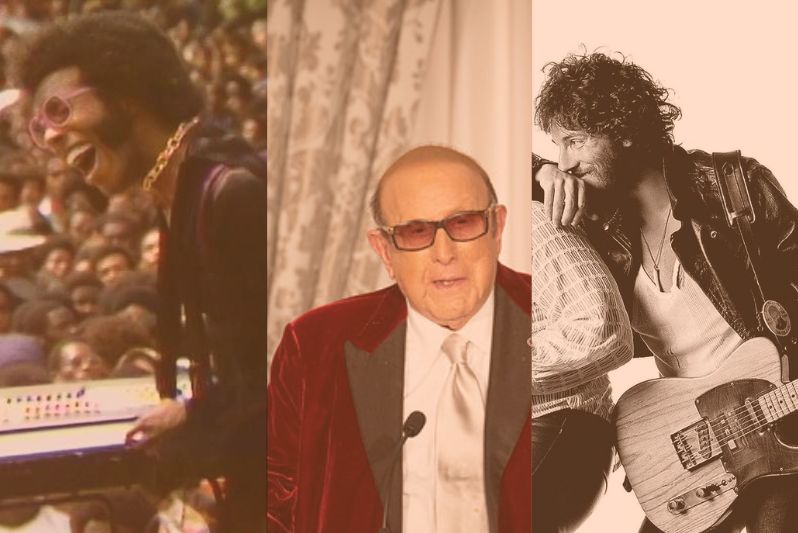
With so many different ways to approach this, here’s the most devastating fact: Clive Davis, who passed away on Monday, June 22, at the age of 94, signed and developed hundreds of artists over a six-decade career across Columbia, Arista and J Records. How was he able to be in so many rooms back in the day without the use of screens, Zoom calls, or the ease of metrics not being pulled out of the cloud and immediately being at his fingertips?
His retention was analog. Taste in music? Vast. To hear that kernel of artistry in Bruce Springsteen during the early ’70s? Then flip ahead to signing the firebrand Alicia Keys in the Y2K year, 2000. That’s determined gold mining, digging for crude oil at the top like There Will Be Blood; Clive Davis was and shall always be a symbol of that American dream. Unregulated and at all costs. He bent his sensibilities around so many foreign-type counterculture idols from the beginning.
His first two signings were Donovan and Janis Joplin in the mid-’60s. Not conventional. He heard prospect and futurity in the generational shifts lurking around the corner, which other music moguls plainly deemed invaluable. Obviously, it was a different time where certain things were relaxed, no matter whether legal or criminal. And yes, your mileage may vary on that phrasing. Davis hopped, dipped, wiggled, waggled, got fired, fell, and then always came back stronger with younger, overlooked brilliance just waiting for the right label executive to recognize their talent. There, Davis was off again, dominating a 50-plus-year enduring industry influence by establishing long-running careers. Never thinking just song, but actually star. He was an atypical American business titan who indeed heard all of this country in that Great American Songbook. From Pink Floyd to Billy Idol and everything before, between, and after, he adjusted the nuances to those chapters. Rescued Santana and Aretha Franklin, interceded because they didn’t have the correct ideas and concepts around them in the latter part of their careers. Davis curated and adjusted new projects that fit the esteemed talent levels of these towering performers.
Forget about dealing with egos. Resurrecting careers? That’s several jobs within one. But he felt he owed a debt to these performers who still were relevant and had untapped creativity still in the later parts of their careers. Lastly, he found the Hell’s Kitchen artist Alicia Keys in 1998, immediately knew the multi-talented vocalist and musician was one of a kind, ousted her from Arista, a label he built and left, and positioned Keys as his central superstar on his new J Records. Songs in A Minor put Keys in elevated company, with comparisons to Stevie Wonder, Lauryn Hill, and John Legend. Again, stars over songs. So that whole TRL image she was stuck with at Arista? Gone. Keys credited Davis’ trust in her own vision for allowing her to grow into the unique superstar she became.
Here are eight various artists who benefited from that Clive Davis attention and went on to be luminaries in the modern music era.
Janis Joplin
According to Billboard, after seeing Janis Joplin perform as the lead singer of a then-little-known psychedelic rock band, Big Brother & the Holding Company, at the Monterey International Pop Festival in 1967, Davis, newly appointed as Columbia Records’ president, inked Joplin and her band as his first signing. “I had never signed anybody before,” Davis told Billboard in 2019. “But watching Janis at Monterey, I had this spine-tingling feeling that I was witnessing a musical, cultural, and social revolution. I had nothing to do with causing the revolution whatsoever, but I was fortunate that I was there to act on it.”
Bruce Springsteen
Signed in 1972 by Davis, “The Boss” was granted ample years and trusted leeway to evolve into the American icon he is today. Not many imprints would put out an album like Nebraska at the urging of the artist. But when that artist is Bruce Springsteen, the star Davis signed, those requests turn into finished tasks due to a track record of proven selection that errs on the side of legacy acts. It’s twelve, count ’em, twelve years between The Boss’s signing and his watershed-defining pop moment of Born in the USA. Being a Davis signing helped with that, allowing a lengthy gestation period.
Billy Joel
Known for his witty take on his musical education: “I didn’t go to Columbia University, but I went to Columbia Records.” Billy Joel was lured into the prestigious imprint due to the affiliation with Miles Davis, among other luminaries, whose discographies took residence at 51 West 52nd Street, between 5th and 6th Avenues in Midtown Manhattan. Despite the music, New Yorkers are always impressed with the lay of the land, and that was prime real estate. Plus, really early on in his career, he was a hit artist in 1973 right out of the box—no gestation period needed—with his iconic single and album Piano Man. And like real estate, Clive Davis recognized Billy Joel’s New York-centric dynamism, which sold itself.
Sly and the Family Stone
Sly Stone had talent emanating from his pores; the challenge was finding the right temperature for a pop audience to recognize it. Listen, when Sly and the Family Stone pranced out on stage at the 1969 Harlem Cultural Festival, captured lovingly by Questlove in the Academy Award-winning documentary Summer of Soul, these Bay Area band members wore street clothes, in an unmistakably San Francisco manner, out in Harlem’s Mt. Morris Park (now Marcus Garvey Park). The music and musicians were outliers in comparison with the established Motown regimes and jazz musicians. Everyone at the concert under 25 knew who the band was, leaving the elders alone in throwing side-eye at this racially intermixed and multi-gendered band featuring a Black woman on trumpet and a white dude playing drums. Nobody booed, but they did leer. Clive knew this band had to be talented to pull off so many progressive ideas with an aloof type of swag. This is Prince and The Revolution at the end of the ’60s; shit’s blowing people’s minds. Davis just needed Sly to write pop songs as an introduction to who the band is; once that was established, the rest would sort itself. From Clive Davis’ urging, Sly penned something that could introduce the band, which became “Dance To The Music,” and the rest was history.
Blood, Sweat & Tears/Chicago/Earth, Wind & Fire
Not to diminish the importance of any of these outside-the-box bands that played so many versions of pop, jazz, fusion, rock, and R&B—and those are just the genres with names—Davis, with his big ears and big brain, identified that these maverick-individualist acts had the stuff to reach the masses.
Listen, I could go off on any one of these three bands. I’ve owned records by all of them, specifically from the late ’60s to mid-’70s when they, for my money, were at their most inventive best. But again, Davis, who was known as the svengali behind so many solo performers, sometimes doesn’t get the proper acknowledgment for having a larger, non-pop ear, for seeing something that will align itself with the direction culture is headed. All three of these bands represented that maximalized presentation and so much more.
Whitney Houston
One of the reigning pop stars of the ’80s and one of Clive Davis’s career-defining artists, he signed the singer after taking in her performance at a club in 1983. Knowing she was the daughter of gospel singer Cissy Houston, niece of pop vocalist Dionne Warwick, and also related to opera singer Leontyne Price, Davis took exception to his time with the artist who came from such a dignified pedigree. Releasing her debut album on Arista in 1985, the self-titled album reset—mind you, during the era of Madonna, Prince, MJ, and Bruce—the pop music star trajectory. Houston continued that rocketship, yet very much earned, success in the early ’90s due to the film The Bodyguard, covering a Dolly Parton ballad; performing the national anthem at a Super Bowl like nobody else ever has since; and winning six Grammys. Yet it must be noted Houston’s death was also intertwined with Davis’ story, as her hotel bathtub drowning at age 48 came the night of his annual pre-Grammys party, which she’d been expected to attend.
Treble is supported by its patrons. Become a member of our Patreon, get access to subscriber benefits, and help an independent media outlet continue delivering articles like these.

