

Brian Eno & Beatie Wolfe : Liminal

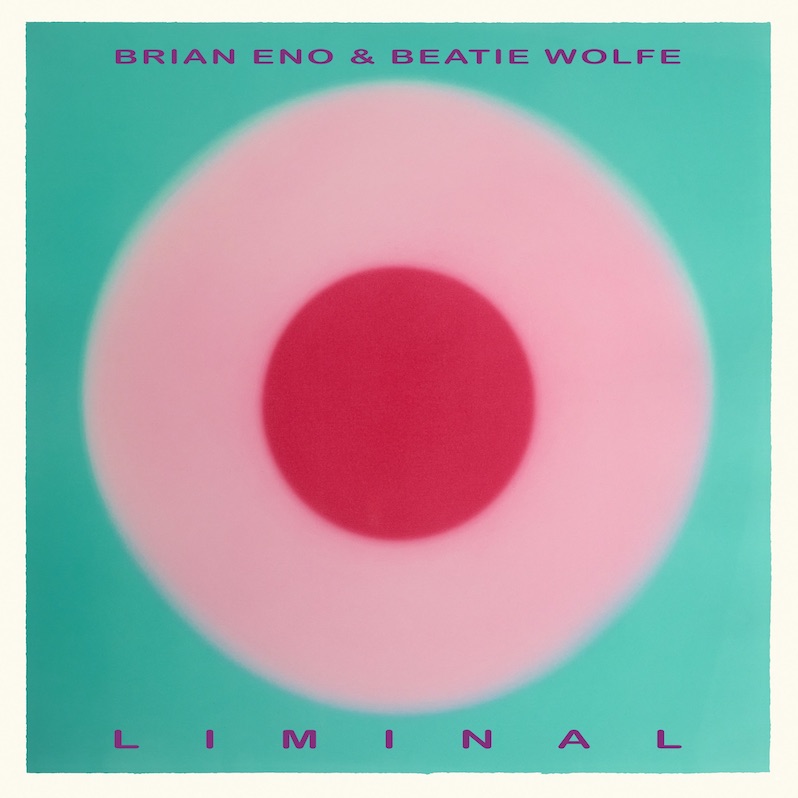
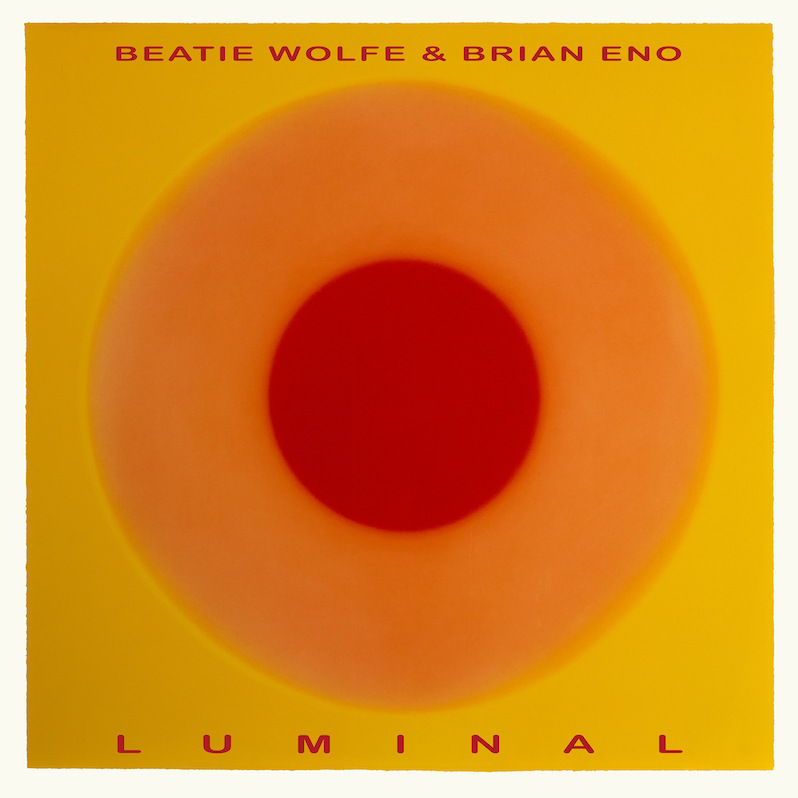
Brian Eno and Beatie Wolfe’s collaboration continues to unfold like a quiet cosmic experiment in empathy. Once of the duo’s records from earlier this year, Lateral, gave us the vast, spatial calm of ambient music. Luminal, its companion release, explored the consciousness of dreams. Liminal, the final piece in the trilogy, arrives into the borderland between the two. It’s a territory the pair call “dark matter music.” And, yes, the phrase fits. This record feels gravitational, like something invisible pulling you inward.
From the opening track, “Part of Us,” the duo summons a sound world that feels both kind as it is destabilizing. Tones drift as if submerged in a heavy atmosphere; guitar murmurs flit beneath synth halos. There’s a strange intimacy here. Eno’s legendary architectural stillness gives shape to Wolfe’s ghostly proximity. Then it is the sense of scale, which is constantly shifting. It flows from the microscopic to the galactic, from a pulse in your chest to a hum at the edge of perception.
One of the joys of Liminal is following the arc of these records. Where Lateral was unpeopled landscape and Luminal a room for emotion, Liminal gives that emotion a body. You can feel its breath. “Ringing Ocean,” one of the album’s instrumentals, ripples like a memory refracted into something alien. It’s followed by “The Last to Know,” a brief vocal piece that transforms Wolfe’s voice into texture more than message. The listener senses story without language, like overhearing a secret through haze.
Throughout, Eno and Wolfe play with the thresholds of form. They call it the “nong,” the almost-song. Tracks like “Procession” and “Little Boy” hover at the edges of melody, offering suggestions of structure before dissolving back into ambience. It’s a technique that invites the listener to participate, to complete the music in their own imagination. “Before Life” deepens this approach, a composition that seems to start mid-thought and end mid-exhale. You listen, leaving unsure whether you’ve emerged from a dream or entered one.
There are moments where Liminal feels uncanny in its restraint. “Laundry Room,” for instance, begins in a waiting space, but quickly spirals into something spectral. Wolfe’s voice turns observational dread into a kind of performance art, narrating the mundanity of a laundromat as if it were the site of a haunting. The mundane and the metaphysical collapse into each other, and the effect is quietly stunning.
Eno’s production remains a study in precision without coldness. He, of course, has a sterling reputation for composition, and this is a showcase. Here, the sound field feels enormous, but not showy. Like so much of his discography, every frequency is chosen by Eno with painterly patience. “Corona,” one of the record’s most affecting pieces, distills that balance. Harmonics go trembling between sorrow and grace.
By the time the closing piece “Shudder Like Crows” arrives, Wolfe’s layered vocals gather organic yet unknowable. The album ends not with resolution but with movement, as if the dark matter itself has begun to think.
Compared to Lateral’s patient expanses or Luminal’s softer emotive reach, Liminal feels more alive, yet more humanly unstable. It’s less about ambient comfort and more about tension between connection and distance, signal and silence. The duo’s interplay here feels at its most conversational: Wolfe’s imagery and Eno’s geometry in delicate orbit.
Label: Verve
Year: 2025
Similar Albums:
Brian Eno and Beatie Wolfe : Liminal
Note: When you buy something through our affiliate links, Treble receives a commission. All albums we cover are chosen by our editors and contributors.
