
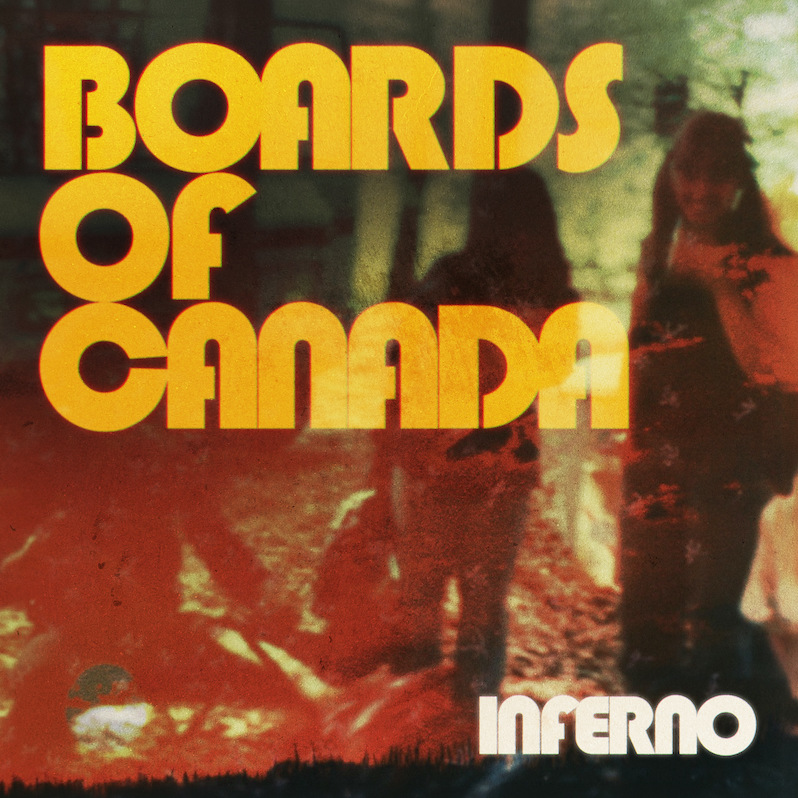
Boards of Canada – Inferno

You can demarcate three specific periods in the catalog of Scottish electronica duo Boards of Canada not just by sound, but by vision. First, brothers Marcus Eoin and Mike Sandison marked their earliest EPs and debut album Music has the Right to Children with images of innocence and playfulness, behind which they delivered nostalgic ambience and cracked versions of hip-hop beats. Second, two more EPs and LPs between 2000 and 2006 took their music to extremes of both light (“Dayvan Cowboy”) and dark (“Alpha and Omega”)—the longer releases like The Campfire Headphase using art abstracting the human form, the shorter journeys like In a Beautiful Place Out in the Country suggesting roadside scenery and signs.
Third, Boards of Canada then fell down rabbit holes of their own making, embracing and amplifying their reclusive nature, using all available time and space to compose rhythmic, atmospheric music that seemed to start to comment on matters of the day in some of the bleakest 1970s terms possible. A 7-year absence brought us Tomorrow’s Harvest: rivaling Nine Inch Nails’ Year Zero in alternate-reality-game marketing, it arrived in 2013 blanketed in the overheated pastels of apocalyptic sci-fi to convey societal collapse. Thirteen years later, Inferno now lands with iconographic suggestions of the dread found in Italian giallo horror cinema, as the Sandisons’ long-gestating fascination with the constructs and consequences of belief launches forward from the background.
Mike and Marcus’ references can usually be tracked down with a little legwork, and this album includes some of the longest and clearest dialogue samples they’ve ever used. If you encountered Inferno in a vacuum, without understanding the recontextualization of content heard throughout Boards of Canada’s catalog and long interpreted by fans and critics, one might get the impression that the album’s an electronica entry into Christian contemporary music. The breaking-news theme opening Inferno is called “Introit,” a name often applied to music used to start holy communion. Song title “The Word Becomes Flesh” is from the Gospel of John, suggesting the transformation of God’s commandments into the body of Jesus. Back-to-back tracks “Age of Capricorn” and “Father and Son” are propelled by recordings of televangelist Jack Van Impe and The Children of God (later The Family International), respectively.
But what BoC have often done with respect to the cults they address—not just religions large and small, but worship of any construct, really: science, magic, personality—is critique them through audio, setting messages in opposition. For every God-fearing allusion on Inferno there seems to be a rebutting one from another faith (“Naraka,” a murky groove titled after the Hare Krishna concept of purgatory and sampling one of its core mantras) or from some far less parochial pursuit (like the PCP addicts captured in conversation on “Blood in the Labyrinth”). The transubstantiation implied by “The Word Becomes Flesh” feels almost undermined by its sampling of an educational film describing in utero development of a chicken.
Throughout Inferno the Sandisons also recut or layer these voices in an attempt to change or obscure meaning, or distort them to imply inner spiritual conflicts. It’s Boards of Canada’s take on age-old tales of angel vs. devil, possessed souls, and false directions from forked tongues. “Age of Capricorn” merges the cadences and tones of three vocal lines—two spoken, one melodic—with spare synths and bass in one of the band’s most beautifully disquieting hymns ever. Multiple songs here match lifted vocals to notes and beats the duo seem to want to play, and the results on cuts like “Father and Son” rest somewhere between Squarepusher’s glitch and Saul Williams’ spoken word.
The notes and beats of Inferno are collectively some of the darkest Boards of Canada have committed to an LP. The air of apprehension in these low- and midtempo atmospheres overtakes even those heard on Tomorrow’s Harvest and Geogaddi. Guitar strums in songs like “Arena Americanada” occasionally push the duo into post-rock territory, but those combined with BoC’s sonic synthesis and manipulation means music like “Into the Magic Land” echoes the moody abstraction DJ Shadow managed on his and UNKLE’s earliest albums.
I will readily admit that as Inferno progresses, it sometimes finds itself comfortable coming back to similar BPMs and keyboard/kit settings. There are even moments that feel like callbacks to past BoC work—”You Retreat in Time and Space,” for example, could be a mirage of the extended version of “ROYGBIV” fans clamor for. Maybe it’s absence making the heart grow fonder, but nobody sounds quite like the Sandisons and I’m not sure anyone should try, so I’m prepared to cut them a little slack for stumbling into repeating themselves a little bit. Besides, they also manage to bring us in new directions like the spare, despairing drum pad funk of “All Reason Departs,” or the haunted merry-go-round interlude of “Somewhere Right Now in the Future.”
Boards of Canada’s backward-glancing aesthetic has given us decades of scraps of stories about journeys in the dark of both the mind and the world immediately in front of you. With Inferno, they force listeners to acknowledge the uncertainty and, in some cases, abject terror of not knowing if you can trust who’s guiding you along the path.
Label: Warp
Year: 2026
Similar Albums:
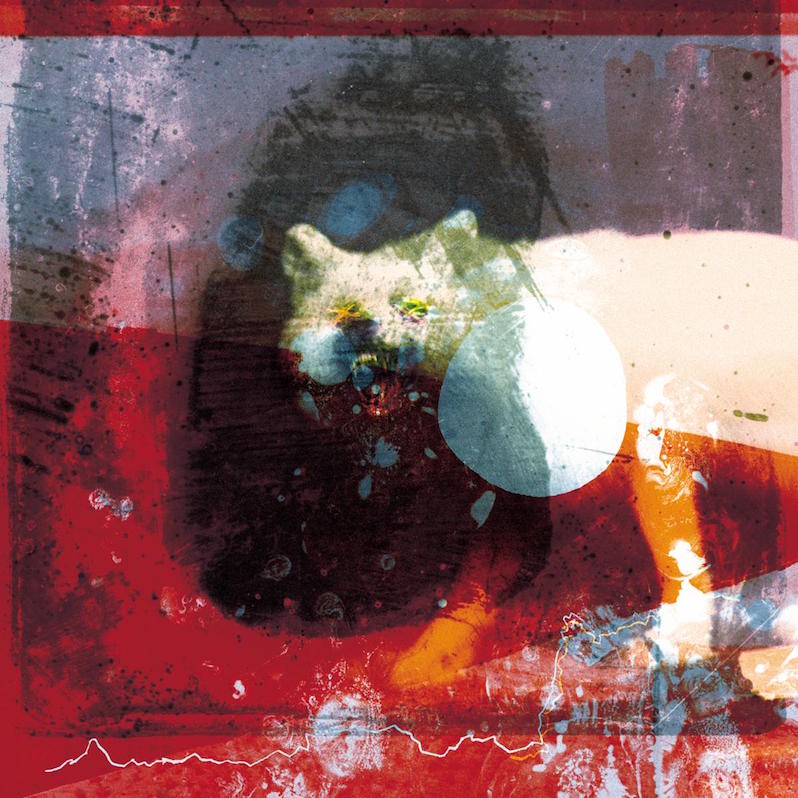
Boards of Canada : Inferno
Note: When you buy something through our affiliate links, Treble receives a commission. All albums we cover are chosen by our editors and contributors.


Excellent review. How did this album make you feel? And will you come back to it again and again?