

Charli XCX : Wuthering Heights

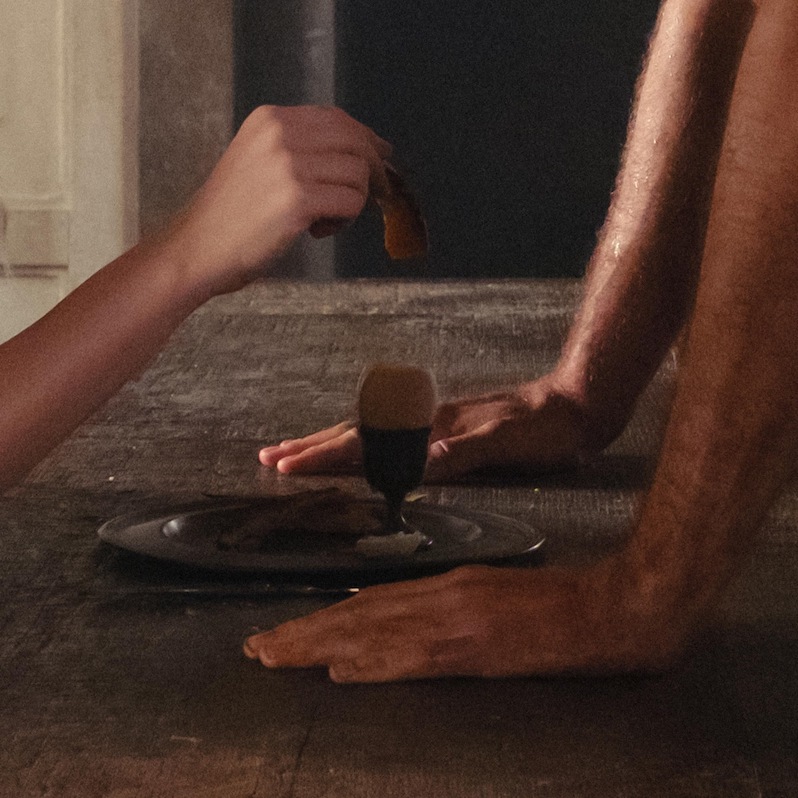
Charli XCX put herself in a difficult position with brat. That album’s explosive success both commercially and critically meant that she was on the hook for whatever her next project was; the level of eyes and critical scrutiny was going to be extreme no matter what it was. That she chose her next project to be the soundtrack to an upcoming and even-then controversial film adaptation of Wuthering Heights, a soundtrack to be released simply under the name itself, was already a bold decision. That her first single would be an industrial-driven dirge sharing vocals with a haunting spoken word performance by John Cale was another. This was a statement of intent; the maximalism of brat and, honestly, her entire body of work but applied suddenly to the complex and grief-stricken emotional character that comprised the post-party atmospheres of brat.
To say the rest of Wuthering Heights makes good on this promise would be an understatement. First, it takes a shift in instrumentation and arrangement, leaning more toward the post-Björk orchestral/electronic hybrid of Rosalía’s brilliant LUX, an album that seems like will only rise in its artistic and critical estimation over time. This shift lets the sprechgesang of Charli, where she seems more often to be rattling off raw thoughts with slight melodicism rather than a properly formed vocal line and refined lyric, land in a more emotionally yearning manner. That sense of ache was always present in her work, similar to how The Weeknd’s body of work is the self-hatred and self-annihilation that comes during the comedown after the party has dimmed, but with Charli’s self-interrogations happening more in the midst of the party, picking your head up from a line of coke on a bathroom sink to see your messy face in the mirror. Here, she has stripped away the party aesthetic that had become somewhat artistically confining for her, allowing her emotionality to live within itself. The power of Romanticism as a form is to exaggerate a feeling on its own terms, to match wilderness and the natural world to the seismic force of the human heart, something Charli and collaborators take keen advantage of here.
The album is brief, coming just over half an hour, and with most songs being scant in length as well. It plays like a fragmented song suite, fitting for a concept album acting as a mirror to a film, landing somewhere in the grey space between a soundtrack and a studio record. Sky Ferreira, whom we have not heard enough from in recent years, emerges as a guest vocalist late in the record, delivering lines of gothic intensity that lean in to the tonal pivot Charlie explores here. Lines like “you’re going to love me like I’m already dead” and “put my flesh up on the cross” have a character to them that would have previously felt out of place; here, they feel like Charli embracing the potentiality her music possesses in the post-brat world.
She had initially expressed artistic fatigue in the wake of that landmark record, only to produce Wuthering Heights while touring it. Her embrace of gothic timbres range from darkwave to neoclassical to witch house, but all with her very post-Bowie cocaine poet literary aesthetic. Her lines are, ever as always, blunt but cutting, plain statements of details we’d often rather not look at. If brat was the artistic and aesthetic apex of what she once was, Wuthering Heights is the first tentative steps at a wider and more expansive life project. Does it achieve the same heights (ha!) as its predecessor? Not quite; it is too intimate, perhaps, lacking in the anthemic heft that made “brat summer” inevitable. Is it a shockingly potent vision of what her artistic growth might yet be? Absolutely.
Label: Atlantic
Year: 2026
Similar Albums:
Charli XCX : Wuthering Heights
Note: When you buy something through our affiliate links, Treble receives a commission. All albums we cover are chosen by our editors and contributors.

