
Sports Team : Boys These Days

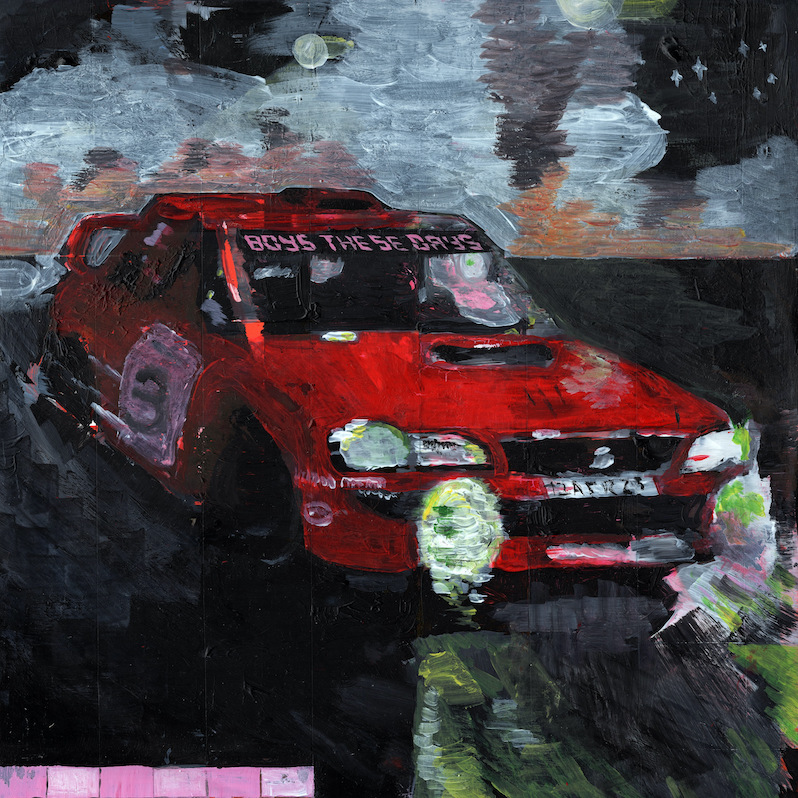
Sports Team are having a quarter-life crisis. They’ve bought a shiny new car (a Subaru, if the title of the new album’s opening track is anything to go by), along with, by the sounds of it, a saxophone and a harmonica. Their sound has had an overhaul—it’s out with the skittish, chaotic, zig-zag guitars that characterized their first couple of releases, and in with a heft of well-articulated neuroses, a sparkling clarity of purpose, and some of the grooviest basslines of their whole damn career.
It’s well-established by now that a fundamental strand of Sport Team’s DNA is their sublime social commentary. Consistently clever and cutting, and always delivered with a theatrical wink and a sense of sardonic showmanship, the band are adept at introducing and quickly deconstructing all kinds of concepts without ever leaving their audience feeling lectured to. Boys These Days certainly continues that trend, though taking a somewhat sharper focus compared to the band’s past two albums. The theme of this new record is getting old (if you consider 30 old, that is)—or, more specifically, feeling suddenly cut adrift from your youth in a way that leaves you feeling powerless to do most anything other than gaze helplessly back at your twenties and wonder why Fred Again… isn’t cool anymore.
Unsurprisingly, the record’s title track is one of the best manifestations of this concept; it’s a character-based tune that doubles as a satire on toxic masculinity, although the band wouldn’t dare to use such an academic phrase themselves. Instead, their point is made with comedy and playful absurdity—“When I was your age, we didn’t even have doors / We just had playing in the traffic with rocks,” vocalist Alex Rice croons matter-of-factly, channelling his inner Daily Mail reader, “Boys these days look like girls … Maybe what they need is a war.” The notion of grappling with one’s age sees another highlight in “Sensible,” which showcases a kind of awestruck disgust at the vogue habits of today’s young adults with the baffled intensity that only an ever-so-slightly older young adult can muster. The sentiment behind “Planned Obsolescence” takes a bit of a darker turn, though the lyrics remain bitter and sharp as ever—it’s a song about the dissatisfaction that comes from existing within a system that doesn’t really create space for you to grow into your own person—it just needs you to simply exist to keep the cogs whirring. “I am another pointless device,” Rice laments, “awaiting planned obsolescence.”
The problems with Boys These Days begin where the lyrics end and the instrumentation begins. Which is to say that although there’s not exactly a shortage of musical highpoints throughout the album—the serene sax on “I’m In Love (Subaru),” the country-punk stylings of “Bang Bang Bang,” and the general grooviness of Oli Dewdney’s bass—there never quite feels like there’s a moment where the music fully aligns itself with the lyrics, just in terms of sheer quality. The album is catchy, there are moments that feel good and get stuck in your head, but it almost consistently feels like the music is providing a soapbox for Rice’s witticisms, rather than being a whole other dimension to the songs on an equal footing to the words. Indeed, it’s only the closing track, “Maybe When We’re 30,” that feels instrumentally immersive and perfectly meshed with the song’s storytelling in a way that the rest of the album deserves to be.
But then, the whole narrative arc of Boys These Days bends toward an acceptance of growing older and lamer, and the style that is reflected throughout the album’s 10 tracks does feel distinctly ‘70s—and not the trendy, post-punk sort of ‘70s that’s gained a purchase in the British indie scene of late, but a far more soft-rock, dancey, disco sort of ‘70s, the kind of charmingly cheesy stuff that people go mad for at weddings. On some conceptual level, it makes total sense for the band to fill their record with musical styles that eschew trends adopted by their contemporaries. So, perhaps in rejecting what is “cool,” Boys These Days has instead taken aim for “timeless.” We’ll have to wait and see if it’s successful. Maybe when it’s 30.
Label: Bright Antenna
Year: 2025
Similar Albums: