

The Antlers reckon with ecological fragility

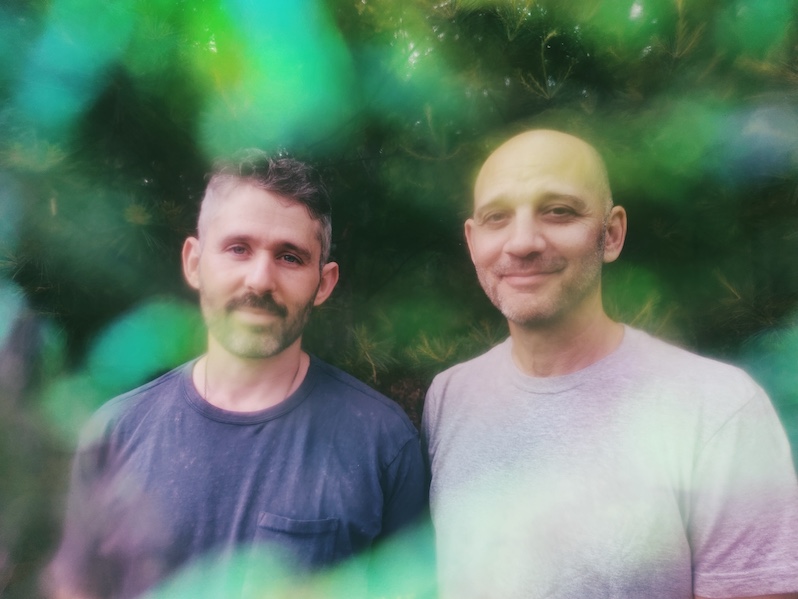
The Antlers’ vocalist and primary songwriter Peter Silberman sits in an environment that feels almost uncannily adroit. Talking to Treble from a gorgeous white wood-lined room, surrounded by plants and bathed in sunlight; it’s a space that looks as delicate, pretty and immaculately arranged as the music that Silberman and drummer Mike Lerner have spent the last 20 years making.
On their sixth studio album Blight, out now via Transgressive, Silberman is tackling some typically thorny and complex themes. This time around, it’s the pollution and wastefulness that is devastating Earth’s natural order. These nine tracks are deeply inspired by the natural environs of Silberman’s upstate New York studio in which they were written and recorded, frequently mirroring the fragile splendor of said environments.
Blight is also The Antlers’ most abstracted album, full of odd samples, electronic skitters and unpredictable structures, occasionally recalling the emotive textures of the early post-rock acts. Silberman’s signature voice remains the same, however; an angel surveying our lush but imperilled world, balancing this sense of wonder with the apocalyptic visions of tracks like “A Great Flood.”
Across the course of a thoughtful conversation, the softly-spoken and generous Silberman guides Treble through Blight’s ecological inspirations, his rural studio and his complicated feelings on our troubled future.
Treble: I was very taken with a line in the press release for this album where you describe walking the fields near your studio and it feeling “like an abandoned planet.” How has that fed into your music here?
Peter Silberman: I think that over the last few years, maybe longer, I’ve got a lot of ideas from being in the natural world. In recent times, I’ve used that as a tool; when I’m planning to write I won’t really sit with a pen and paper, I go for a walk and see what occurs to me and take notes. There’s something about being in a wooded or other natural place that affords me some psychological privacy. Whereas, when I lived in the city and tried to write, there was something distracting about it. There’s something liberating about being in nature, you become less self-conscious and can get lost in your imagination. That was definitely the case with this record. It required me to use my imagination and inhabit the way that the natural world seems to you when you’re a kid; magical, otherworldly.
Treble: When you talk about an idea coming to you, how literal is that? Does it gradually arrive or is it a literal spark from something you experience?
PS: It’s hard to say. In that movie Empire Records, a character says something like “who knows where thoughts come from, they just appear.” It’s like that. I put myself into circumstances where it feels like I’m going to be the most receptive to ideas. Sometimes I don’t know what they mean, they’ll just be a thought that I’ll write down and think about in terms of what it means metaphorically or symbolically.
Treble: I want to ask about your upstate New York studio. What the environs like and how did it play into the creation of this new album?
PS: It’s this small outbuilding on the edge of these giant hayfields. I’ve been working on it for about five years now. The main room itself is not very big, but it’s big enough to fit myself, one other person and a bunch of gear in there. It feels a bit like a spider’s lair [laughs]. But there’s a lot of natural light and it looks out over these fields. The fields almost feel like an extension of the studio. More often than not, I’ll start working on an idea, then take a break and go for a walk. It’s my version of pacing around the studio, except that I’m doing it outside. The boundaries feel very porous. It’s just a good space for contemplation. I do some of my best thinking when either walking or looking at some kind of view or scene. Living in the country, it feels like my thoughts can stretch out and fill up a space. Whereas in the city it often felt like they were bouncing off buildings and people and it was hard to get them to stretch out. Out here, my thoughts become a bit more cosmic.
Treble: The word I have to describe this album is that it’s your most “abstracted” work, it actually sounds a bit like how you were just describing your thoughts. Did you initially have a specific idea of what you wanted this album to be or did it come together more organically?
PS: Both, in parallel. A lot of the musical ideas came about from just being in a daily practice. In some cases it was practicing piano, recording ideas and kind of cataloging them. Alongside that, I was developing the concepts of the album, like the environment, pollution, technology. Gradually, you then start bringing both of these strands together, seeing which musical idea suits which subject. When I’m writing words, maybe I’ll start with one line. That’ll tell me that this song is about this subject. Because I have this one line that is alluding to a direction, I’ll attempt to expand on it. If it works, the track becomes more fully realized. There’s an intuitive aspect to it, where I’m not always sure where a song is going. I try not to force it. I try to trust that it goes where it needs to go.
Treble: The track “Pour” feels like a great example of the album’s themes and ideas. What’s the story behind that one?
PS: With that song, I started thinking that I was going to write about something that happened in our neighbourhood, around the time I was writing it. An oil delivery truck went off the road and there’d been a big spill and clean up. I thought there was something to dig into. I started writing about it, but at some point I thought “what if this is a survey of local instances of contamination?” I read about another where a warehouse nearby had, over many decades, been pouring their waste products down the drain and it had contaminated the ground water. The state ended up having to clean it up and everyone had to transition from using their well water to municipal water. I wrote about that and that became the story, not the truck overturning. It felt like a good bridge from the micro to the macro. It’s a record about small acts of wastefulness and their cumulative effect, over time and across a large population.
Treble: As broadly peaceful or tranquil as a lot of this album is, there’s occasional interjections of apocalyptic imagery. Big question: are you optimistic, pessimistic or neither about our collective ability to shift our perspective on these issues?
PS: I do think people have an incredible capacity to evolve their thinking. But, they have an equal capacity to regress their thinking or be stubborn. There was a time when it felt like there was an awakening to a lot of these issues and that the world was getting on board with fixing our attitudes to consumption. I think that attitude is still there, but it comes up against greed, laziness and convenience. It’s a difficult thing to keep pure. Right now, in this country, there’s a large roll-back of green technology, which is really disheartening and scary. I like to think that it’s temporary, but there’s some damage that can’t easily be undone. I find it hard to be optimistic. I really want to be and I was hoping, on some level, that writing this record would help me find glimmers of hope. There’s also a complacency that can set in with a certain type of optimism regarding this stuff. It makes you think that the arc of history will always bend towards justice. I wish I felt like that was true. Nature follows laws of correctiveness; it’ll find ways to over-correct the damage that’s done to it and that sometimes comes at the expense of people. Maybe nature finds a way to recover, but I don’t know if that applies to people.
Treble is supported by its patrons. Become a member of our Patreon, get access to subscriber benefits, and help an independent media outlet continue delivering articles like these.
