

The Best Prog Albums of Winter 2026


This column, much like all great prog epics, must change. While my original outline—that of three-chapter rotations covering a classic album, a contemporary album and a record some might view as outside the prog canon—still has legs to it conceptually, the shape of life made it harder and harder to produce. It turns out digging deep into your own psyche over and over again exhausts you in some deep and existential way; who knew?
But where the previous installments might be viewed as 20-minute behemoths slowly developing one idea to its vast prog apex, this new shift might be viewed as the type of 20-minute epic made by snatches of pieced together shards of music much in the way the Beatles’ Abbey Road medley laid out for all prog bands to follow. I still have my list of things I want to cover: The Cure, American Football, Slint, Godspeed You! Black Emperor, Diamanda Galas and more. And I may yet do so. There is space, after all, for a more sizable essay to open this new format with the other capsules as engaging nuggets, a scattershot of brilliant records and interesting material.
But for now, the new form excites me enough that I feel like I will stick to it. The Solid Time of Change will be devoted to older records, be they a year old or 50, reflecting work that is of the historical body whether lesser minds consider it within the progressive music wheelhouse or not. Total Mass Retain meanwhile will be devoted to contemporary material, i.e. work put out ideally within the last three months or so. I don’t have a set amount or set balance for each; the amount and the records contained will vary based on what interests me, be it due to its excellent or for how it generated an interesting or worthwhile thought. After all, I realized in part that one of my issues was my resolute seriousness in the previous endeavor, one that produced material I’m still overwhelmingly proud of but becomes harder and harder to replicate as I age.
This month, it’s two records for The Solid Time of Change, one from last year and one from way back in 2005. And it’s six albums for Total Mass Retain, the vast majority of which I think are excellent and all of which generated what at least I view as worthwhile thoughts to boot. The spread of these eight also offers a satisfying array of the different approaches we see in progressive music, from the most scurrilous and avant-garde to the bright and hip and punky to the most overtly unabashedly prog you can find, erudite and pretentious as fuck, just the way daddy likes.
Note: When you buy something through our affiliate links, Treble receives a commission. All albums we cover are chosen by our editors and contributors.
Total Mass Retain
Antropoceno – No Ritmo de Terra
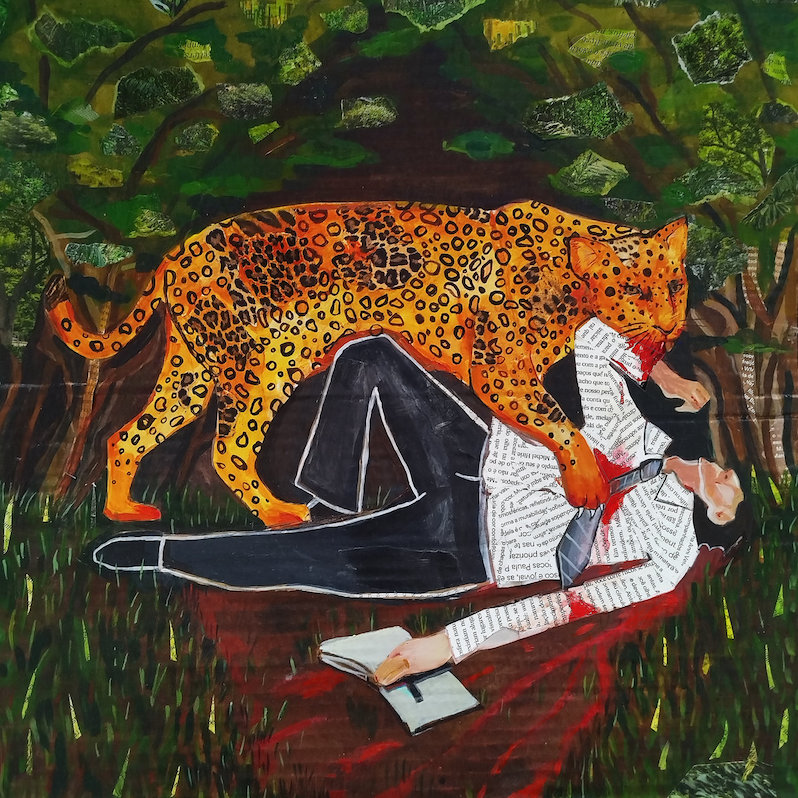
Now, unlike others, I actually do quite like the group the Mars Volta became. They never chose the easy or obvious thing, pivoting from prog-infused post-hardcore to abstract avant-rock to Zeppelin worship and even a Gentle Giant-style prog record before returning with more ambient and jazzy material post-reunion. That said, Antropoceno here turn in the album that I think we Volta fans have always secretly wanted, especially to prove naysayers wrong. We see here a fusion of Latin music, with strains of samba and bossa nova and more making their way in, meted against quite bright electronics and progressive rock, all set with vocals from the more abrasive side of skramz. To merely sat it compels would be to comically undersell the record. This album currently sits near the top of my favorites of the year, itself a space already getting quite crowded a quarter of the way in. It’s part of a trilogy but to my ears, the connection seems mostly in the impetus of the creator rather than manifest in the material itself, which both frees you up as a listener to spin it unaccompanied as well as opening the door to yet more material if it so moves you. It belongs next to groups like Bríi and that sort of forward thinking Latin, Caribbean and South American prog, stuff unafraid of their own folk traditions. I had initially thought this record related in some way to Holoceno especially given their similar aesthetic space before I remembered that record was by Papangu and not a group called Holoceno. The relationship there I realized later was from The Ocean’s album duology of Anthropocentric and Holocentric, themselves the kind of era-cap of their career-length project of having albums for the geological eras of the earth. This associative interconnective tissue between projects is, for me, so much of what makes art a fascinating space to explore, the irreal mappings that make up in many ways the meat of our emotional associativity and thus value of the material, especially beyond a purely journalistic or historical sense.
Listen/Buy: Bandcamp

orchiddBB – water the teeth
This kind of avant-prog is some of my most delicious treats I gravitate toward. orchiddBB occupy a space of zeuhl and RIO, or Rock-In-Opposition, that spans groups from Magma to Salma Mammas Manna to, especially here, Koenjihyakkei. RIO, for those not in the know, was not just an explicitly politically but an explicitly anarchist and communist art movement of avant-rock and experimental physical artists and poets in Europe meant to oppose the rising second tide of fascism hitting the continent in the ’70s, itself countered by the explicitly fascist and white supremacist art movement Rock Against Communism. The hybrid of classical textures with punk attitude, blues sensibility and progressive structuralism (in decay) will either strike you as pretentious or thrilling; there’s rarely a middle ground. It’s meant to mirror a very post-Dada sense of the world. Dada, the most toothsome modernism and proto-post-modernism, was born out of watching the highly structured and ordered world of the Victorian era run aground on the jagged rocks of mass mechanized death in World War I, which threw into sharp relief the meaninglessness and madness of our hubris in those structures. That we see more of this being made in the contemporary condition, with fascism not just on the rise in America and Europe but also visibly already decaying, like a zombie’s form of fascist ideal, undead and shambling, is not really a surprise. Punk is and was one of the most important art movements for the musical world, but it’s so often misunderstood as mere aesthetic, about a sound or a look rather than an attitude underpinning that look. That sharp, acerbic and critical mindset is immensely commensurate with more obviously cerebral forms of music; in so many ways, they are one and the same. This caterwauling, with those screaming dissonant strings, near-tuneless operatic vocals and dissembling beats, feels like very nearly the only fair counterpoint to already breaking apart world.
Listen/Buy: Bandcamp
Big Big Train – Woodcut
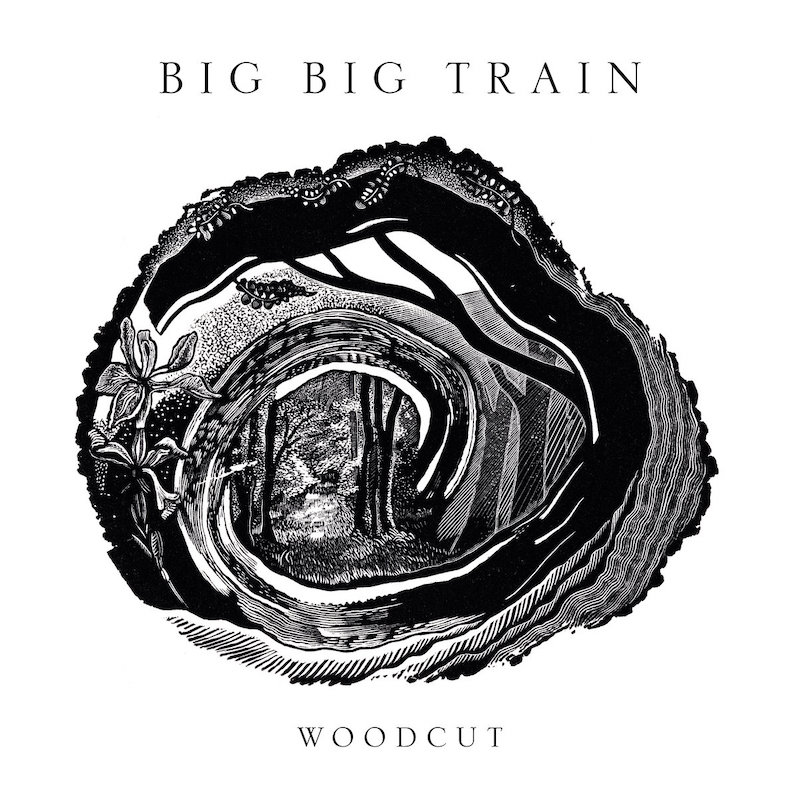
I’ve been in love with this group since 2006 when they dropped Underfall Yard, which to me is still their high water mark both as an album as well as a song with the 20-plus minute-long epic title track closing it out. That said, barring 2021’s Common Ground, they haven’t put out a bad record, even if some require more patience than others. This one sees the group, who’ve become quite a who’s who of prog musicians given the inclusion of Beardfish’s Richard Sjöblom and Spock’s Beard’s Nick D’Virgilio, returning to the style that made them break through so well in the prog community, marrying a bass-forward approach similar to Yes with the wide atmospherics of early Genesis with some of the drama we associate more with the ’90s and 2000s forward in prog where they got back more in touch with rock writ large. There is a concept here, a full-on narrative, but like in most concept-driven arenas it exists mostly to ensure a musical and emotional cohesion and throughline to the record, which it delivers superlatively. It’s important, as previous entries in this long-sleeping column (once intended as a book in chapters!) have shown, that it’s important to approach this material seeking not just the hip or the canonical but instead more open-heartedly. There is a bleeding heart sincerity here akin to U2; you have to be willing to love it. As a result, Woodcut isn’t a record that fares well as background music at a party or trying to impress others; I implore you to put on headphones and sit quietly with it, allowing it to move you. Is it adjacent to musical theater with some of the dramatization? Sure, I can’t deny that. But there’s a magic to letting go, right?
In a normal critical context, this next part wouldn’t make sense, but that’s part of the beauty of these contained columns. There’s so much expressiveness in this playing that you don’t necessarily pick up on unless you play along with it, be it on drums or guitar or keys or whatever. Following the key changes, the shifts in tempo, the way the emphasis and shape of the melodies change section over section, make the music feel substantially less random and pretentious and aimless. Suddenly, the emotional character isn’t just latent within the music but now active under your fingers. This is an element of art I struggle to convey often in a critical sense; there is both the alchemy of human experience which is already pre-lingual and difficult to capture let alone convey outside of the art itself but also the pure-internal aspect. It’s why as writers we sometimes are told to write out character by character lines that we love, why as musicians we are told to learn songs as they are written, why as poets we are told to read the work we love out loud. There is something to embodying the work and not merely being audience to it that opens up some very real doors of understanding and experience regarding why it’s shaped the way it is. A comparison I could make is listening to hip-hop or club music actually in a club while moving your body to it, lost be it in alcohol or drugs or lust or exhaustion or even just the breaking waves of stress leaving your body. This is an experience that isn’t just emphatically better for the art in question but also one that opens up your ability to understand it outside of those contexts. Punk records in a Walkman with the volume cranked is akin to playing this particular kind of prog with your own hands, whether you can play it capably or not. The emotional logic of its drama becomes manifest in you. The fact that this record has brought me to tears sounds less insane.
Listen/Buy: Bandcamp | Amazon (vinyl)
Major Parkinson – Valesa — Chapter II: Viva the Apocalypse!
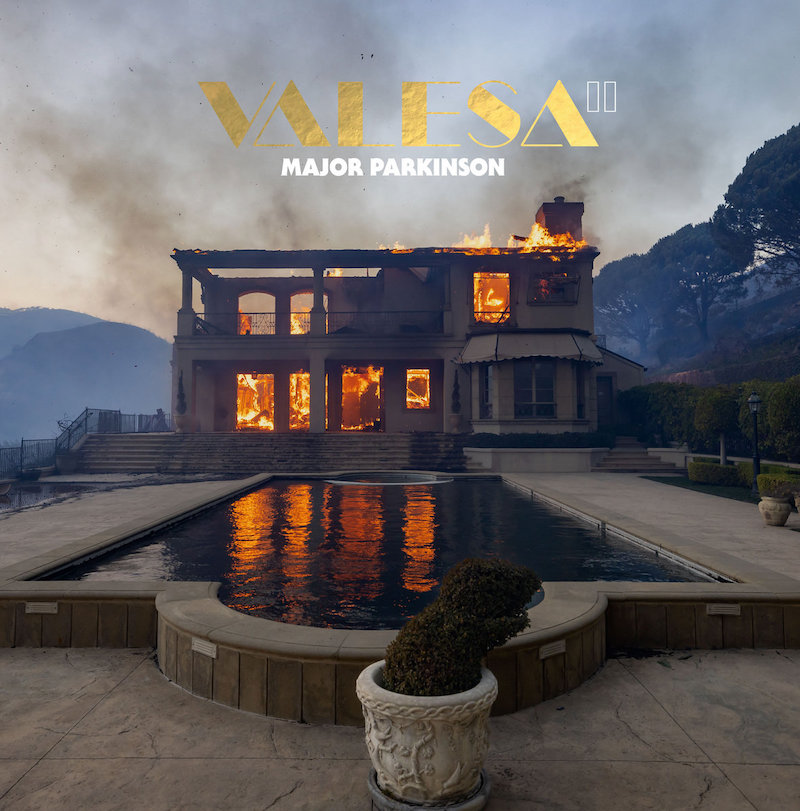
There’s a lesser known prog sub-genre called pronk, a sibling genre to zolo. Both are effectively combinations of new wave, itself already drinking deep from the art rock well, with more explicit prog elements. We see it show up most famously in groups like Oingo Boingo or the occasional odd-time jerky tune by, say, The Pretenders. Major Parkinson lives in that sonic world, playing out like either a substantially less manic Cardiacs or perhaps if Seeds of Love-era Tears for Fears got in touch with the odd times and Zappa humor of late ’70s prog and post-punk. There are horns and bright color, vocals that feel like a more trained take on what Roger Waters was pedaling on The Wall with his manic portrayal of Pink the mentally decaying rock star. This album is, from what I can tell, the second in a trilogy (it’s prog after all!) about the apocalypse, here portrayed in the melting candy cane psychotropism of post-psychedelia and its ilk. One of the things that makes the record in my view is the dichotomy between the serpentine grooves of the bass, the glassy patches for the synths and the interplay between those more theatrical male vocals and more melodic female vocals. “Karma Supernova” features a lovely groove that shifts between a 14-beat and a 15-beat variation of the same underlying pattern, a subtle enough shift that it doesn’t jostle too bad the common listen, only revealing itself as you go to play along to figure out how it achieves itself. This is before a wild synthesizer freakout, delivering the equivalent of a tapping guitar solo before breaking into these wide expressive chords. There’s something wonderfully open-ended about this material; the strange jags and twists it takes feel more like the result of musicians playing together and making each other laugh with stream-of-consciousness composition rather than trying to outwit each other necessarily, underpinning that aforementioned union of punk and rock spirit to progressive musical structures and adventurism.
Listen/Buy: Bandcamp
Trion – Terra Tiempo
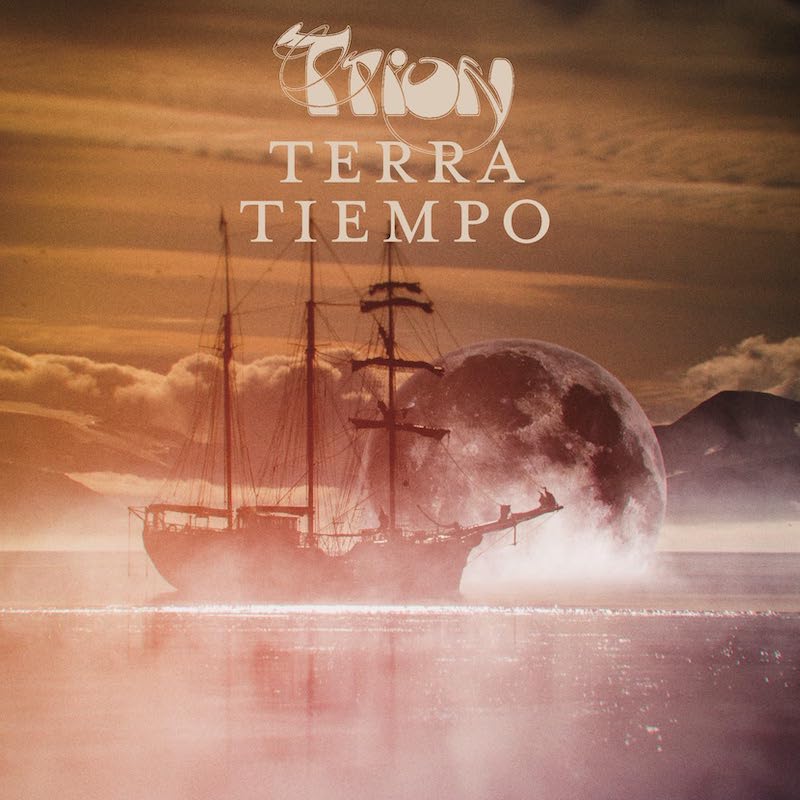
This Dutch trio turns in a set that spans the sounds of the more pastoral end of ’70s prog, including my beloved Camel. This is instrumental music, heavy on melody and harmonic development, with lots of lush keyboard work that is deeply reminiscent of Tony Banks at his most grandiloquent. Eddie Mulder’s guitar playing, so sweetly elegiac and vocal in its affect, brings to mind Steve Hackett’s impeccable work on those mid ’70s Genesis records following Peter Gabriel’s exit from the group leaving him to pick up more slack to fill compositional space (at least until his inevitable exit as well). This is retro worship through and through, which would bode ill if it wasn’t also executed superbly; I’d hand this record to someone unfamiliar with prog-for-prog’s-sake, so to speak, the genre as practiced by its deepest and most ardent fans rather than the more hip and acceptable (though obviously still quite compelling) modern variants. Radiohead, the Mars Volta, Mastodon and even some of the more adventurous indie bands like Wolf Parade did a lot to destigmatize prog, but this is the pure shit, with Mellotrons and music that feels like it’s meant to score oil paintings or those particular kinds of watercolor animations from the mid-’70s like The Snowman. “Aftertouch” in particular calls to mind “Colony of Slippermen” off of The Lamb Lies Down on Broadway with its bizarre turns on that funky synth patch. The adjoining drum beat that comes in follows that same pattern that Genesis and Gentle Giant often followed, with the keyboardists being these fantastical painters of color, the guitarists trying their best to play art pop with elegiac leads and the drummers believing somehow that they are in funk groups. It’s that collision that gives classic prog its wonky characteristic that is so intoxicating to so many of us. I think without the burden of prog’s sometimes, um, interesting attempts at vocal accompaniment, Trion make the case for why this music is so enduring even for those long stretches of lean years in critical consciousness.
Listen/Buy: Spotify
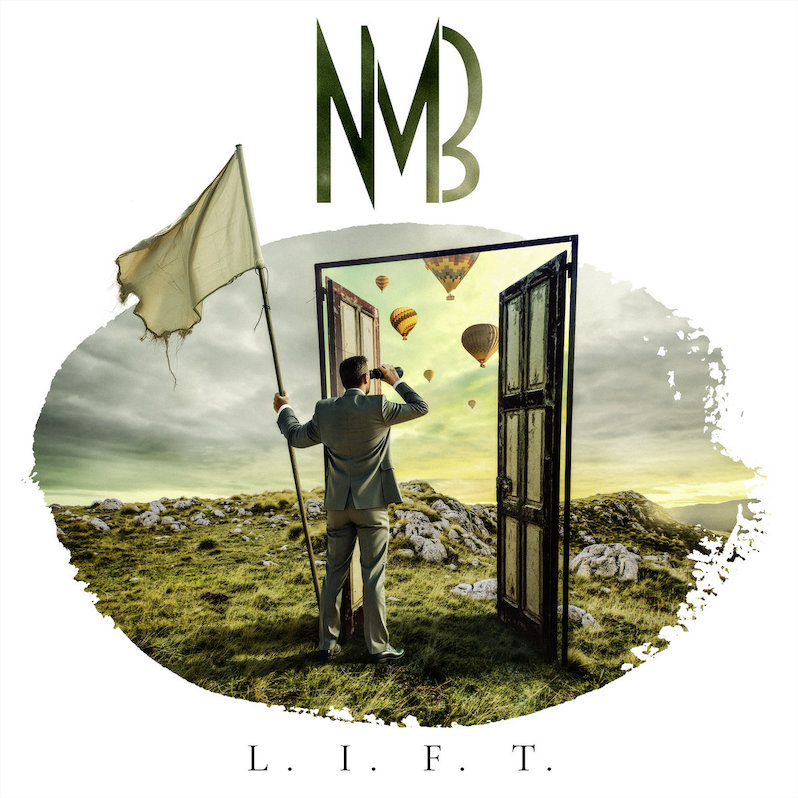
Neal Morse Band – L.I.F.T.
One cannot peruse the fabled halls of progressive rock without eventually stumbling upon Neal Morse, making engaging with his on-going body of work mandatory regardless of one’s feelings on it. He has released a staggering 53 studio albums across his various projects, most of which he band-leads, over a span of just over 30 years. Beyond that, he is also known for a common inclusion of half-hour long songs on his albums, or longer, such as the hour-and-a-half Transatlantic song/album The Absolute Universe I reviewed way back in 2001. He returns once more with L.I.F.T. backed by the same lineup he built around himself for the overwhelming majority of his solo prog records, including Mike Portnoy of Dream Theater, the reason I got into his work in the first place. This new one is unfortunately nothing to write home about; for those that know his solo catalog well, you’ll feel like you’ve heard all these pieces before (something not uncommon with his work) while those unfamiliar will likely be struck askance by the Christianness of it all. I’m a fan of his work, to be clear, so I found at least on a personal level a sense of comfort, but compared to, say, his album with his other band The Resonance titled No Hill for a Climber or even the immediately previous Neal Morse Band record Innocence & Danger, this felt more like an exercise in play rather than a substantive addition to his catalog. This isn’t too shocking; it’s the first record the band cut since Portnoy rejoined Dream Theater, which disrupted the previous furious pace he and Morse collaborated, so the likelihood of this album being a shaking off of the rust isn’t exactly low. That said, a run through of the album will, for better or for worse, give you a decent sense of the standard for contemporary prog, above which lay records of quality and below which lay albums not even I can finish listening to all the way through.
Listen/Buy: Bandcamp | Amazon (vinyl)
The Solid Time of Change
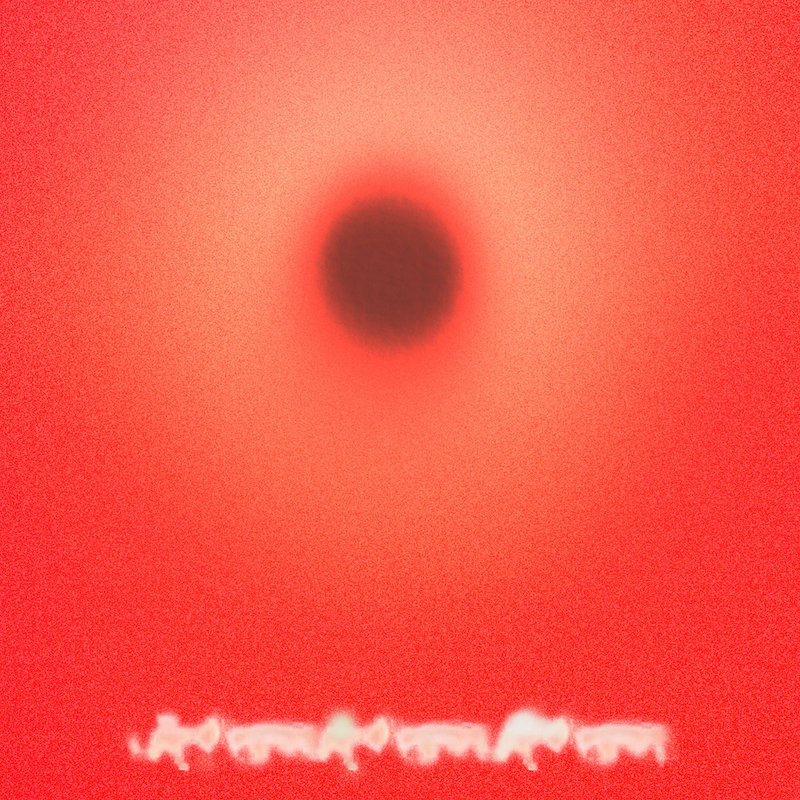
YHWH Nailgun – 45 Pounds
This was recommended to me by some algorithm or another and, by god, the machines may be evil and opposed to life but sometimes they know some good records. This one is prog by way of punk and abstract electronic music, with the kind of avant-gardeisms I associate with hyperpop and vaporwave’s more arthouse edge, or the kind of genre demolition we see in cybergrind or Death Grips’ more adventurous works. YHWH here also show that the path to progressive music doesn’t have to always follow through prog, per se; in fact, much of the contemporary progressive music world is inspired more by the spirit of aesthetic progression than necessarily an adherence to the canonical texts of the genre, something I have found overwhelming healthy for the overall substance of the genre. They’re like a bright-colored partner to Disappears/FACS, with that same level of abstraction applies to post-punk in a way that leans heavily on the arthouse aspects inherent to that genre. Dance grooves linger here, but they are collapsed like mutant architecture, leading to a frantic clatter, like everyone can hear the metronome but no one can find 1. It’s a thrill and overwhelms the senses in a brilliant way with sufficient bass and volume, feeling quite physical for me in a manner I hope is more inherent to the music than a new and fascinating way for my brain to be broken.
Listen/Buy: Bandcamp | Rough Trade (vinyl)
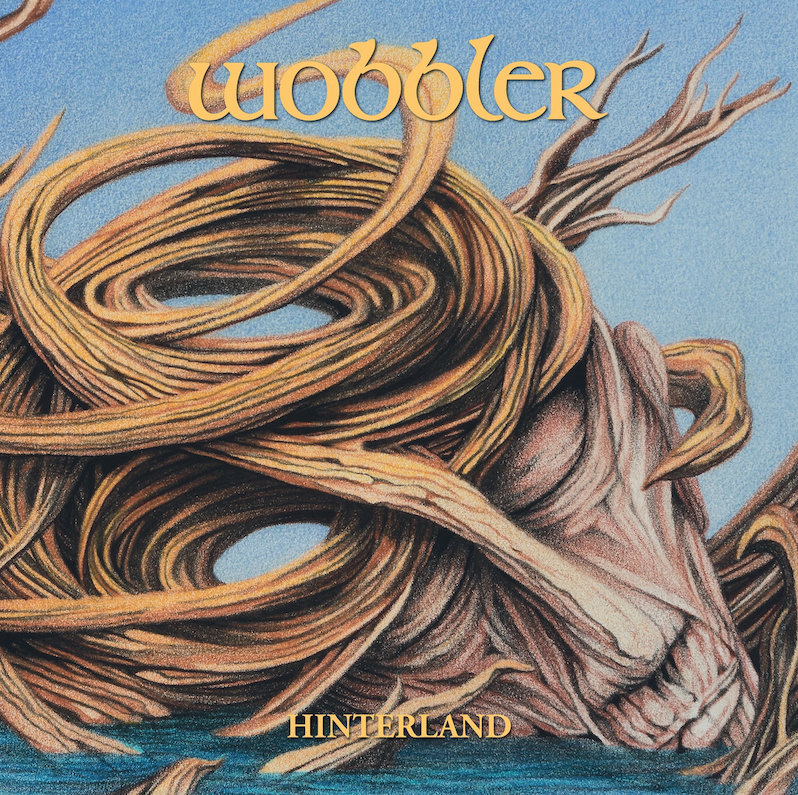
Wobbler – Hinterland
Some albums feel like music. Some, like Hinterland, feel like getting lost in a world. I mean that much more literally than you might anticipate; for years when I would try to listen to this record, I would fall in and out of restless fatigued sleep, making my sense of time dilate and the album feel like it lasted for hours and hours. The cover and album art, depicting winding branches assembling hands, faces, a human body, all in perpetual flux, fit the music so well that both soaked into my dreams, leaving me riven by something pagan and terrifying and awesome gripping the space in which I lay. Music at its best has this kind of highly transportive quality; ask anyone who sufficiently loves Pink Floyd to describe how they feel listening to “Echoes” or “Dogs” and, if you’re lucky, you’ll hear the same. It’s the part of the genre most keenly tied to its aesthetic parentage in psychedelic music, wanting to conjure by texture and melodic movement and jagged time signatures a genuinely altered state of consciousness, be that the dream-logic of a trance or the nightmare-panic of mania. Wobbler achieves the former. This is dense stuff, with harmonic movement and embedded melodies requiring keen focus lest it become a mere portal to fae lands. But the reward of following the winding branches of music for these gargantuan tracks, the shortest of which is 13 minutes long, rewards you with some of the most lush and magical music the genre has ever made. The band is led by players who are better known for their time with black metal projects, with this being the result of putting away little scraps of ideas evolving into bigger and bigger structures over time; that you are hearing years and years of work development is manifest in its density. It’s also perhaps the only fair inheritor to the throne Anglagard abandoned when they broke up in the ’90s, producing foreboding and arboreal work that subsumes rather than sparkles. Fitting given their black metal provenance.
Listen/Buy: Bandcamp
Treble is supported by its patrons. Become a member of our Patreon, get access to subscriber benefits, and help an independent media outlet continue delivering articles like these.


Well everything I know here is great so it looks Iike I have some listening to do. I like how on the nose the name of this column is btw.