
Kayo Dot : Every Rock, Every Half-Truth Under Reason

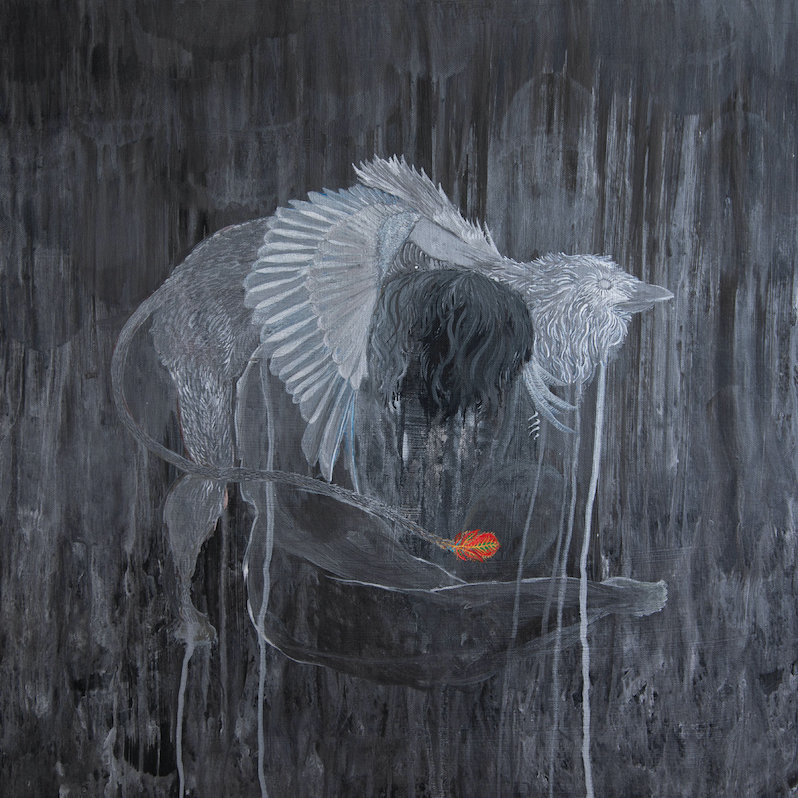
Kayo Dot has always been a tricky band to review; hell, Toby Driver’s work in general, be it solo or in group settings, almost always is. Every Rock, Every Half-Truth Under Reason is no different. It’s partly the length, sure, and part of that is the girth of the tracks themselves, with the shortest being just over eight minutes and the longest a hefty 23. But it’s more than that. These songs aren’t just large in the sense of time but also in the amount of mental real estate they take up. As far back as maudlin of the Well, Toby Driver has used dream logic to guide his compositions, moving sideways across textures, genres and soundscapes rather than tracking a linear and easily-grasped path. This is a major reason why his music has created such a devout cult following; very little I’ve ever heard sounds like his work, and very few bodies of work map such a broad and ferociously creative terrain. But hoo boy does it make any kind of rigorous critique a challenge.
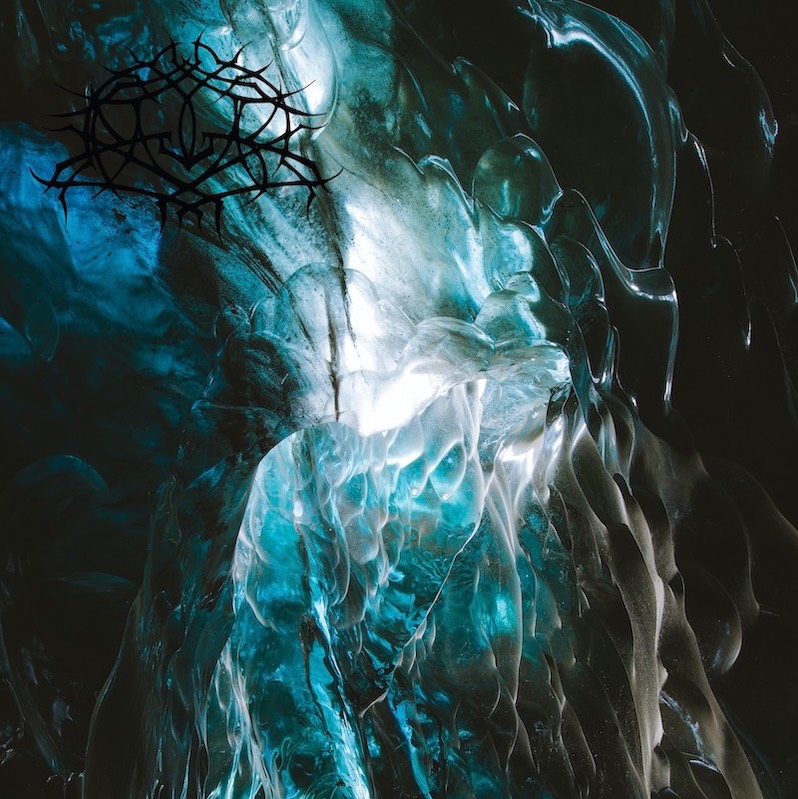
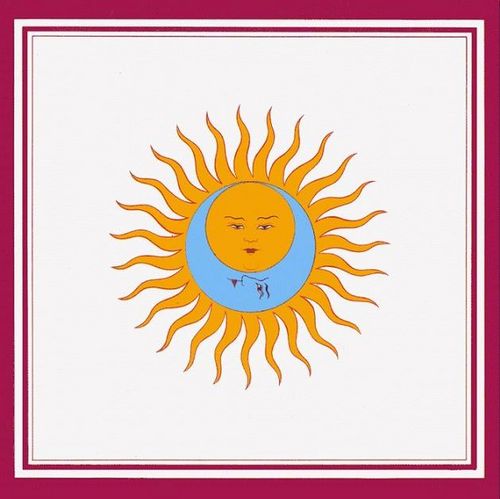
Here, Kayo Dot commits itself to music that is on the active end of ambient music, borrowing it seems the cold and abstract synthesizer pad soundscapes of the current iteration of Krallice but marrying them to the clattering free-form percussion of Jamie Muir’s very short tenure in King Crimson before becoming a monk. That stated goal is, in part, to make the kind of music that generative AI couldn’t, to commit to choices that are so against the logic of computation that it has no risk of being copied. Ironically, and to its benefit, Half-Truth winds up generative something closer to the abstracted cataclysm of ideas AI would be better off making; one would hope that automated tools, used in the arts as far back as the cut-up method by Burroughs and the glossolalic motifs of James Joyce and the Dadaists on up to Markov chains used by poets to break common language, would guide us toward the kind of art a human mind wouldn’t make, to open a door to something new rather than pilfer and mutilate something known while robbing people blind and burning down rainforests and guzzling our dwindling clean water to boot. Man and machine, a parallel mind created by us in our image, have always had parallel goals.
Way, way back when, Driver complained in an interview about his group being lumped in, both by critics and booking agents, with the rising “Neruisican” wing of heavy metal as it was called in that narrow window before post-metal was coined. There is no risk of those associations here. Certainly the expansive and desolate soundscaping has a great deal in common with the past decade or so of material from Swans, but the emotional character Toby Driver mines is something more forlorn and romantic. His clean singing across the record, often set against horns and chiming guitars, feels like a gravesong, Orpheus plucking the lyre aimlessly and singing into the wind for his eternally departed Eurydice. His harsh vocals rumbled like stones over the miasmic synthesizers. Melodies emerge in fractured fragments, here sung out by a yawning clarinet, there sawed by a weeping violin. But for the most part, it plays in music the way Virginia Woolf played in words, with clashing fragments of thought that feel like a collision of humanities. The arrangements here show Driver’s hidden but fundamental talents as a contemporary classical composer; much like Wagner, it feels like each instrument, be they melodic or percussive, is associated with a voice, that a Greek choir or sound sources are engaged in dialog with each other like the Symposium of Plato rather than driving toward a single unified song idea like, say, the work of Niles Rogers.
This is also a gothic record, one of ghosts and hauntings forward and back. Look at the titles for a moment: “Oracle by Severed Head,” with its quietly sung line “I have become the vessel / I have become the void“; “Closet Door in the Room Where She Died,” with its glassy discordant synthesizers matched against the frenzied shouting of Jason Byron; “Automatic Writing,” the gargantuan epic of the record which paints in its 23 minutes a cold and unwelcome landscape like if the film Poor Things never got straight from all that was crooked. This isn’t a new landscape for Driver to work in. Albums such as Coyote and Coffins on Io more openly foregrounded the influence of the gothic, tenebrous and ghastly on his work, but everything from the closing diptych of records by maudlin of the Well to the massive Hubardo to his ballad-driver trio of solo records often focused on images of death, water and birds have all outlined a similar macabre fixation. Driver plays it here more Penderecki than Robert Smith, like a maximalist William Basinski, a threnody not for Hiroshima or the victims of 9/11 but something more universal in its death-facing aspect. It’s, in short, a bad-time album, one masterfully composed and avant-garde enough that many are going to bounce off of it. Those that don’t, however, will likely find that they love it. That’s the benefit of resolute intensity in composition; there are no lukewarm feelings to be found here, even in the wasteland between lives.
Label: Prophecy
Year: 2025
Similar Albums: