


Although my spiritual beliefs don’t fall under any one label, the tenets of Buddhism have brought me great joy, its focus on mindfulness, truth, and love profoundly resonating with me.
I was raised Catholic, but between my conflicting views of an afterlife, growing older and finding my own path, and an ever-increasing awareness of the cruelties and hypocrisies of organized religion, efforts to embrace Christianity haven’t worked out for me. Buddhism, for all its esoteric beliefs, offers a path much more grounded along which I can practice. In Buddhism, there’s no push for eternal reward or trying to appease a god—there’s only an emphasis on doing good, now, for your fellow neighbor. I don’t call myself a Buddhist—I’m not devoted enough—but continuing to study it and embrace art with Buddhist teachings brings me comfort. It’s because of Buddhism, and an immense love for doom metal, that I found Yob.
***
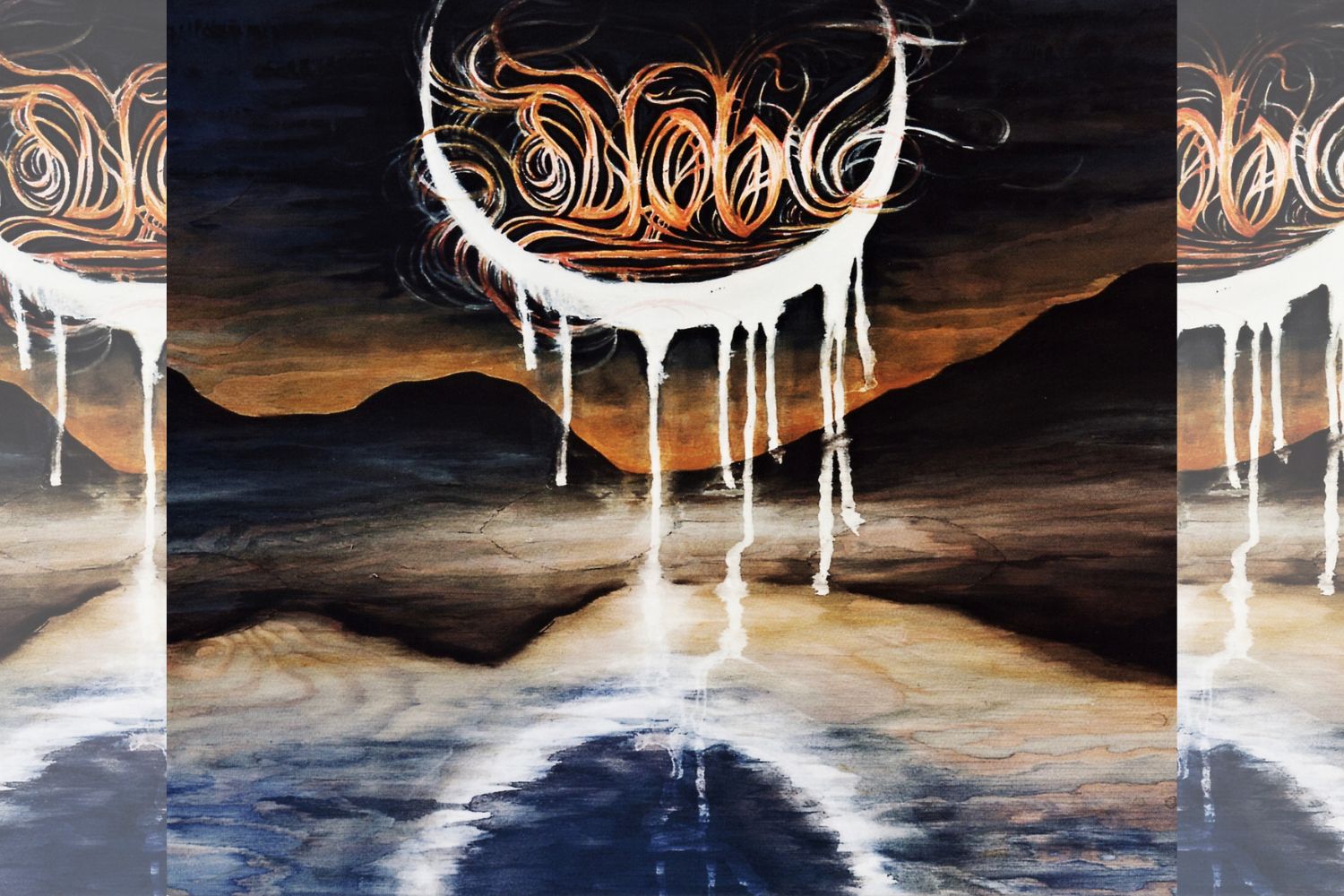
Throughout its history, metal has had a complex relationship with religion, one focused primarily between that of Christianity and Satanism. Even with the rise of 2000s Christian metalcore, religion has always had a target on its back for metal bands, yet Satanism has been embraced and championed, especially in black metal. By the 2010s, this dynamic between Christianity and Satanism was the primary context in which metal engaged with any spirituality whatsoever, which makes Yob’s 2011 album Atma a fascinating anomaly.
The lyrical subject matter of Atma revolves around Buddhist and Hindu beliefs, spiritualities that, while present in metal, haven’t had as much attention drawn to them like Satanism and Christianity. And whereas some Christian and Satanic metal bands can be accused of proselytizing, Yob frontman Mike Scheidt doesn’t force anything, but rather invites listeners to open themselves to questions and explore.
Founded by Scheidt in 1996, Yob’s stoner-doom metal alternately enchants and crushes the eardrums. Although Yob follows similar aesthetics as those of other doom-stoner acts, what primarily sets them apart are Scheidt’s lyrics. Rather than lean into conventional heavy metal tropes, Scheidt invokes ideas founded in Eastern belief systems, often exploring them in the context of his own struggles with depression. Between this deeply personal approach and the band’s abilities to create a meditative sonic space, Yob brings heartfelt intimacy to doom.
Scheidt identifies as a Buddhist, while also embracing Hindu philosophy. On Yob’s official website, he writes, “I’m a longtime practitioner of Buddhism with a nod to Advaita Vedanta. I’m a skeptical practitioner in the sense that certain beliefs are either things I don’t grab onto or I take a slow approach. But it was all very much an attempt to solve my own suffering and connect to a deeper world than the one I was raised to believe in.”
In Hinduism, Atman (or Atma), is the idea of the “self.” Atman is one’s innermost self across multiple bodies and lifetimes; while these different bodies may differ, there is always a core sense of “you” growing throughout these lives. In some cases, Atman is likened to “soul.” For some Hindus, the goal through Atman is to achieve Brahman, otherwise thought of as achieving enlightenment. A philosophy that relates to Atman and Brahman is Samsara, defined as a cycle of life, death, and rebirth. As you are going through your lives in a journey towards Brahman, you’re undergoing Samsara. These beliefs make up the heart of Yob’s Atma, and through the care and craft of Scheidt’s lyrics, the result is a remarkable, spiritual, and massive musical experience.
With album opener “Prepare the Ground,” Scheidt presents the idea of Samsara upfront: “One hundred thousand / Repetitions / Recite the mantra / Flowers unfold / Loosen the grip / Undo the fiction / Release the power / Trapped in the story.” Between Scheidt’s guitar work, Aaron Rieseberg’s bass, and Travis Foster’s drumming, the band present a strikingly heavy hypnotism across the track’s nine-minute runtime. For as ominous as doom can sound, its technical qualities ultimately combine into meditative flows. With archetypal doom, the forward momentum from its rhythms creates an atmosphere that borders on the psychedelic. An issue that can arise with such rhythmic music is that, while it sounds cool, you can very easily end up zoning out. Whether it’s through tonal, tempo, or structural changes, Yob keep their performances engaging, understanding that the potential for music to verge into thoughtful depth requires technical nuance. “Slow is fast,” Scheidt says.
Recordings of flowing wind and water play at the start of “Atma.” Though their presence is brief before the band unleash roaring instrumentation, these nature sounds play into the lyrics. “Water mixes with blood / Blood mixes with earth / The earth a silent witness / Witness to the dawn.” In the context of Atman and Samsara, Scheidt speaks of a universal oneness—although we repeat the cycle, we are always one with the Earth, one with the universe. “Before We Dreamed of Two” sees Scheidt diving further into exploring the idea of “self,” expressing how realization involves balance between introspection and connection to the world around us.
For as much these beliefs are aligned with notions of enlightenment and peace, life is not always that. In fact, a lot of life is suffering—both in the sense of tragedies like war and poverty, but also in the inevitable, quotidian forms of struggle we will come across in our daily lives. While differences exist across religions and spiritualities, many embrace this core idea that struggle is inherent to existence, and how we can confront it brings meaning to life.
Scheidt is not ignorant to this fact and how this acknowledgement is crucial in relation to Samsara and Atman. In “Upon the Sight of the Other Shore,” Scheidt speaks of eyes “in desperation” looking upon “a world we cannot escape” and of hands “clutching hate like a weapon.” Alongside the band’s thundering and gloomy instrumentation, Scheidt’s lyrics strive to create a sense of relatability for those who feel overwhelmed by hardship yet hold onto faith. “Belief shaken to the core / Upon the sight of the other shore.”
Through Samsara, ideally, we are undergoing change that helps us reach Brahman. In each life, our true self is learning lessons that allow us to progress little by little. Until we reach Brahman, every journey will begin and end the same: we will be born, then we will die. As Scheidt speaks of a “Siren’s call / From the sea” in “Adrift in the Ocean,” it gives the impression of the cosmic ocean—the waters of existence we are born from, where we return to in death. One can read “Adrift in the Ocean” as a birthing from the universe: “Adrift in the ocean / Colors take hold / Shadows take shape.” A being is born into the world, and thus a new cycle of life begins.
Atma is a deeply moving spiritual work, particularly for those who’ve studied either doom metal or Eastern spirituality. But for those who don’t practice Buddhism or Hinduism (or The Riff), what can such a work offer?
At the end of day I don’t know if there’s a heaven, if Samsara actually happens, or if there’s “nothing” after death. I do believe that enlightenment exists, but it isn’t something you can get solely through meditation and self-help books. It’s having a dog-shit day at work, and rather than stewing in misery, you talk to a loved one. Perhaps you make yourself a cup of tea or you go on a walk, and in whatever you choose, you acknowledge your feelings. Right now hurts, and that’s okay, because that’s human and you will eventually feel better.
For someone who puts himself through existential tug-of-war at times when it comes to spirituality, Buddhism has been a gift in my life. Buddhism reflects many of the values I hold dear. I’m inspired to study it more, to learn more about what Hinduism has to offer, as well as other earth-based and loving philosophies. I do this not with any expectation of “what’s to come” or being rewarded by some deity, but because the learning makes me a happier, healthier, and more informed human being.
This is what spiritual art like Yob’s Atma can do for a person. You can put this record on and expand your mind with new ideas. You don’t necessarily have to embrace them wholesale, but you can find something there that fits into your life and build upon the knowledge you already have.
I will never know the answers to life’s greatest questions, and I’m okay with that. While I’m alive, what I care about is doing good. I care about being there for my loved ones, my neighbors, and living a life of kindness and love. You don’t need a spirituality or a religion to love and be kind to one another.
***
In 2026, though there’s still lots of metal rebelling against religion, the broader universe of heavy music has evolved to a relatively more open-minded relationship with spirituality. There’s more metal today which is open to talking about spirituality without dismissing it entirely, whether that be through the lens of Hinduism, Buddhism, or Christianity. Yob’s Atma is a critical part of this growth. Like many students of spirituality who are driven to investigate the mysteries of life, Scheidt simply cares to explore, a quality he continues to embrace to this day. With Atma, Yob crafted a work which welcomes listeners to potentially new concepts without force or judgement.
Compared to where I started in my 20s with Buddhism, I’ve come to better understand what it means to confront struggle; I’m not immune to heartbreak, despair, or anxiety, but I am able to bounce back with greater confidence. The strength I feel today is something that Buddhism has guided me towards. Scheidt puts it perfectly: “It’s easy to try and bypass the feet-in-the-mud work: to hope for some magical moment where you become enlightened and then it all falls off like a husk and it’s nothing but blue skies forever. I think a lot of people go through that stage. Eventually, you come out the other side and realize that there is no shortcut. You have to really slow down, really watch that one breath, really contemplate questions that are naggingly unanswered.”
Treble is supported by its patrons. Become a member of our Patreon, get access to subscriber benefits, and help an independent media outlet continue delivering articles like these.