

Fire-Toolz : Lavender Networks

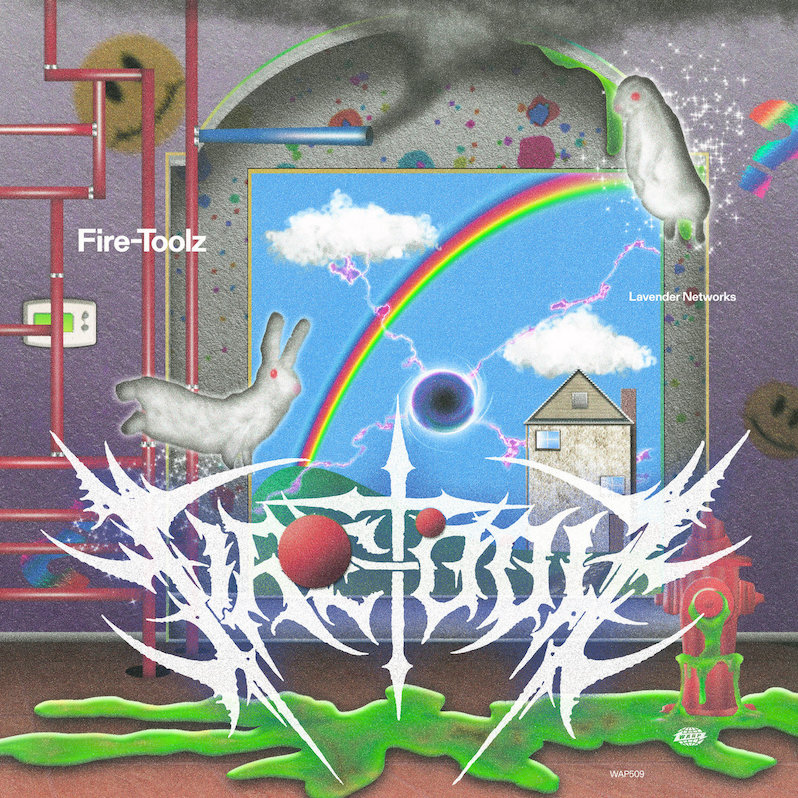
It is better sometimes, perhaps, to ask about the emotional terrain of a work rather than base historical or musicological elements. Those latter make up the bread and butter of journalism and history writing, noble and important endeavors, but are ultimately concerned with the outer shell of affect rather than the penetrative force of aesthetic, the natural poeticism of art that compels us. This is useful for me here; Fire-Toolz is and always has been resolutely impossible to fully describe in musicological terms, even when the emotional landscape is eminently legible.
On Lavender Networks for instance, we have breakbeat, deathcore, slam, progressive metal, skramz, vaporwave, new age music, pop, black metal and more within just the first four tracks. Any kind of rigorous explanation of how they are interpolated in a manner that describes the music would go on for pages and pages, cataloguing these razor-thin sheets of genre elements stacking together. It may be a distinctive drum pattern from one, guitar riff from another, vocal affect from a third, synthesizer approach from a fourth, which by the time you have recognized it sees one or more of the previous aspects already shifting. Angel Marcloid demonstrates her already abundantly obvious mastery of a number of disparate genres, but they are wielded in a painterly fashion, not ends unto themselves but pointing toward something.
Lavender Networks brims with this urgent becoming, the same that makes your heart skip as a child in the single digits dreaming of adulthood, as an outcast youth be you queer or a punk or a nerd or a metalhead wanting to throw off the shackles to become yourself, as someone in their twenties beginning to experience the confusion and aimlessness that actualizing yourself really entails. Every uplifting major melody and beautiful electronic texture points toward this reigning optimism, that you can at last somewhere somehow be, with every metallic texture and riff and glitchy avant-gardeism mirroring every instance where rage and humiliation leaps into your throat, those musical textures matching as much the interior voice of shame as the exterior one of mockery.
There is not a moment of permanent eruption on Lavender Networks, but there are moments of serenity. Take “And Where Is The Heart? I’ve Searched My Entire Home.” Its post-vaporwave electronic pop soars the way and flutters the heart the way J-pop and footwork records signal to the closeted youth that maybe they aren’t so straight or cis after all, the kind of feeling you get watching a magical girl transformation or learning about the agendered Public Universal Friend and wishing it could be you with the belief that it really could be. Marcloid measures liberation both in dance beats and the way a throat shredding vocal can mirror screaming in your car before your dead-end job or howling in the pit of a hardcore show or the way you can find yourself with an electric guitar and a practice amp.
Vaporwave has always been a practice of nostalgia, which itself is always just around the bend from the fascist urge to return. The worst material from the scene satisfied itself with just those elements, seeing figures like Grimes eventually melting their brains with memes and shitposting and reactionary politics. But Marcloid, much like Death’s Dynamic Shroud, always was more canny, interested as much in why things provoked nostalgia and why we wanted to look back as they were the feeling itself. The nostalgic hauntology of Fire-Toolz, here included, is less about the look back to abandon presentness and futurity for some golden yesteryear as it is to get back in touch with the necessary fires of youth to be and become yourself, to cast away the overburdening sentiment that makes up so much of adulthood that this is simply how things are and will be.
Better, Marcloid doesn’t say as much with trite lyrics or obvious cuing. It’s in the blending of Dream Theater riffs with City of Caterpillar vocals, Yellowjackets saxes with Enya synths, Utada Hikaru heart flutter with Nine Inch Nails post-industrial glitch and clatter. Marcloid invokes deep cut prog records, cassette tape raw black metal, 7-inch skramz records and white pastel cover new age CDs with equal levels of sincere love. The noxious irony that can infect music as varied as this is utterly absent; Marcloid is a musical magpie and Fire-Toolz, and Lavender Networks, is her variform and multicolored nest.
Label: Warp
Year: 2026
Similar Albums:

Fire-Toolz : Lavender Networks
Note: When you buy something through our affiliate links, Treble receives a commission. All albums we cover are chosen by our editors and contributors.

