
Laurel Halo : Midnight Zone

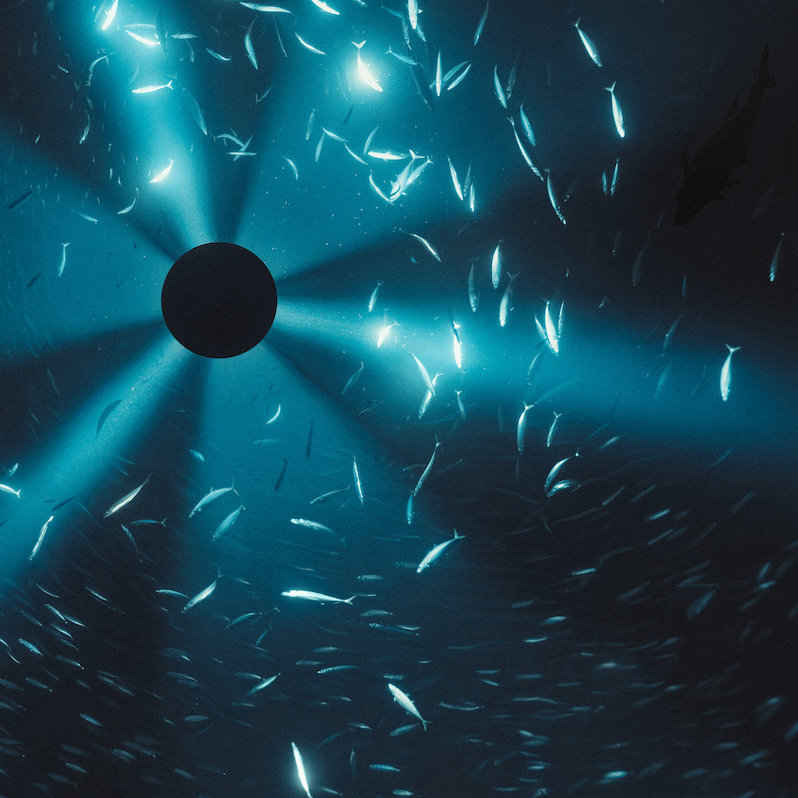
Midnight Zone is the name not only of Laurel Halo‘s new record but also of the film it scores, an experimental dialogue-free journey following a beam of light cast by a lighthouse as it strikes the water and penetrates deeper and deeper into the ocean until it reaches the titular midnight zone, where surface light ceases to shine. It’s unclear whether the album and the film are separate objects; does the record score the film or is the film the imagistic completion of the record? Perhaps they are identical. Regardless, they are inseparable in a conceptual sense, capturing the same riven emotional state that journey from the knowable to the unknowable the light provides regardless of its chosen medium.
That Halo would produce a work so imagistically rich is not new for her. Her work has always tended toward the image-driven, with its rich use of textures mapping well to the harshness of digital decay, the robust organicism of wood and insects and the breathiness of wind. What I had not noticed was her slow accretion of the benthic in her work. Here, it is undeniable, reinforced by the film, the title, the cover, the track titles themselves, everything, let alone the sonic choices, which are so cold and vast and percolating with haze-like mystery. But on reviewing her work backward from this moment, the development toward this sonic space has been ongoing roughly since Possessed, another score of hers from 2020.
That record at the time struck me as extrapolating on that sense of wind and breath, using piano and strings to chart the tracelike lines of the air. But in retrospect, especially seeing as how those slower and more ambiently rich approaches to her sound developed over the record Dissent which she contributed to and her previous record Atlas with its who’s-who cast of experimental musicians, it was also the first trace of not just watery soundscaping but cold and dark water especially. To say Midnight Zone captures its subject matter well would be a steep understatement; its imagistic capture is brilliant, moving over the span of the material from the top layer sunlight zone, rich with additional instrumentation and brimming with life, into the progressively colder, bleaker and more abstract depths of the ocean.
This kind of conceptual ambient work is not for everyone, but our readers thankfully are the brave and adventurous sort. It follows a similar sonic arc to John Luther Adams’ Pulitzer-winning orchestral work Become Ocean. Like that esteemed work, it is not event-driven as much as mood-driven, privileging density of the sonic air over density of arrangement. It’s fascinating hearing an ambient work’s approach to density; it achieves a literal figure, feeing like your brain is being pressurized by the music and the intensity of its sub-bass frequencies rather than it referring to note density. That the record ends with the orchestral elements of “Sunlight Zone,” its opening piece, doesn’t feel like a bonus track as much as an intake of breath after hours in the dark. Halo is perpetually patient and gentle, in a manner at least; the violence of that bleak cold doesn’t really become apparent until that release at the end. She’s mastered this form of slow-accreting tension, paired against a film that is the perfect syncretic completion, or vice versa. It’s hard to imagine her remaining in this space after this. The sense of completion is abiding.
Label: Awe
Year: 2026
Similar Albums: