

The Best Prog Albums of Spring 2026

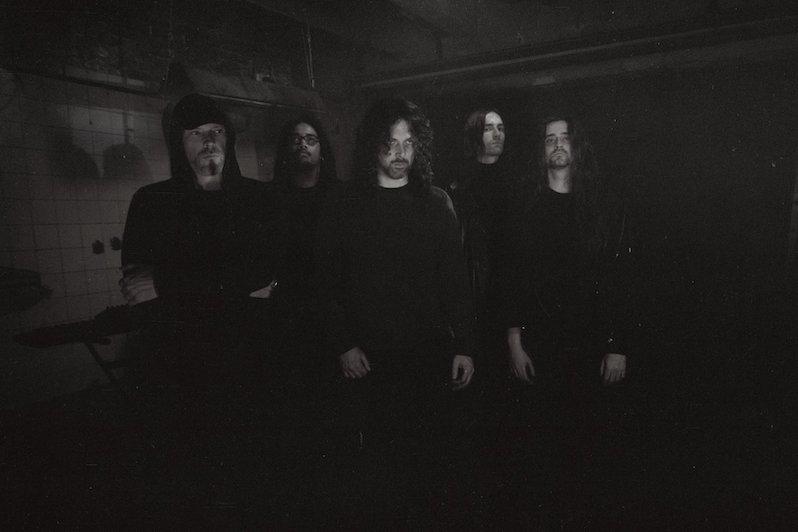
My efforts to land on the ideal opening essay for this installment took me on a journey fitting of a prog album. Should I discuss the mounting evidence that Fucked Up’s Grass Can Move Stones is the prog epic of the decade? What of my long-gestating essay discussing the Kinsella brothers’ body of work as a prog suite showing surreptitiously the emo and indie rock crowds the majesty of Yes recoded? There even was a capsule review of the newest record by The Emerald Dawn, a serviceable record, that grew to gargantuan size as I began parsing the timelike-curves embedded in art via its creation and experience, a wild intellectual flight of fancy certainly fit for a prog column but that appeared a bit too indulgent even for me, especially with this rejiggered format. In the process, I wound up plucking up 10 records, most of which are new but several are single-album band rarities from the 70s that belong perfectly in a column like this. And so fate decided for me: no essay, just music. Enjoy.
Note: When you buy something through our affiliate links, Treble receives a commission. All albums we cover are chosen by our editors and contributors.

Total Mass Retain

The Dear Hunter – Sunya
Sunya, the third album of the current narrative arc for The Dear Hunter, did not enter the stage on good standing with me. Despite my love for the Acts material from the band and the Color Spectrum EP box set, the new musical direction the band began exploring on The Indigo Child and furthered on Antimai didn’t connect with me. The Dear Hunter had pivoted away from their early 20th century music-driven approach to prog-cabaret, playing out like if the Mars Volta was obsessed with music of early Americana and Steinbeckian portraits of the early century than Latin music, and toward foregrounding elements of synth rock, funk, disco, and more future-gazing genres and instrumental timbres. I am very much in favor of that sort of material in general, but the tonal shift for me from not just an established but a lauded sound of The Dear Hunter proved too much for me. I had the good sense not offer my critical opinion of the records, given the issue was clearly more my inability to approach them properly than an obvious failing on their part, but the long attachment with a band that was so pivotal in my late teens to my early 30s seemed broken.
Not only does “The Wasteland” prove that thought of mine ludicrous, recapitulating the sound The Dear Hunter had developed on those early narrative records, but the following two tracks “Marauders” and “The Bazaareteria” deliver on the promise the listed new genre explorations hinted at but struggled to land for me. Suddenly, the connection between this current era of the band and that early pronk and zolo window of proggy new wave in the early ’80s or the underground beloved Cardiacs became more clear, justifying to my ears more of their atypical moves. My difficulty became in retrospect somewhat odd to me, since it’s precisely the kind of contemporary prog approach I cite in a lot of modern pop and indie records that’s made itself part of the current musical landscape much the way trap drums and synth pads have. But it’s truly on “The Glass Desert,” a roughly 19-minute piece of music broken into three tracks, that everything snaps into place for me. “Giants,” the first movement of the piece which takes up just under half the album, feels like a hybrid of Frank Zappa, California-era Mr. Bungle and the kind of prog The Buggles were doing that got them hired to join Yes or that Frankie Goes to Hollywood were playing with that saw Trevor Horn and Steve Howe join them on their debut album. “Giants” stands as one of the best pieces of music the band has put to tape yet and serves as the ideal skeleton key to use to break open this entire era of the band’s output. The sense of fun across it is charming to the extreme; you can practically hear them smiling ear to ear.
Listen/Buy: Bandcamp
Emptiness – Nowhere Speaks
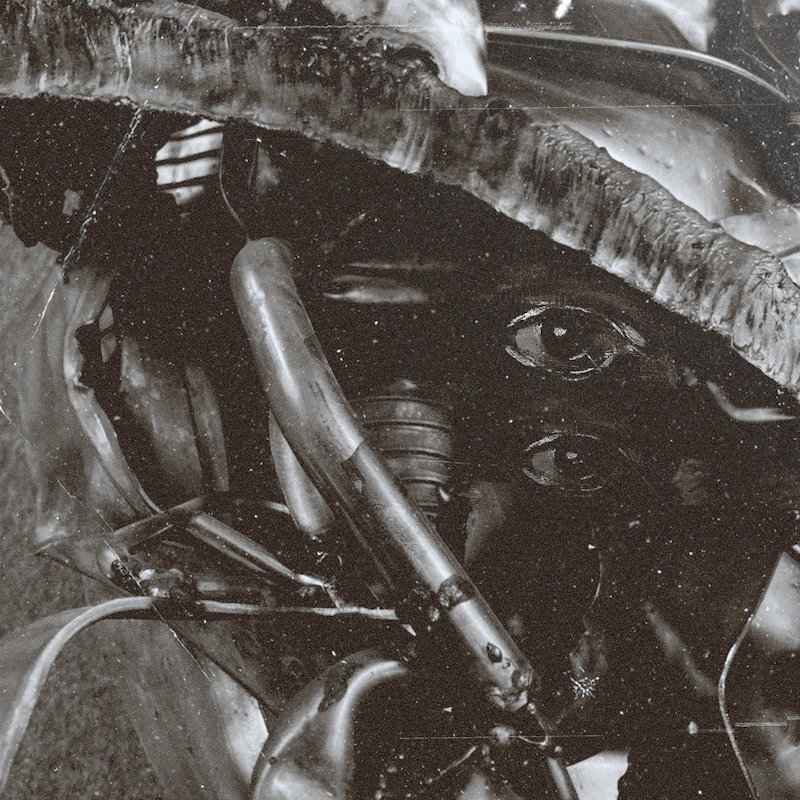
I have waited 12 years for this album. I fell madly in love with Emptiness‘ album Nothing but the Whole, a masterpiece of avant-garde death metal that took their bristling philosophical approach to the genre and broke it open. The band’s early career was already marked by the kind of conscious cerebralism that you seem to only be able to find in places like prog or extreme metal, where pushing yourself to the very limit of your capability (be it instrumentally or intellectually or sometimes just in patient, endurance, chops) is seen as a positive and not a negative even if it leads to unlistenable results. Their lyrical approach, already cryptic and featuring the same broken reconfiguring of the Wittgensteinian language game into puzzling knots of words delivered too consciously to be indeliberate but sitting just beyond the grasp of meaning, here entered a black hole in a brilliant abstruse way. It sat with similar extreme metal like the early material of Behold the Arctopus or that of groups like Nithing, Blut Aus Nord or Effluence, asking you to sit in the murky mystery like a small fish in the dusty waters of unknown oceans. And then, immediately after, they shifted direction. Nothing but the Whole served as an eruption point, breaking them out of metal and into their cerebral avant-prog space, refusing to retread themselves.
The album is not only a direct sequel to Nothing but the Whole (in face picking up mid-riff with the exact same note that earlier album ended on) but also its prequel as well (ending, fittingly, on the opening note of Nothing). The result is uncanny in puzzling but deeply fitting way. The material here is so of-a-piece with that of the earlier record that it feels at times like nothing was added that wasn’t already present. This sits next to the fact that, listened to as a single work across two records, it not only feels unbroken but feels genuinely like the back half of one project, making the initial record seem suddenly broken in a way it didn’t before. The subject matter of both records is that favorite of extreme metal lyricism, Anaxamanderian dichotomies. Anaxamander is one of those philosophers you know without knowing the name; he was the Grecian who posited their form of dualism, which saw only one pure unity in existence, apieron or the Eternal, which could only become manifest in the world by breaking into pairs of opposites, a fact which later guided our successful pursuit in finding antimatter like positrons, antiprotons and the like. That they stick to the most extreme forms, the nothing and the everything, the nowhere and the everywhere, finding each in the other, leaves them capable of dropping cryptic partial lines, emerging like exposed bone from flesh rather than coherent complete thought. It’s a pursuit of a Lovecraftian kind of nihilism, that true understanding of the world is beyond human capability but exists, that it is knowable but not to us, and that we must solace ourselves humbly in the unknowable dark. This is a thought as fundamentally true as it is metal as fuck.
Listen/Buy: Bandcamp | Amazon (vinyl)
Hypercollider – We shall never meet again—how wonderful! Goodbye.
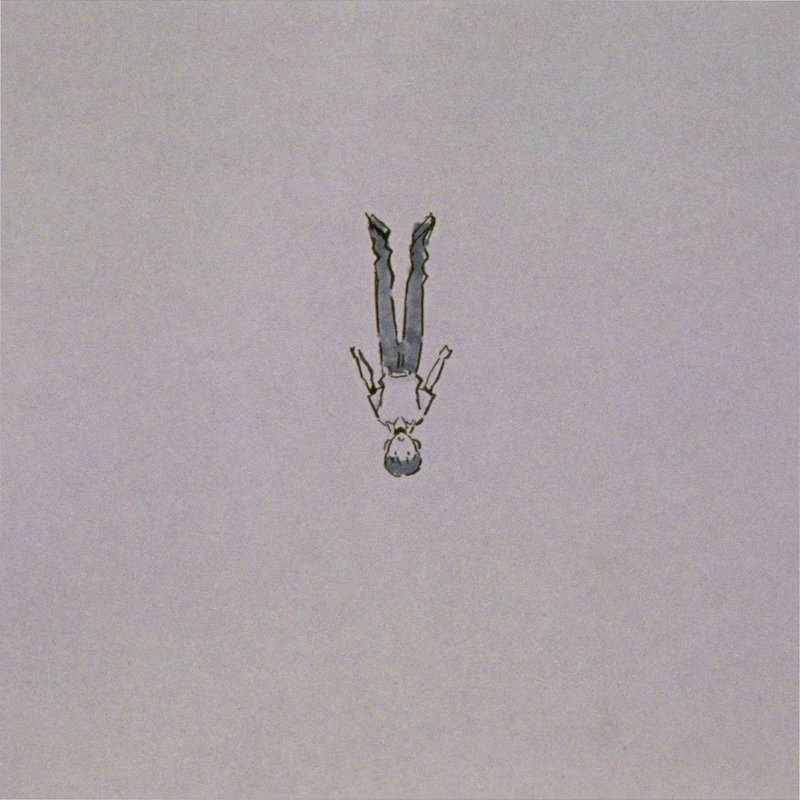
Technically, this falls outside the current considered window for new works, given that it came out in March rather than the April-June window for this installment, but the beauty of making the rules is the rules can change. I’d never heard of Hypercollider before prior to this six-song album, the titles of which spell out before the words and punctuation of the album title itself. An earlier album of theirs titled S/H/A/P/E/L/E/S/S followed a somewhat similar pattern, with each of its five songs being numbered, but giving titles to the songs that spell out the title gives another character to the work. Numbers alone, especially for either this kind of math rock, which combines the twinkle of emo with rhythmic robustness of King Crimson, or black metal tends to bring to mind movements of a single macro-scale work whether the songs segue into one another well or not. After all, most symphonies and concertos in multiple movements are not played as one unbroken piece but indeed as multiple interconnected ones. The shift to braiding the title of the album to the songs themselves, especially with the emotional content of the title, adds a complicating layer to this music which otherwise sounds joyous. That the music is instrumental makes the mystery here unanswerable; the notes are laid too deliberately and played with too much vigor for the title choice to be random and its recurrence as song titles means they want us to pay attention, but the only clue we have to unravel is how the music mirrors the sentiment of “how wonderful!” These kinds of mysteries offer a critical interpretive gap, an amorphous space filled by our own experiences rather than dictated by hand of a writer. It’s a canny move paired against excellent music.
Listen/Buy: Bandcamp

King Crimson – 1974 Penn State University
We live in the world of King Crimson. They are one of those bands that once you become aware of them you see everywhere, from punk to heavy metal to the avant-garde to improvisational music and of course to prog. This is due primarily to this incarnation of the band, which existed for just around three years, forming in 1972 and being disbanded by the end of 1974. Just the encounter with those three remarkable studio albums (Larks’ Tongues in Aspic, Starless and Bible Black, Red) feels perhaps adequate to understand why, given the monumental force of that material, but your understanding doesn’t really begin to exist until you hear the many, many live albums and bootlegs of that era, of which this is the newest to be cleaned up and released properly. The truly bizarre nature of the band is made most apparent on the opening two-fer of “Larks’ Tongues in Aspic II,” the second part of a song suite perhaps most directly responsible for math rock in all its forms, into “Lament,” a piece which takes up the softer timbres of ’70s rock before breaking into brutal avant-garde stretches with brutish bass stabs and haunting violin courtesy of David Cross. That this is not only a mere four-piece but a live album to boot replete with improvisation that proves there are no overdubs shows why they are broadly considered the masters of progressive rock even if they did not author its most excellent document. Yes may have beaten them at concentrating their thoughts onto a single enduring document, but King Crimson could play, and it’s that sense of fearless hybrid of muscularity and sophistication, classic pop melodicism and the strangulations of the avant-garde, that explains succinctly why prog burst alive, why it endured, and why it continues to enthrall, as captured here.
Listen/Buy: Spotify | Amazon (vinyl)
Manic Vice – Solo en Nuestra Cabeza
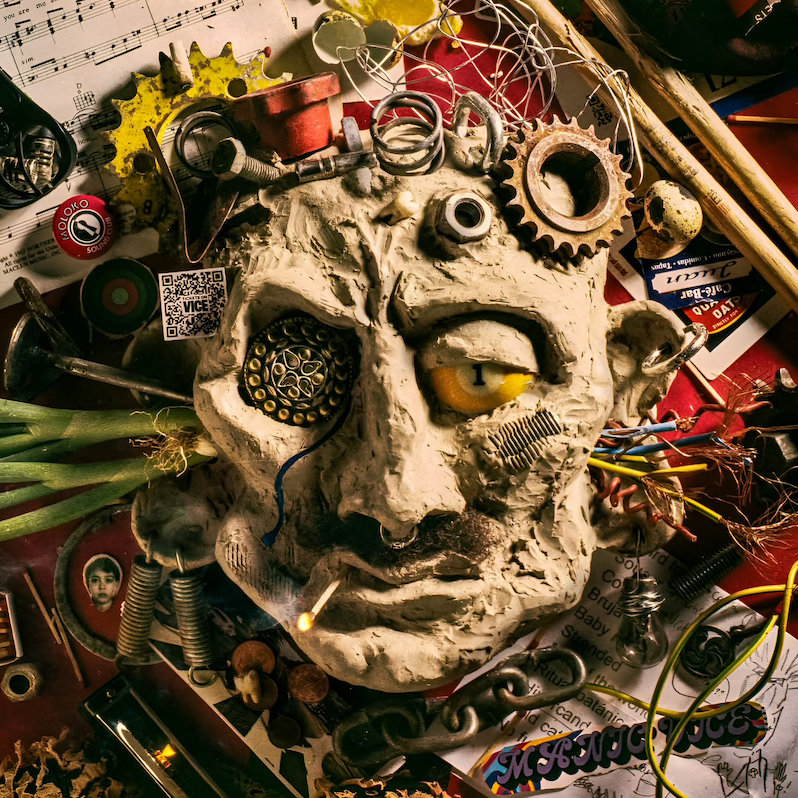
A competent exercise in genre out of Spain by a young quartet. Cabeza plays out like a lost Spanish-language psychic record from the ’60s or early ’70s, focusing primarily on the sort of prefiguring of progressive music we saw in psychedelic pop and the more adventurous wings of psychedelic rock, similar to how Steve Winwood’s early material with the Spencer Davis Group prefigured the later explicitly progressive turn he would take with Traffic with records like John Barleycorn Must Die or The Low Spark of High Heeled Boys. In a shocking reversal from Atmosphera (whom I wrote about below), this album, which is musically superior to that earlier one, somehow feels just a notch less charming, precisely by it being a modern record versus the real deal from its home era. Still, an aspect of progressive music it captures quite well is the sort of watercolor mellow jazz rock of the mid-’70s, the kind of flute and organ driven jazz rock you might hear as the score to a fantasy cartoon or Christmas special or Sesame Street interlude. It’s music of a shocking character, caught somewhere between the overt lysergic sexuality of psychedelia, itself derived from the similar opium and absinthe mysticism of Art Nouveau, and the later almost sexless phantasias that would in time become the foundational imagistic material of heavy metal of a certain stripe. This amorphous quality renders Cabeza mercurial, feeling erotic in flashes before becoming more about the vistas of imagination, windswept canyons and their revealed stone and strange water teaming with the glow of stranger fish below. Manic Vice are, at this early juncture, too good for themselves, delivering an album that sounds like the toothsome middle period of a band as their debut record. It’s something that will cause this record to age quite well even if it renders it a bit uncanny at the moment.
Listen/Buy: Bandcamp
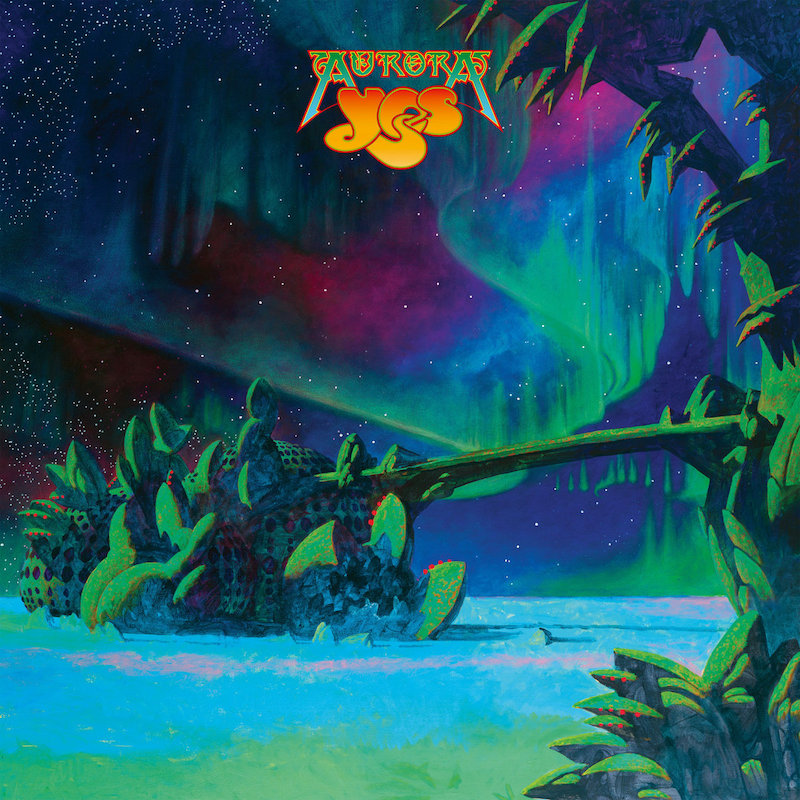
Yes – Aurora
I would be utterly remiss, regardless of what quality it wound up being, if I did not cover the newest album by Yes, the band that shares alongside King Crimson the crown for the genre. Yes roughly a decade ago was in rough shape. Original vocalist Jon Anderson was out and the efforts to replace him were exercises in adequate replicas rather than vocalists who added something of value themselves. Chris Squire’s health was waning after decades of pioneering prog and Alan White was to follow shortly after. Their studio album from 2014 Heaven & Earth was notoriously so bad and so widely loathed even (or especially) among the faithful that the band delisted it entirely, with the next seven years seeing an onslaught of rerecordings, live albums and nostalgia trip full-album tours that seemed to signify the end of the road for the aging giants. Then, out of nowhere, The Quest came, sounding invigorated if not especially unique. The band could be read as playing tribute to themselves, sure, but it was a competent one again, finally a match to Fly From Here, their last strong album that by then was already a decade old. Mirror to the Sky came two years later, featuring the new lineup of Steve Howe and Geoff Downes joined by Jon Davison who joined in 2012, Billy Sherwood who had rejoined in 2015, and newcomer Jay Schellen who had joined in 2016 as a fill-in drummer for live performances before becoming the full-time drummer in 2023 with the passing of Alan White. It was not only another strong record but arguably their best since 90125, showing a band who seemed to have discovered themselves again.
Aurora blessedly follows this pattern, borrowing the use of an orchestra from Mirror to the Sky (which in turn had borrowed it from the underrated Magnification from 2001) to great effect as well as showing early prog writing closer to the band’s material on their first two albums from the late ’60s. The album is not without its cheese but Yes by this point are allowed some, especially when songs like the title track and especially the 13-minute three-movement song “Countermovement” are so remarkable. The final song “Emotional Intelligence” is terrible but mercifully at the end, making it easy to excise without feeling like you’ve disrupted the flow of the material. Albums like Aurora are what ultimately define a fan. Any listener of artful music should check out their classic ’70s run and 90125 but albums like Talk, Topographic Oceans, Time and a Word and this one are for those who love Yes. With Aurora, the band now has put together a three-album run validating not just this lineup but this entire creative era of the group, something nourishing from a group closer to rock’s beginning than its present moment.
Listen/Buy: Bandcamp | Amazon (vinyl)
The Solid Time of Change
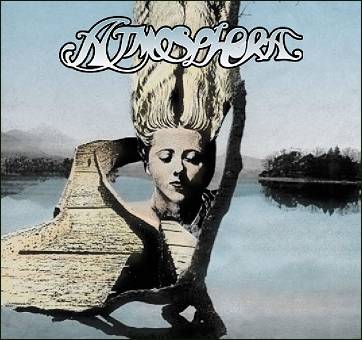
Atmosphera – Lady of Shalott
There is something beautiful about artists and albums that lack a true identity of their own, that have only scant releases, that feel like catching a common fish from another universe. Atmosphera’s debut and sole album from 1977 is four long songs, with the shortest being just under 8 minutes long and two passing the 16-minute mark, and none of which possess a single original idea. On paper, this might seem like a criticism, but given the marginality and relative rarity of the band, it transforms the experience into something else, like the way songs transform in our memories and dreams into mutant versions of themselves. Their sound, which combines roughly equal parts Yes and early Genesis, replete with the particularities of Tony Banks’ quite post-’60s organ playing on those early records, is a pitch-perfect emulation played with spectacular smoothness, each section flowing like the natural extension of what came before and natural prelude to what would follow. There is an occasional weakness in the mix that makes the record suddenly sound like lost tracks from a late ’60s psych rock deep cut, the kind that dropped one album before its members would emerge in folk bands, soft rock groups and pop solo artists decades later. An important part to art is myth and mysticism; take punk for example, which despite being driven equally by the street life of New Yorkers, Londoners and other urban working class rats alongside an artificial fashion aesthetic managed to develop the real spirit it pretended to early on. We see falsely myth and the mystic effort as something gesturing back to true histories we’ve lost when they are better understood as generative acts, prefiguring the emergence (or potential) emergence of something into the world, even if that thing is just the faint whispers of false memory. This mystical capacity in art, to feel like we are remembering something we once experienced but forgot, emerges in the evocative abstractions of fine art, the familiar but unplaceable strains of western orchestral and art music, the psychic immersion of a novel or, here, in an also-ran record that in its naivety, singularity and evocative similarity achieves something unique to albums of this sort.
Listen/Buy: YouTube
Dün – Eros
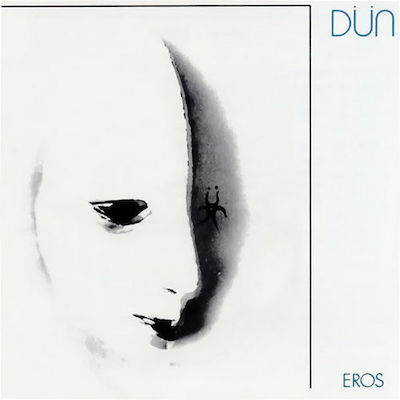
Another single-album band, this time from 1981. Dün were one of several bands on the periphery of the Rock in Opposition movement, sharing the stage and clearly taking influence from its constituent members but not having been elected into the group proper. Eros, their sole album, runs just over 35 minutes with its four instrumental tracks, with the primary ensemble being a jazzy palette of a vibraphonist, a flautist, and then the standard rock trio of electric guitar, fretless bass and drums. Both the band’s name and the track titles refer to Frank Herbert’s Dune with pieces like “L’épice” and “Arrakis” providing a strong tie. Beyond this, however, the album is a mystery. The cover is simple, pure white with the band’s name in simple thin lines at the top right and the title at the bottom right. A black line draws itself nearly down the length of the cover to the left of these titles, acting almost like an obi from a Japanese pressing of an album. The sole art is a white face shaped like an egg, turning away with its eyes downcast.
The shadow of the eyes renders them opaque and unreadable, mirroring the only other strong visual accent of the cover, that being the face’s black pursed lips. The right side of the face is in shadow. Between the instrumental nature of the music, itself too resistant to easy emotional categorization, and the communicative opacity of the art, let alone the cryptic title of Eros which is mirrored in the closing track of the record, renders this deeply mysterious. Adding to that mystery is the fact that the album was initially self-released in a quite limited quantity, making the album and band more of a hushed rarity in certain circles until the days of digitization and easier copying and disseminating of the record allowed it to break out of the bootleg tape-trading world. Given the similarity of the face on the cover to the face found in Cydonia on Mars by NASA photographers in 1976, itself a dusty planet, we have a loose associative framework. Beyond this, however, is contemplative mystery.
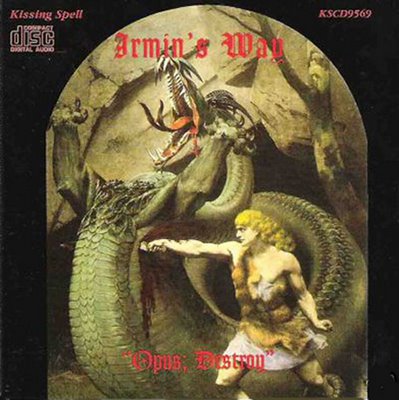
Irmin’s Way – Opus Destroy
Another one-album band, this time releasing their record in 1976. Irmin’s Way is a curious group, having anonymous members due to them being rumored to be in existing bands whose contracts wouldn’t have allowed them to make a record together, explaining perhaps as well why they released a single 4-song LP before splitting. The band was a split of German and American members, but beyond that we know little. The record is a lopsided behemoth, with side A being two 9-minute tracks followed by a breezy 5-minute number while side B is the gargantuan 22-minute title track. The offerings here are musically confused in a delightful way: Is the band a Yes clone or a krautrock jam group? Do they play hard rock or folk? Clearly they listen to Jethro Tull, but do they draw more from the bands blues rock, proto-metal or deeply skronky prog periods? Rather than integrating these sounds together, the band hops through them with wild abandon, bringing to mind the similarly scatterbrained Caress of Steel by Rush. Irmin’s Way wind up with a charmer, however, as each section is delivered with gusto and carries with it that mad recombinatory spirit of hard rock reaching its experimental apex in the years before punk where you were just as likely to hear a two-chord vamp one minute as an odd-time finger twister the next. It’s a shame they never reconvened; with the fun shown on this album, it’s believable that future records would have been a hoot.
Listen/Buy: YouTube
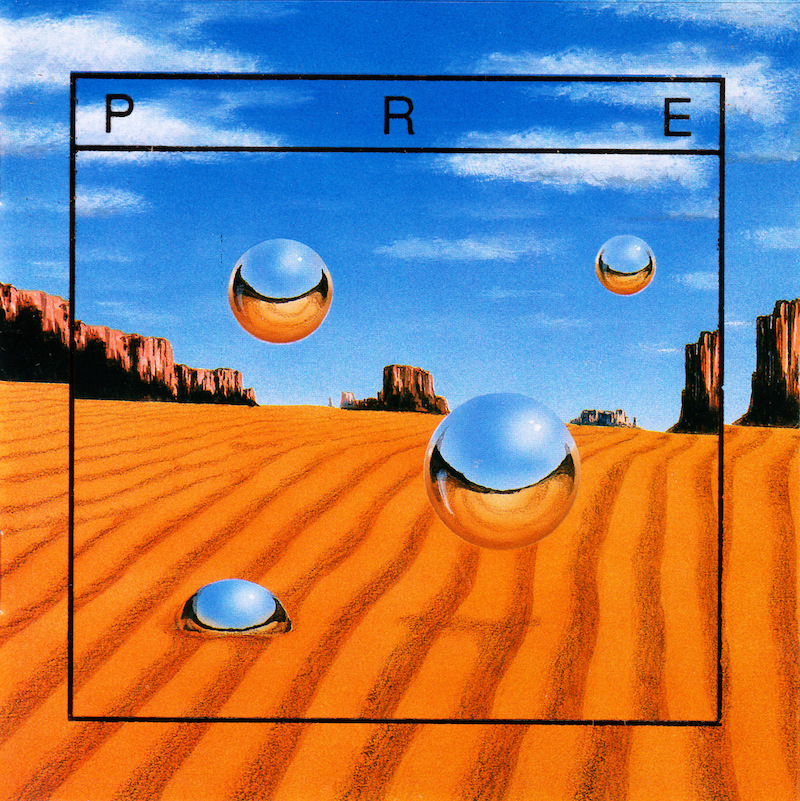
Pre – Pre
Tolerance for Yes clones follows two basic precepts. First, the band changed its sound more often on close listen than one would assume, with their classic sound as we define it now really only existing for the narrow window of portions of 1971’s The Yes Album through fellow 1971 album Fragile into 1972’s Close to the Edge. From that point forward, the band, who were the commercial kings of progressive rock despite their abstruse airy epics fusing everything from country to symphonic music to psychedelic pop to some of the best bass work ever recorded, would constantly be reacting against themselves, either diving deeper into the abstract miasma of prog epics (said lovingly) or into sharper edged new wave and contemporary sounds. This makes the world of the Yes clones one referencing a window of time that in truth spanned just over a single year and produced less than two hours of material from its prime source. Second, these clone bands are a testament to the fact that punk overwrote for decades, which was the popular success of Yes in the early ’70s, who for a run of years outgrossed even bands like Led Zeppelin in album and ticket sales.
Pre were a U.S. troupe led by two brothers who themselves had short life in the music industry, forming in 1976, writing and recording the material for their debut, then disbanding in December of the same year. This record would not see release until 1994, owing in part to the volume of material, stretching to nearly an hour which in those days would have necessitated a double album given the girth of these tracks. They were resurrected due to the sudden boom of prog of this kind in the early to mid ’90s spearheaded by bands like the Flower Kings, Spock’s Bears and Änglagård sparking renewed interest in the obscure corners of the genre’s history. What we get here is genuinely more exciting than America’s other premiere Yes clone Starcastle, showing a mastery not just of sonic elements but the mood and wide-eyed terror of early Yes, which often sang tales of death among the ice in “South Side of the Sky” or adapted War and Peace along with its famous battle section in “The Gates of Delirium.” While the whole album is filled with brilliant writing and playing, the sort that makes you sad the band never got a proper go at things, it’s the 19-minute closer “Ballet for a Blind Man” which stands comfortably toe-to-toe with Yes’ early work that most justifies the existence of this record and makes the continued detective work of archival and historical record labels so necessary.
Treble is supported by its patrons. Become a member of our Patreon, get access to subscriber benefits, and help an independent media outlet continue delivering articles like these.

