
Matmos : Metallic Life Review


Records like Metallic Life Review underscore why I am so glad we here at Treble don’t use scores for our reviews. Matmos have built a career from challenging works that press against our preconceptions of sound, diligent records that consistently prompt the listener to be likewise diligent in their thoughts. This does not correlate strongly to a numerical rating system; those types of metrics tend to work best cohered to something like a common listening pleasure, how you feel pressing play on a record, and not always the ferocity of thought that follows or happens in the midst of a record.
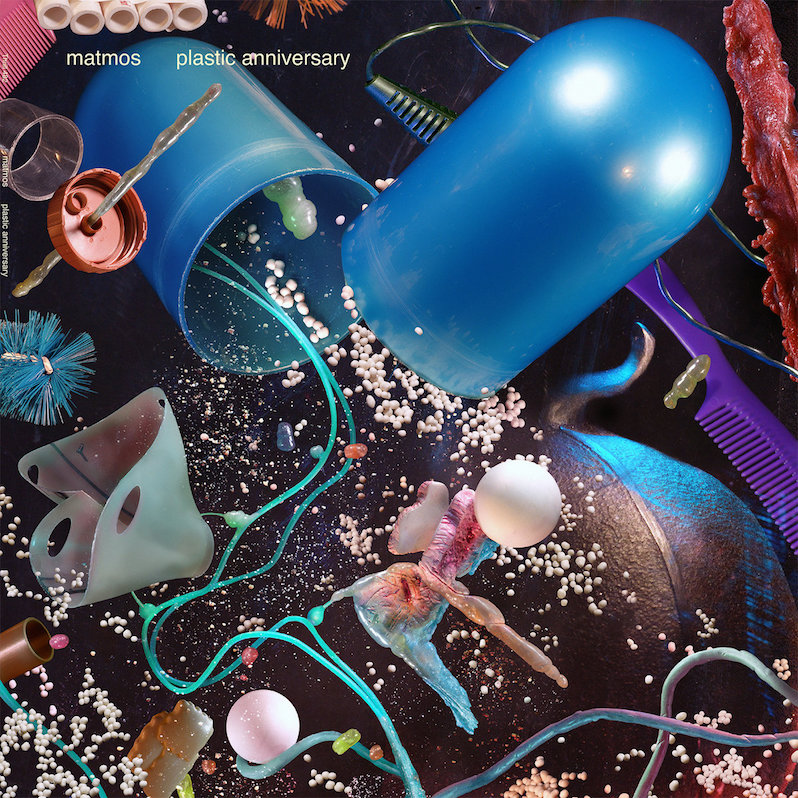
Metallic Life Review is something between a sequel and a conceptual complement to Matmos’ earlier record Plastic Anniversary. Both are albums constructed of sources sound from their stated sources, this record being metals while the previous was plastics. Taking this kind of abstracted and found-sound approach to sampling and sonics opens the doors wide; one can think in terms of texture, tone, and note rather than tuning, allowing manipulating in the studio and layering to create melodic or harmonic content. In the case of Plastic Anniversary, there was an amount of conceptual heft behind it given the plastics-driven element of global climate change, a haunting corona around an otherwise beautiful and sonically engaging record. Here on Metallic Life Review, that kind of social consciousness slips away from something more abstract and conceptual, a meditation on metals themselves without stated direction.
The first five tracks that make up the first half of the record are a collection of short pieces that wouldn’t be out of place on experimental techno records. The benefit of metals is that there are a series of standard instruments already made from them, opening up these pieces to the use of brass instruments and tuned percussion. Matmos however also make use of heavy rhythmic layering of samples, sitting sonically somewhere between the sample-based avant-gardeisms of early industrial music like Throbbing Gristle and Nurse With Wound and the more abstract and textural electronic works of someone like Haruomi Hosono and Oval. Were the record constrained to these five pieces, it would be a thoughtful record, one comfortable in a catalog as diverse as the aforementioned Plastic Anniversary or Regards, their interpretations of pieces of a European composer. You can even hear the obvious lineage of an overbearingly ever-present figure like Aphex Twin in them, with his groundbreaking run of ’90s IDM records, especially works like “Bucephalus Bouncing Ball” and “Flim” from Come to Daddy or the shocking subtle beauty of drukqs. This alone however would be only half the story of the sonic interest and satisfaction of the record.
The completion of the record as a project, per se, is the second half, the single long-form improvised title track. Here, joined by figures like Thor Harris (from groups such as Swans and Shearwater) and Jason Willett of Half Japanese on guitar, the group explores an expanded ensemble investigation of sound sources that feels closer to a rock-in-opposition or zeuhl piece than a traditional rock or electronic one. They follow in the tradition of latter day Swans, of Water Damage with their long improvised drones, and of those early off-shoots of progressive rock, all of which approach the question of the rock group-as-orchestra. The work is more involved and active tense than would constitute post-rock, possesses the thoughtfulness of the sound sculpturing and installation pieces of Brian Eno while having just enough motion to push itself beyond the realms of ambient. It feels closest, truthfully, to sitting in a vihara, cross-legged and silent in meditation, as Buddhists play the singing bowls and bells, as your stilling mind finds the sound of feet against stone and tile, the flicker of flames on the candle sticks. The intensity rises over the 20-minute length, but that level of trained astuteness lingers over it. It’s a composition for the kind of person who can’t sleep to ambient records because the slow-shifting chordal structures set their nerves on fire, following those elaborate developments in sometimes muted environments to really test the acuity of the listener.
It’s on pieces like this that something magical happens. King Crimson explored this to great lengths, as did Magma and Throbbing Gristle and Coil and Swans and more. This kind of approach to play, too playful and sonically adventurous for classical, too thoughtful and sublimate for rock or pop, playing with sonics of funk and the rhythms of the folk musics of the world without using any of their attendant sounds, opens up some non-linguistic or post-linguistic space both for players and listeners. “Metallic Life Review” the composition doesn’t feel like a song so much as the erecting of a physical architecture within the head, each sound feeling like discovering a new piece of a great machine, some vast engine neither benevolent nor malevolent. It can feel like this lovely dissociative thing, breaking the association of machinery and the world of metals from the unnatural world of human invention and returning it to the broader concept-space of the ultimately natural. There are ways to extend this to a political vector, but that doesn’t feel like the intention here. Metallic Life Review, unlike its conceptual predecessor, feels more concretely placed within the realm of meditation on the limits of the natural and unnatural, the way music emerges from the chaos of found sound as indicative that these structures are not antagonistic to one another.
How would you render that in a score? How do you quantify the deep pleasures of thought, which Drew Daniels and M.C. Schmidt so consistently deliver? Just because you wouldn’t throw this record on in the car doesn’t mean you can’t understand why Björk chose to work with them on Vespertine or appreciate how sitting with a piece of wordless music can stoke your hunger in everything from the architectural theory of Bachelard to the non-organic phenomenology of Sloterdijk. They challenge me with each new release, sonically but also more satisfyingly in an intellectual capacity. This is music that is gentle but firm in its efforts to make you wiser and more thoughtful.
Label: Thrill Jockey
Year: 2025
Similar Albums: