


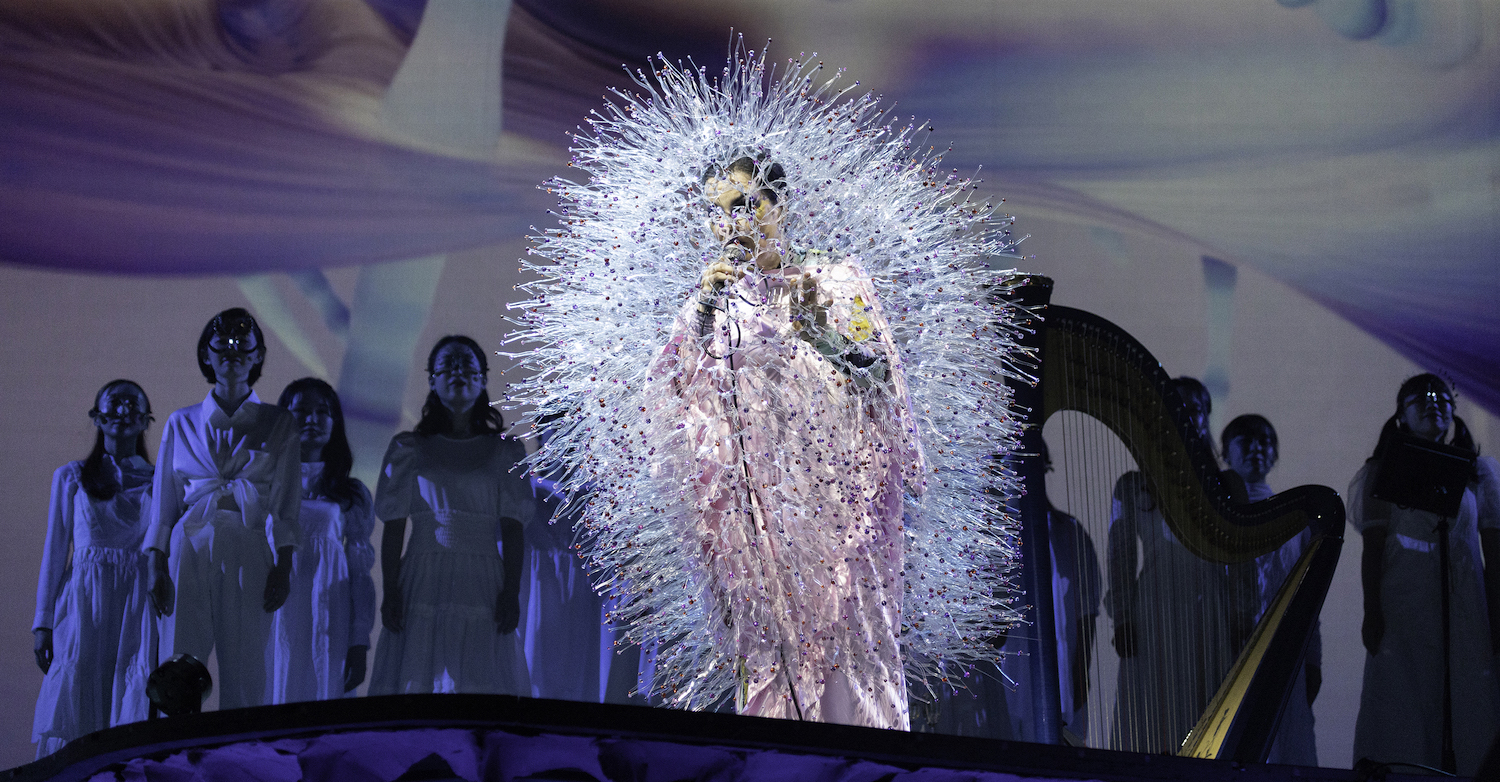
Before going solo in 1993, Björk had a career deep enough that it warranted its own beginner’s guide. Beginning at 10 years old with her debut self-titled album, she would put Iceland on the musical map with her early projects Tappi Tíkarrass and KUKL. They navigated the art rock and post-punk spaces of the 1980s, though she made her largest impact with The Sugarcubes in the late ’80s and early ’90s. Their short discography of off-kilter alternative rock would likely be more celebrated if it weren’t dwarfed by Björk’s terraforming career. Although they fit within the confines of college rock, they poked at its edges, foreshadowing the restless leg syndrome of creativity Björk would thrive off of.
Every Björk album has forward momentum. Each one flaunts a novel idea, an ambition unbothered by reality. Never one to repeat herself, her unmistakable voice has identified her regardless of her persona, whether she was the new city transplant or the queen of mushrooms. Only occasionally has she ran parallel to mainstream tastes, but that was largely due to coincidence. She’s primarily been bold and proactive, creating music that reacted to her life, and her best work reflects each epoch of hers. There’s then little in the way of a definitive Björk sound. Usually, this defaults to the albums that made the largest impact, but they do not represent her artistry as a whole. The only way to make sense of her is to examine her entire body of work.
And, with Post recently turning 30, we figured it’s time to celebrate one of the most kaleidoscopic careers in all of pop music.
Note: When you buy something through our affiliate links, Treble receives a commission. All albums included are chosen by our editors and contributors.

Debut (1993)
To lament Debut for being underfurnished compared to the rest of Björk’s discography is hindsight bias. If it was a one-and-done release and Björk became a turnip farmer for the rest of her days, its imprint would still be felt. It only appears modest only in relation to her ensuing career. On its own, it is wide-eyed, in love with the big city and all its pleasures and lights, hailing taxis and running an endurance test against a Friday night moon.
This energy comes from the dissolution of The Sugarcubes and Björk moving to London with a trunk full of music she had yet to record. It elevates Debut above its form as a collection of well-crafted love songs. This love is rarely romantic (“Venus As A Boy” depicts an attentive male lover as if he was a headcanon fan fiction character), instead generalizing affection for all manners of human interaction. It’s pleasantly childlike and what sets Debut apart from Björk’s other records because only here does she sound youthful. From Post onwards, she would stretch her ambitions and abilities far beyond her years and any biological clocks.
Debut’s production, thin despite its attempts at fullness, tethers it to its release date, though this is more a matter of the technology available than Björk’s skills. At times, it plays like an acid house event gone pop, whereas elsewhere, it’s reminiscent of the WWF No Mercy soundtrack. This is not an out-and-out negative because it provides Debut with its own charm. In a sense, it shows how effective Björk was at reconstructing music for large rooms and sweaty raves into pop without making crossover concessions.
More than all this, Debut is unbothered by awkward first kisses or the fear of moving to a new country. It never stops to ask “What are we to do with all the memories of people we’ll never see again?” Consequences are of no concern to Björk here. There is only freedom, the same one she felt after leaving the Sugarcubes. She did not hold onto this fleeting feeling forever.
Rating: 9.0
Listen/Buy: Bandcamp | Rough Trade (vinyl)
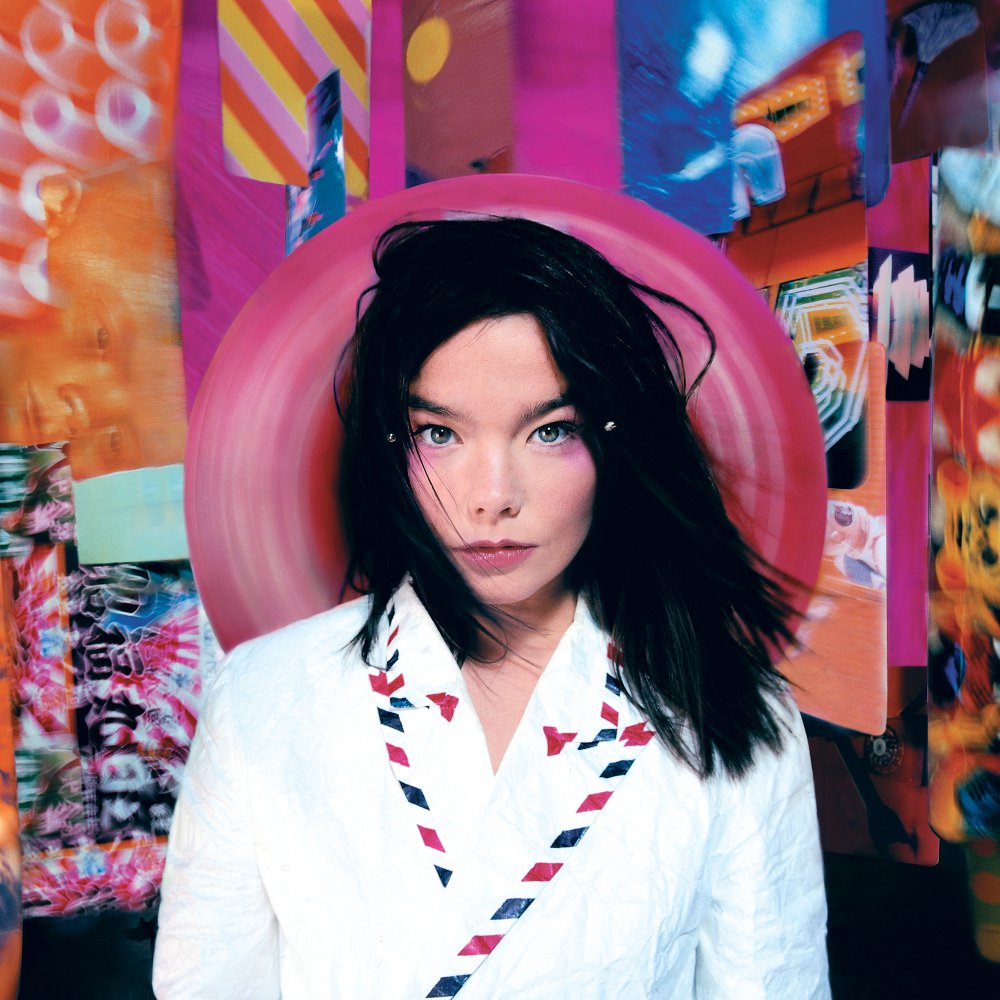
Post (1995)
Björk’s magnum opus, Post, is her most diverse and song-oriented record. It plays like it just won the lottery and has 30 days left to live, breaking everything to see how the parts fit together. It demystifies the spaces between industrial, dance, trip hop, and ambient. The congealing element is, of course, Björk and her vocals. She bridges the gap between “I Miss You” and its vaudevillian lust, the ethereal “Cover Me,” and the warmth “Headphones” finds in sharing music (a theme Björk would return to multiple times through her career).
Björk attributed her life in London and her near-constant clubbing as Post’s guiding light. Debut played with those inspirations too, but more like a first-timer buzzing with excitement. Meanwhile, on Post, they’re symptoms of a deeper diagnosis—the rampant self-discovery brought about by Björk’s new connections and lifestyle. Post digs into this and examines it from the outset. “Army of Me,” after all, is about creating your independence. Crucially, Björk doesn’t pretend it’s painless. She’s cognizant of the woes arising from a lust for life, like how relationships change our core (“Hyperballad”). But each revelation is imbued with racecar fuel, encouraging daring behavior by presenting the best-case scenario. That’s why it’s still—despite featuring Led Zeppelin samples, Spike Jonze-directed music videos and big band covers sprawled across green-screened backdrops—ageless. And nothing has come close to a Post 2.
Rating: 10
Listen/Buy: Bandcamp | Turntable Lab (vinyl)

Homogenic (1997)
Björk’s other magnum opus Homogenic contradicts its predecessor’s vitality by reckoning with how a lifestyle rampant with deconstruction and adrenaline such as Post’s impacts the soul. It combines the identity carved via experimenting in early adulthood with reconnecting with one’s lineage and family tree, showcasing a Björk who left the clubbing scene of London due to media overexposure, withdrawing into her Icelandic heritage and the comfort of new collaborators like Mark Bell and the Icelandic String Octet.
With Bell, Björk established a partnership that would endure for over 15 years. Their comfort together is immediately apparent and likely the reason why Homogenic brandishes the sound Björk is most associated with. Trip-hop meets strings—reduce Homogenic to as few words as possible and that’s what you get. It builds off of Tricky and Portishead and furthers trip hop until it’s alien, then humanizes it with accordions, glass harmonicas, and timpanis (it’d be too much work to list every instrument here). Without them, a track like “Hunter” would scan as an indictment because of how frigid it is. Two tracks later and the distant beats pantomime a heart separating in two on “Unravel,” the organ and saxophone defrosting in real-time. Homogenic thrives on this interplay between analog instruments and forward-thinking yet glassy production. Decades later, Björk would release “Stonemilker,” but that title applies more to Homogenic’s approach.
It is also worth considering how software and tech have hijacked human living in contrast to the optimistic scene Björk presents wherein we alchemize with the digital age. She reverberates excitedly about technology and the future without outright explaining where it may lead us. Sure, “Pluto” eviscerates the human form for digital hedonism, but Homogenic as a whole proudly oversees the vast expanse of technology, noted by “Joga” and “Bachelorette” bursting through dams at the thought of new horizons. These are ideals one could only hold in 1997. Homogenic then has a date, but is not dated. Within the prism of polygonal avatars and dial-up internet, Björk crafted her best album.
Rating: 10
Listen/Buy: Bandcamp | Amazon (vinyl)
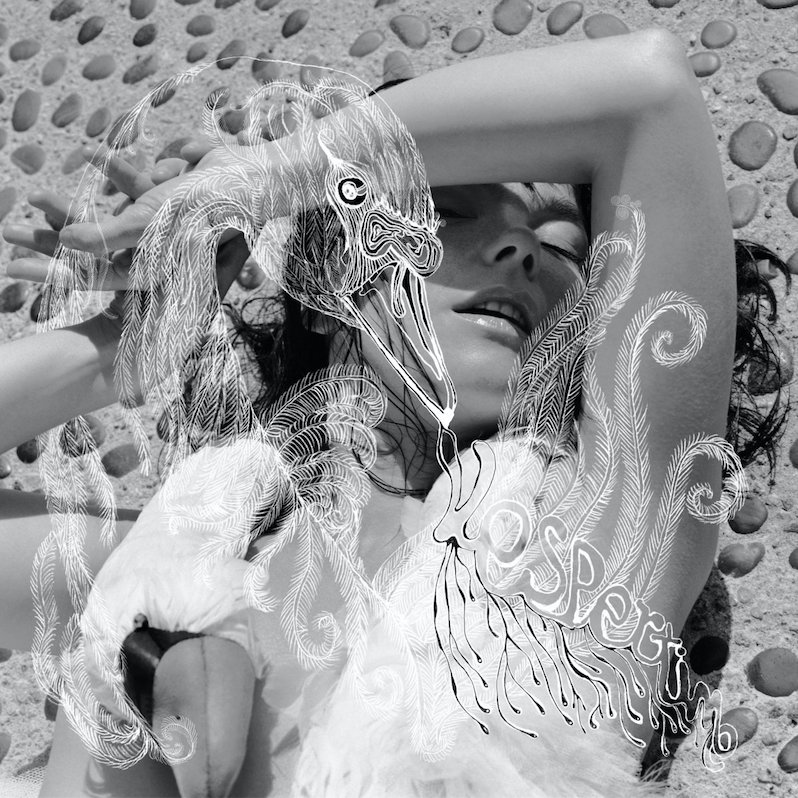
Vespertine (2001)
Björk’s third magnum opus is defined by delicateness, even if it’s the most upfront Björk ever was, only surpassed by its sibling Vulnicura nearly 15 years later. While Post craves freedom and Homogenic strives to create its own identity and language, Vespertine is easier to pin down—it’s about love for another human. The strings and romantic overtones overindulge the conceit, but Björk has never taken a half step in her life. She has to fully commit. In doing so, she elevates Vespertine beyond “a love album” to “the love album.”
The blooming relationship between Björk and avant-garde artist and director Matthew Barney influenced Vespertine, but the record doesn’t have the jitters of new love that Debut did. Rather, it’s hushed, like a Sunday morning in bed with a lover. The tranquility is that of mundane loving, of being in the same room as someone else and that alone being the sweetest event in history. “Pagan Poetry” expands that feeling into a sermon with its simple refrain, “I love him.” Meanwhile, the skittering production and midi-friendly strings, used so that Napster downloads wouldn’t be tarnished by compression, reflect the intimacy at Vespertine’s core. They are less razzling and innovative than Homogenic, but that’s inherent to reserved romance, and critiquing them is like complaining about that joyous Sunday morning being too slow. Ultimately, by dedicating itself to the idea of love and to Björk’s muse, Vespertine intrigues, as does the eventual fallout that resulted in Vulnicura and the ensuing metanarrative within Björk’s career. However, it does not snap to attention like her preceding works. Not that it needs to, by the way, but the spark here is dimmer due the focus on the smells and touches of a lover.
Rating: 9.5
Listen/Buy: Bandcamp | Amazon (vinyl)
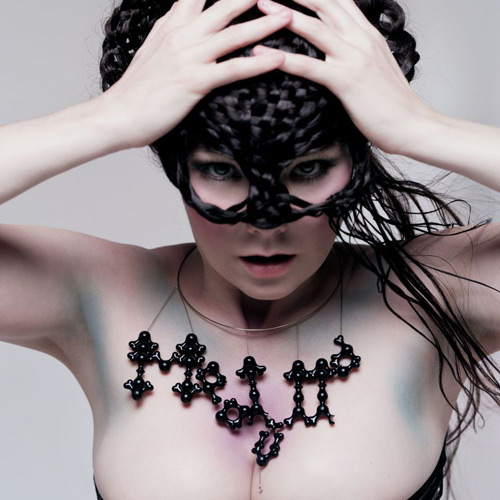
Medúlla (2004)
Based on the quality of Björk’s first four albums, you’d assume that she would ace the five-album test. Her passage is bottlenecked by Medúlla, a divisive pick as to whether it’s stupendous or merely interesting. It’s ostensibly an a cappella record, one that features Mike Patton, Robert Wyatt, Tanya Tagaq, and Rahzel, among others, and both the Icelandic and London Choirs, and Björk plants herself in esoteric territory with pop barely penetrating. On the surface, it’s trying to be hard to love.
More importantly, Medúlla is a case study for the two of Björk’s principles, diversity and conciseness, as it relies upon them to elevate what would be an unwieldy project in other hands. Its heedy concept becomes effortless under Björk’s guidance. The aggro “Where is the Line,” for example, feels like organic matter. It’s hard to imagine anyone else making a straight-faced art pop track that subsists on Rahzel’s beat-boxing and Mike Patton croaking like a bass.
While Medúlla’s tracks are among Björk’s most out-there, they’re strangely magnetic. Like all Björk albums up to this point, there was a mission—to rekindle the connection between body and music. As such, Björk works in sensations rather than song structures. Most tracks are formless and imply Björk’s future endeavors with their amorphous bone structure. In some ways, Medulla improves upon Vespertine in that it is similarly ethereal but slightly more captivating. However, it’s less emotionally potent and ultimately has less to say. This slight blip would color Björk’s next albums.
Rating: 9.0
Listen/Buy: Bandcamp | Amazon (vinyl)
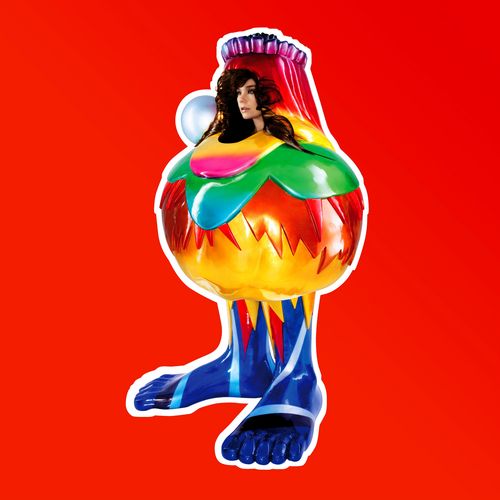
Volta (2007)
Commonly considered Björk’s worst album, Volta drew ire at the time of its release for supposedly returning to a more commercial sound (as if Björk was ever that commercial) and for bringing Timbaland to the fold. He’s not the needle mover he once was, but only a year prior to Volta, Timbaland produced Justin Timberlake’s FutureSex/LoveSounds. He could’ve potentially brought “SexyBack” to Björk, however, his contributions to Volta were disappointing and overhyped. He only produced two tracks and, unfortunately, neither benefitted much from his presence.
The other most derided aspect of the record is its explicit activism which comes at the cost of Björk’s presence. The two can coexist, obviously, but they do not on Volta as Björk strips her idiosyncrasies down to sloganeering. “Earth Intruders” and “Declare Independence” are both riotous but their lyrics lack a stake that drives them to the heart. They possess energy and aim but are missing a shooter behind the gun.
With Timbaland and the activist leaning underbaked, Volta stands as the first Björk record whose raison d’etre isn’t strong enough to carry it. Luckily, the songs are good enough that it almost doesn’t matter. Björk’s return to pop music is Alice-in-Wonderlanded and Dr. Seuss’d. It cloys for your ears and hips, confident that it can ride off its fundamentals. And, it can. Even when it treads familiar Björk territory (“I See Who You Are” recalls her other electronic ballads), it still enchants. Although Timbaland was a non-factor, Volta flaunts a great guest presence in ANOHNI. Their two features, “Dull Flame of Desire” and “My Juvenile,” are crossover events in their own right. It’s just difficult to peel much else from Volta beyond “it sounds good,” and that’s the first time such a statement applies to a Björk release.
Rating: 8.0
Listen/Buy: Bandcamp | Amazon (vinyl)

Biophilia (2011)
Biophilia was developed alongside an app, one which you cannot download anymore because iOS functionality is a joke. It came out a year after Apple trademarked “There’s an app for that.” The app is useless now but it was intended to deepen one’s connection to each Biophilia track through essays, karaoke, and sheet music. This was when apps were seen as the new technological frontier to be conquered rather than a new medium to bet on sports or get into arguments online to help you destress. So, it wasn’t surprising that Björk tried her hand at it. To her credit, her app was ambitious, as was Biophilia.
The story around Björk’s seventh album is interesting even beyond the app. She turned both to nature and technology in a way she hadn’t before, created a new instrument, recorded a Tesla coil, and drew inspiration from moon cycles and walking rhythms among other natural phenomenon. “Crystalline” is written in 17/8 for heaven’s sake! Crucially, this was Björk’s final collaboration with Mark Bell, who passed away in 2014, and who helped her shape her experimental production techniques from Homogenic onwards (excluding Vespertine).
And yet, Biophilia is as flavorful as salted rice. It does not present its scale nor does it strike a mood, coming off as laborious more often than not. Compare that slothiness to Vespertine’s stillness or Post’s “Headphones.” It’s a different animal altogether. There’s no competition for its place as Björk’s most forgettable album. There are, however, three saving graces—the tracks wherein Björk cuts loose on production more than she ever has. “Sacrifice,” “Mutual Core,” and “Crystalline” are visions of squandered potential in which Björk threw all timidity to the wind and initiated a headbanger’s ball. They are microscopic dubstep freakouts, drum and bass breaks amongst ambient pop. So unexpected are they that Björk even sings “You didn’t know I had it in me,” on “Mutual Core.” Yet, they are the only memorable pieces from Biophilia. It’s not an outright bad album, but it leaves much to be desired. The highest praise that can be paid to it is that it established a blueprint for Björk’s next record.
Rating: 7.0
Listen/Buy: Bandcamp | Turntable Lab (vinyl)
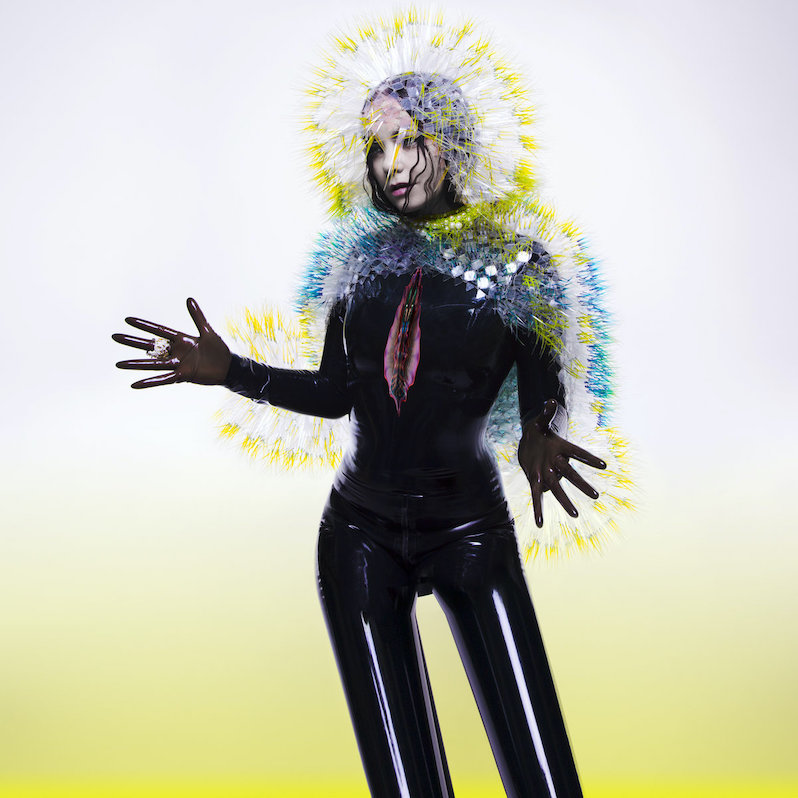
Vulnicura (2015)
Vulnicura has been alluded to multiple times thus far in this piece, and that’s because it shifted Björk’s trajectory, making good on Biophilia’s concepts and serving as the new waypoint for all future releases. It also bears close ties to Homogenic (sonically speaking) and Vespertine (thematically), which is to say it set itself up for adoration. It’s an album that takes a whole career to build up to, is commonly considered her best album post-Vespertine, and is the simplest to explain in terms of emotional cartography. It’s Björk’s first break-up album. She’d previously approached love from multiple angles, mainly Vespertine’s head-over-heels infatuation and the halcyon young love affairs sprinkled throughout Debut and Post. But Vulnicura is blunt, even more than “Cocoon” from Vespertine, and Björk is hurt. Boiling down Vulnicura to its base reveals how deeply Björk processes it and turns it into music.
Vulnicura is a more pronounced reaction to Björk and Matthew Barney’s separation than Vespertine was to their honeymoon stage. They had spent 15 years together and had a child, it’s suitable that this would lead Björk to her darkest record. She found the perfect accomplice in Arca, fresh off their work on Yeezus and still deep in their industrial phase. With them, Björk pushed her tracks longer than ever before and perturbed the balance between electronic and classical she carved on Homogenic. The avant-garde nature of Biophilia is put to work on the antigroove of “Notget” and desperately tries to make peace with a broken heart on “Stonemilker.”
This is not to say that Vulnicura is pacifist. Lyrically, Björk drops the gloves. She is accusatory, pleading, and sullen. While confessional, she is never clever, and that’s why many of her lines will fold you over like livershots. This includes what may be one of the best break-up songs of all time, “Black Lake,” an indictment of an ex-partner so scathing that you may never want to fall in love again.
As stated earlier, Björk never takes half steps, and that removes any modesty Vulnicura could’ve possessed. It is overdramatic, but it earns it. It’s an exposed nerve of an album backed by Björk’s best songwriting since Medulla and, contentious as this may be, her finest production (“Quicksand” and “Mouth Mantra” will quell anyone who disagrees with that assertion). It’s an album that could only be made once per career, otherwise it’d burn its creator. Luckily, Björk healed rapidly afterward.
Rating: 9.5
Listen/Buy: Bandcamp | Turntable Lab (vinyl)
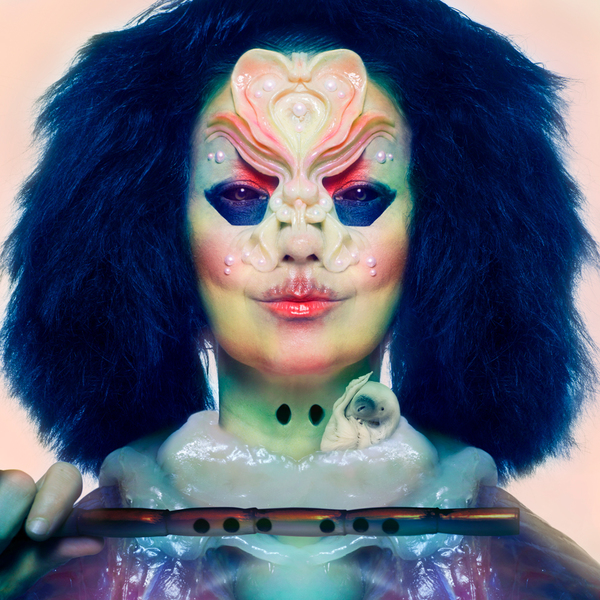
Utopia (2018)
Although Utopia details a less urgent life event than Vulnicura, it’s arguably more vital. Coming only two years after Vulnicura, the fury Björk burned with subsided as she began reflecting on how her pain molded her ability to love. As is to be expected with her, this love is more than just romantic. Björk now wields the lens of a healing mother who must work alongside her heartbreaker. It’s the first sequel in her discography and it deals with a more important concept, recovery.
Which is to say that Utopia is more mature than Vulnicura, though that maturity comes about in the Björkiest way. It’s a weird album with more bird noises than choruses. Glitchy production occasionally jostles the flutes and harp that make up the majority of the rhythmically-agnostic music. Björk either sings into caverns of space (“The Gate”) or plows through soft instrumentation as if she recorded her vocals before hearing the song (“Blissing Me”). It is, fundamentally, Björk’s strangest record, and if she tried to work it into a pop framework like she did Debut or Volta, it’d fail. So, she lets the songs mature, no matter how glacially that process may be and how anti-listener it appears on first intake.
Within that mindset is Utopia’s beauty, routinely made blatant in the music itself but moreso in how it delves into the psyche of mature heartbreak and rekindling oneself. People stop loving each other and that’s difficult to reconcile. Recovery is laced with scar tissue. It is a quiet pain and Björk navigates it through conducting long and patient tracks that trace her thoughts even if there is no conclusion. Sexy? Hardly, but because of this process-oriented mindset, Utopia stands on its own legs even when compared to Vulnicura.
Rating: 9.0
Listen/Buy: Bandcamp | Rough Trade (vinyl)
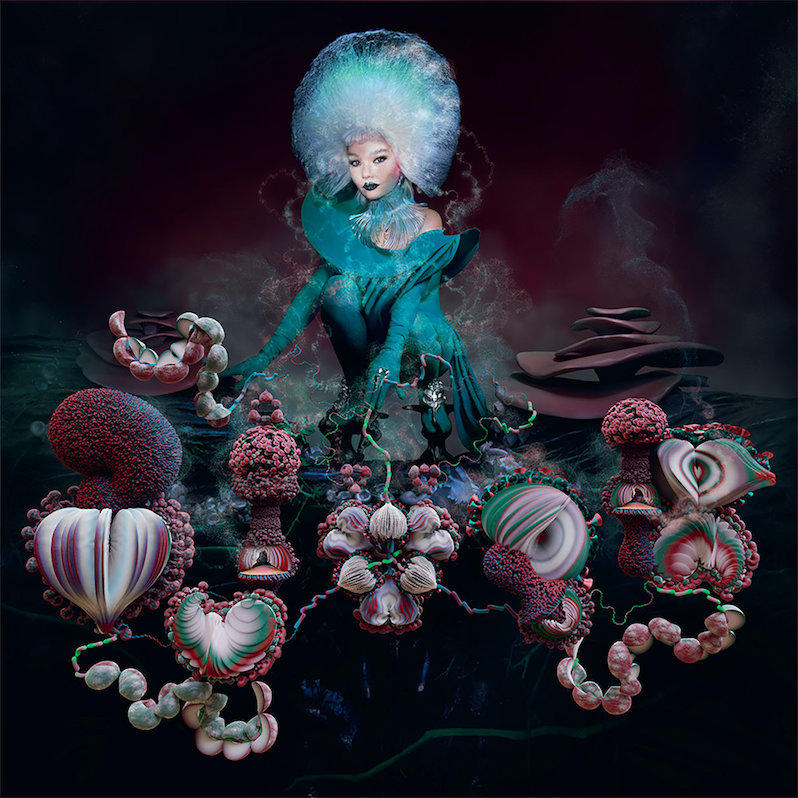
Fossora (2022)
After the longest gap between full-length albums in her career, Björk returns and continues the motherhood themes of Utopia, except now as a daughter mourning the loss of her own mother who passed in 2018 and as mother whose children are full adults. She enters a fantasy world of fungi that was promoted as being heavily gabber-inspired and borne out of pandemic raves in her home in Iceland.
In their review, Langdon Hickman put it best: “It was sometime around Volta that discussion of her shifted seemingly mostly to more academic spaces while, in the world of pop, hers became the hushed name of a goddess.” This transition is not an issue but it points to Fossora’s key flaw; it feels academic. It’s self-serving in this regard, with half the tracks playing more like tests of Björk’s abilities and the other half using those to make a song. At times, specifically “Fungal City,” Björk sweeps you off your feet. The title track rolls out a welcome mat to a colorful and pungent realm. Then, there’s “Atopos,” a top-tier Björk rave track that somehow makes Fossora’s clunky composition work. Yet, Fossora is routinely bogged down by songs that sound like a bass clarinet was glued onto languid meditations, with more attention paid to the process than the end product.
In this way, Fossora is clunky. Ideas are mismanaged or not driven through an editor with the gall to say, “That’s not it.” “Sorrowful Soil” comes to mind here. Vocal melodies overlap and criss-cross into a constellation of sorts, but there’s a bluntness to the lyrics and phrasing that rubs against it like bone rubbing against bone. While some may find these elements enticing, if only to find the cells connecting them, Fossora does not reward such an exercise except to those who can endure its studiousness.
Rating: 6.8
Listen/Buy: Bandcamp | Turntable Lab (vinyl)
Treble is supported by its patrons. Become a member of our Patreon, get access to subscriber benefits, and help an independent media outlet continue delivering articles like these.

