

Deftones – private music


Ever since the release of 2000’s White Pony, an epochal record that produced a seismic shift of mainstream rock listeners toward the experimental and progressive underground, not to mention the equally seismic shift it had on their fellow bands going forward, each new Deftones record has felt like an event. This is something that is increasingly rare in the world of rock music, a space abandoned in the Imagine Dragons-ification of rock radio in the wake of the Supreme Court clearing the way for Clear Channel to mop up the competition and place every terrestrial rock station in a perpetual feedback loop of Three Days Grace/Seether/Saliva dreck. It is also a position the group has clearly taken quite seriously. They can talk down on records of their catalog all they want, and given some of the personal baggage associated with them it’s not always shocking, but the past 25 years of the group have been a series of Radiohead-level experimentation in the heavy rock world, a fact that seems to come in and out of public consciousness.
Deftones led of the private music rollout with “my mind is a mountain,” the album’s opening track. This produced a split reaction. On one hand, it feels blazingly apparent as classic, easily recognizable Deftones, and on the other, what in the fuck is the timing of that opening riff? Deftones bury a Dream Theater-style odd time prog groove to open up a song that splits the difference between post-metal, shoegaze and the particularly bright and gem-like world of dream pop, which sparkles rather than elides in a haze. Add on top of this the substantially more meditative title, Moreno adopting again in Deftones the kind of spiritualism that, while present on White Pony and the self-titled, has largely been present in his side-group Crosses, plus that buried reggaeton three-against-two rhythm interplay of the guitars and drums, and. Well. Suddenly, what seems like Deftones returning to a familiar well reveals itself as a short phrase covering up quite a lot of musical ideas that they synthesize so naturally it feels like obvious pairings despite that absolutely not being the case.
Pay attention to that three-against-two rhythm, though. As the record turns over to the second song, “locked club” picks it up right where “my mind is a mountain” left off, a transition so seamless its easy to convince yourself its one six-minute track rather than two smaller ones. But suddenly, an inflection comes in that, to my knowledge as a fan of the group since “Back to School” dropped as a video, I cannot recall ever being in the system. Moreno starts toasting on the microphone like a ska or reggae MC from the ’60s or ’70s, dubby effects on the vocals, and suddenly without changing the musical bed the vibe flips on its head, no longer dreamy heavy rock but Latin and dub driven ambiance much like Palms, Moreno’s short-lived side-project with the majority of the members of Isis. Something else tickles the ear here, something that only reveals itself in full on the next song, “ecdysis”; are those major chords? In my Deftones? There is a brightness here, again that sense of sparkling and prismatic approach rather than the dreamlike haze we have long associated with the group. This is a trait that we could most obviously tie to Ohms, the successful ’80s city pop-ification of White Pony, but that actually came into the palette just a bit before on the unfairly maligned if admittedly uneven Gore. That record, I wager, will become like Saturday Night Wrist, an album that we will only discover in retrospect as the origin of a bunch of new moves in a band that by Koi no Yokan had clearly mastered their existing playbook.
That three-against-two rhythm becomes the rhythmic bed of about two thirds of the tracks here, producing an effect almost like an album-length composition. That spiritualism returns in “infinite source,” “milk of the madonna,” one of the few stridently heavy songs opening with those classic highly dissonant Deftones chord voicings, as well as album closer “departing the body.” That sense of brightness also never departs for long. If on Gore they took their first stab at the idea, then private music is their first resolutely daytime album for a band that has built a career on the kind of nocturnalism you get only when you mix Sade and the Smiths, Tool and Depeche Mode. We even see returns of the vibe of Adrenaline on “infinite source,” meshing a guitar part that feels reminiscent of “Bored” against a genuinely sunny guitar part I’d sooner associate with Nothing than Failure, my common touchpoint for Deftones. On songs like “infinite source” and “i think about you all the time,” we get the kind of forthright love songs that are closer to the mood music of Crosses or even Team Sleep that this group has done. It’s a syncretism I find deeply fascinating, taking the tonal spread of Gore and filling in the gaps that made that record so confusing at times, resulting in an album that feels like their most explicitly Radiohead-meets-heavy-prog-shoegaze record since, well, White Pony.
I am resisting the urge to drape this one in superlatives. If I wanted to be critical, I could come after the album and track titling, especially “~metal dreams,” one of the very few aspects of this record that seems to follow the recent rediscovery of the group’s music by the TikTok generation. Then again, you won’t find us at Treble being hypercritical of a point like that; after all, if that app can boost Duster, the second best slowcore group of all time after the almighty Low, into multi-million play levels and festival spots, then all the power to them discovering these great bands. Plus invocations of the pentecost in the chorus of “milk of the madonna,” “Holy Ghost, / I’m on fire,” is not precisely a pop pivot I don’t reckon. And invoking that as criticism would be to undersell the canny pop songwriting and hookiness that have been part of Deftones’ DNA since day one. The thing that kept them from underground rock enshrinement early on, after all, was precisely their rock radio success and connection with pop audiences, despite all of us arthouse types jocking their records in secret.
How does it stack up? Deftones’ propensity for interesting decisions and clear iterative evolution is too interesting for a question like that to matter. You hear songs like “cut hands” and “cXz” and you see in a flash literally the entire blueprint of Sleep Token, performed with such a natural and charismatic enthusiasm that it feels like comparing Meshuggah to whatever umpteenth djent band has come along. There remains on private music yet more evidence of a still-untapped vitality that nourishes and encourages Deftones. Heavy rock’s equivalent to a band like Radiohead? Not a bad legacy, I don’t think.
Label: Reprise
Year: 2025
Similar Albums:
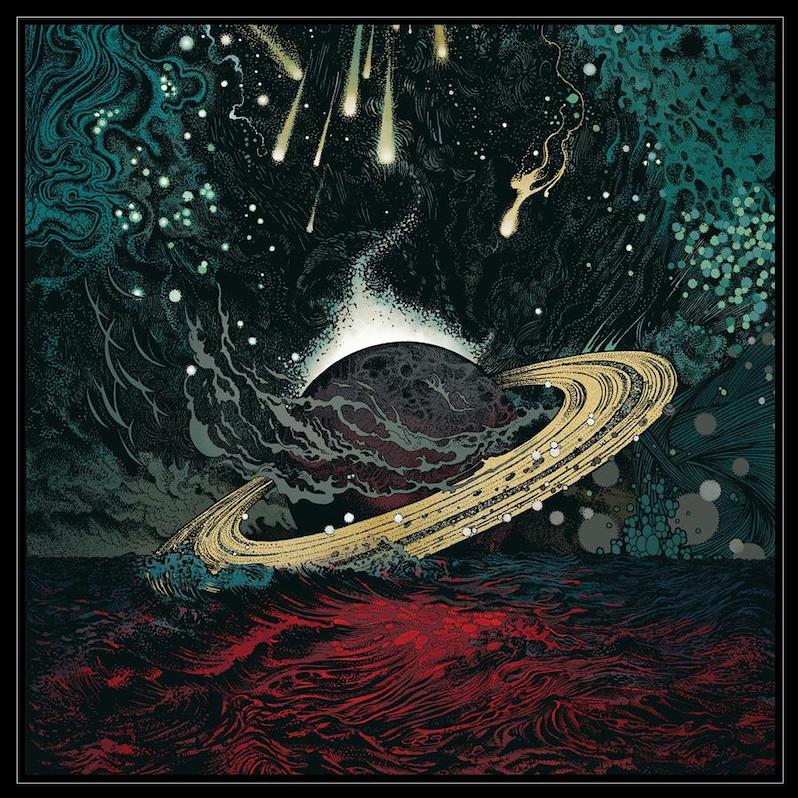
Deftones : private music
Note: When you buy something through our affiliate links, Treble receives a commission. All albums we cover are chosen by our editors and contributors.

